

7 Best EOR Services in Singapore We’ve Tested in 2026
The best Employer of Record (EOR) services in Singapore are designed to ease administrative burdens and manage the legal challenges associated with hiring and managing top talent in the country. And here we’ve compared and contrasted the best options to help you find the right one for your team.











Key Takeaways: Singapore is not an especially chaotic hiring market, but it does have many rules that are easy for first-time employers to misinterpret. If you’re looking to hire talent in the country but don’t want to drag your team into figuring out all the HR and compliance from scratch, the best Singapore employer of record services should be in order. EOR services are designed to ease administrative and legal burdens from hiring and managing top talent overseas.
When comparing options, look for employment and contracting, payroll, benefits, work passes, and compliance and risk management. Singapore EOR pricing typically ranges from $99 to $899 per employee per month, with most falling between $199 and $599, plus salary, statutory employer costs (where applicable), benefits, and sometimes extra charges for onboarding, work pass support, foreign exchange, and off-cycle payroll.
Based on our research of dozens of Singapore EOR providers, testing and comparing their legal compliance, onboarding, HR support, and pricing, Native Teams, Deel, Remote, Multiplier, and RemoFirst are among the best.
Before each round of testing, we review EOR solution websites, product materials, pricing pages, and older versions of this guide to reevaluate both our picks and our previous dismissals. We also draw on long-term notes from our broader coverage of these vendors, including follow-up research, demos, and feedback from HR and operations teams, as well as EOR hires. We then rate providers across the following criteria, using a scale from 0 (unacceptable) to 10 (excellent), to decide which EOR services to feature:
- Compliance in Singapore: We looked for vendors that could clearly explain how they handle compliance and assist clients with contracts, payroll processing, termination practices, notice periods, and local employment norms.
- Payroll and statutory administration: We evaluated providers on their management of payroll runs, statutory deductions, reporting, and other core administrative tasks. We also paid attention to how openly and clearly vendors answered detailed payroll questions in our demos.
- Platform usability: We considered how easy it was to navigate each product, locate employee records, approve invoices or payroll, review documents, and make updates. The best tools felt intuitive even when the workflows underneath were complex.
- Customer support: We looked for providers with robust support coverage, clear escalation paths, and a reputation for being helpful when employers or workers encounter issues. Our user surveys were especially useful here, since support quality often shows up more clearly in long-term customer experience than in a demo.
- Benefits and local guidance: We favored providers that could speak with clarity about benefits administration, leave policies, and local expectations, and offered practical guidance rather than generic employment templates.
- Pricing: Some vendors offer transparent pricing for what is included, while others add hidden fees for payroll, benefits, off-cycle payments, or onboarding support. We looked for providers whose pricing was competitive, understandable, and proportionate to the service they offered.
- Scalability: A service that works for one hire may not work nearly as well for ten. We considered whether each provider could support companies hiring a single employee in Singapore, building a regional team in Southeast Asia, or expanding into multiple countries simultaneously.
- Integrations and HR functionality: We looked at integrations, reporting, document handling, and adjacent HRIS features that simplify ongoing management.
- Employee experience: Contracts should be clear, the onboarding process should feel organized, and payments should be reliable. Since an EOR often becomes part of a new hire’s first impression of your company, we gave extra weight to providers that treated the worker experience seriously.
If a vendor could not clearly explain how it handles Singapore employment requirements, local benefits administration, or worker protections, we treated that as a major red flag. We were also cautious about providers that looked polished in sales but proved difficult to use in testing or frustrating to manage day to day, according to user feedback. Review our editorial standards for more information.


.png)
Deel

Deel made the cut for being intuitive across products, easy to roll out, and especially useful for teams moving from contractor management into full employment. Users also consistently pointed to its compliance prompts, centralized payroll workflows, and broad international coverage as reasons it remained a top contender.
PROS
- Consistent, intuitive UI across contractor, payroll and EOR workflows
- Smooth transition path from contractor to full-time employment
- Strong compliance guidance with prompts for missing or expired items
- Centralized contracts, global payroll, tax filings and employee records
- Enables international hiring, not just in Singapore
- Excellent 24/7 customer service with fast onboarding (2-3 days) and local payroll experts in each jurisdiction.
- Seamless integration with platforms like QuickBooks, BambooHR, and Greenhouse, plus custom integration options.
- User-friendly, self-service features enable quick setup; identity verification often takes under 24 hours.
- Automated invoices simplify payments, provided they're in English.
CONS
- No dedicated in-house account manager for EOR matters
- Upfront salary deposits can strain cash flow
- Limited reporting and workflow customization for complex organizations
- Core HR features lighter than a dedicated HRIS
- Key features like onboarding automation are add-ons, which may increase costs.
- Limited flexibility in modifying contracts or service agreements; changes often require an addendum.
- Invoices cannot be generated in languages other than English.
If you want a self-serve EOR platform that makes hiring in Singapore and beyond feel manageable, Deel is worth consideration. In our review, it stood out for bridging payroll, contractor management, and lightweight HR in a single interface that users consistently described as intuitive and easy to follow. We also liked how well it proactively surfaces compliance requirements, reducing the risk of missing something during onboarding or offboarding.
The tradeoff is that support can become frustrating once issues get operationally complex, as some users found themselves repeating context across multiple reps rather than working with a single knowledgeable contact. Reporting and workflow customization also feel thinner than what a full HRIS would offer, and larger or more complex organizations may find the platform middle-of-the-road rather than best-in-class.
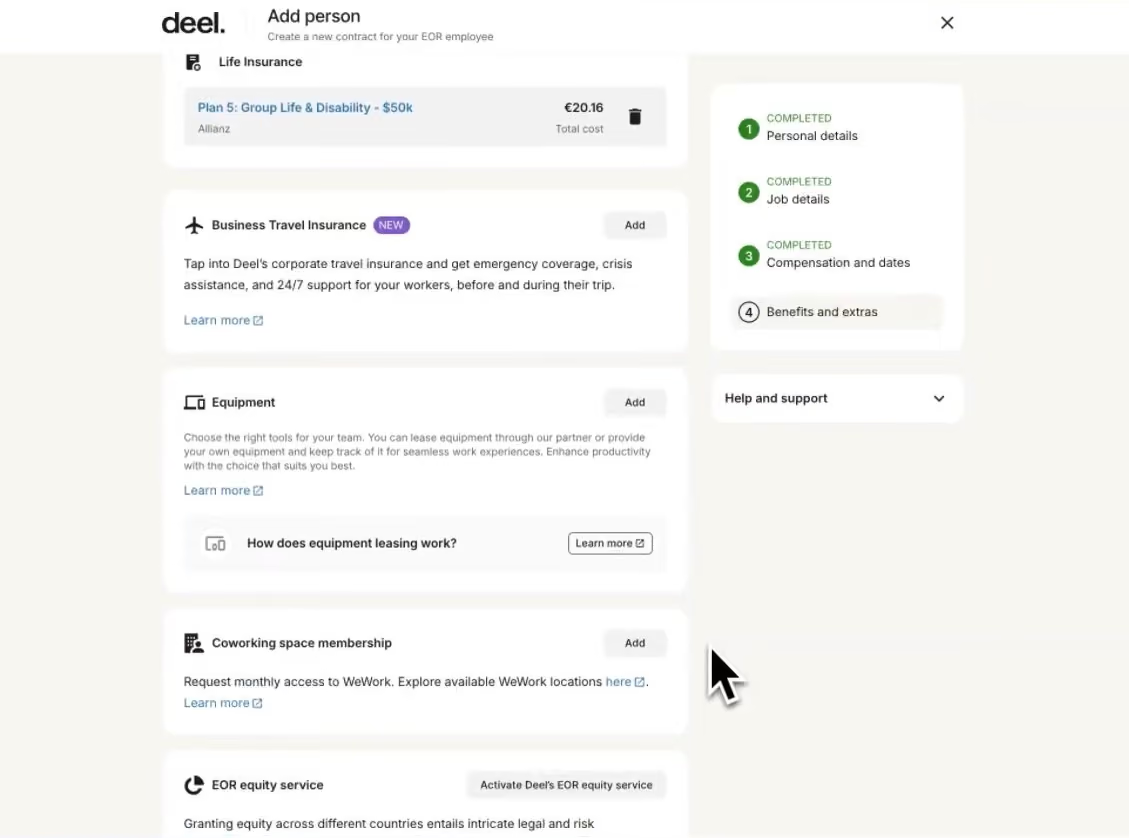
Deel Hire offers two EOR service tiers: Standard (starting at $599/employee/month) and Enterprise (starting at $899/employee/month).

Best For
Startups and growing companies that want a clean, relatively turnkey way to hire full-time employees in Singapore without opening an entity.


We use Deel on a weekly basis to hire, manage, and pay international employees for clients. Once a candidate has accepted our verbal offer, we use Deel to send the offer letter, new hire documentation, and collect information for payroll. Deel stores all of our new hire information such as employee benefits selections, tax information, and signed offer letters. We also use Deel to coordinate with our outside payroll vendor to ensure everyone is paid correctly and the proper withholdings are implemented.
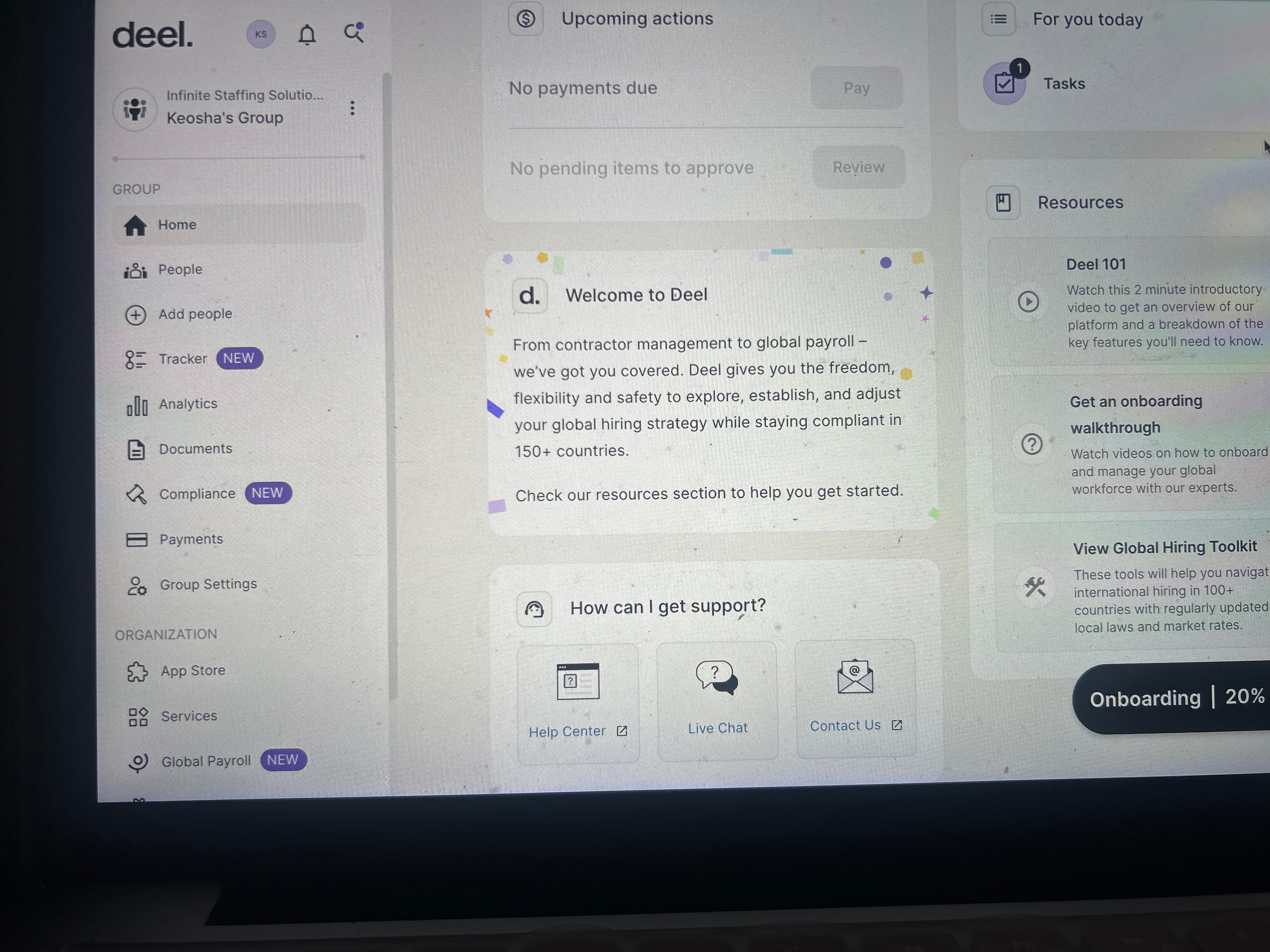
The first thing that we love is Deel HR is free! Not only is it free, it still offers all the bells and whistles of your typical paid platforms. I like that you can use Deel as the employer of record for international employees. Deel ensures we are compliant with local labor laws. Deel HR has replaced our need to purchase an HRIS system to serve as our employee management system.
We purchased Deel because we were seeking an affordable HR tool for our startup company. We were experiencing pain in the areas of documentation management, managing employee files on multiple databases, and wanted to streamline our operations. We were also seeking an onboarding solution that could integrate with our recruitment process. Deel has helped us centralize our HR functions and improve our efficiency in managing employee data and onboarding new hires.
The cost for the employer of record is very high for a startup company. This is an amazing solution to offer for a growing company, but I wish the price was lower or split into two payments across the month. Although it is easy to navigate, the UI could be nicer.
Deel is a one-stop shop for domestic and international hires. They have a built-in background check and visa and EOR in one platform. Other platforms require the use of multiple tools to accomplish these tasks.
First, they need to consider their hiring needs. Determine how many international hires annually to be able to do a cost-benefit analysis. They also need to have a defined hiring workflow to determine if Deel has everything they need to enhance their existing workflow.
Deel has done a great job with API and adding new integrations as the market evolves.
Global and domestic organizations of all sizes.
Deel is great for all companies and industries, especially if they want an all-around tool to take care of all HR needs including global payroll and EOR.

Multiplier
Multiplier feels more at home in Southeast Asia than many US-centric EOR rivals, making it a strong contender for Asia-Pacific hiring and expansion into new markets, including those with a significant Malay population. Its Singaporean EOR is backed by broader coverage across key regional markets like Malaysia, Indonesia, Thailand, and the Philippines, which makes it a stronger fit for companies hiring in Singapore as part of a wider APAC expansion.
PROS
- Being a Singaporean EOR gives it a competitive edge compared to US-centric counterparts
- Streamlined bonus, commission and one-time payment management
- Clear supplement tracking with status tabs and history logs
- Integrated ESOP management for equity-granting companies
- Active and structured compliance tooling
- Multi-currency payments in local currencies
- Multi-lingual contracts made instantly
- Compliance, payroll, onboarding, and timesheets, all in one platform
CONS
- Billing and reconciliation complex with credits, VAT and FX adjustments
- Delayed support and inconsistent answers reported
- Reporting tools clunkier than Deel or Rippling
- Payroll visibility frustrating for finance-focused teams
- Limited integrations. As of Summer 2024, Multiplier only integrates with BambooHR, Personio, Workday, and HiBob for HCM-type tools, although they are working on adding more.
If you want an EOR with genuine regional depth across Southeast Asia rather than a global platform with Asia bolted on, Multiplier is worth a close look. It offers dedicated EOR coverage across Singapore, Malaysia, Indonesia, Thailand, Vietnam, and the Philippines, and its pay-supplement tools add useful control for bonuses, commissions, allowances, and one-time incentives with clear status tracking and history logs. We also liked how its country-by-country employment guidance treats each market individually rather than collapsing the region into one generic offering.
The main drawbacks are on the operational back end: billing and reconciliation can get muddy once credits, VAT, and foreign-exchange adjustments enter the picture, support can be uneven, and reporting is not as polished as what you get from larger platforms. But for companies using Singapore as a base for broader Southeast Asia expansion, that tradeoff is likely worth it.
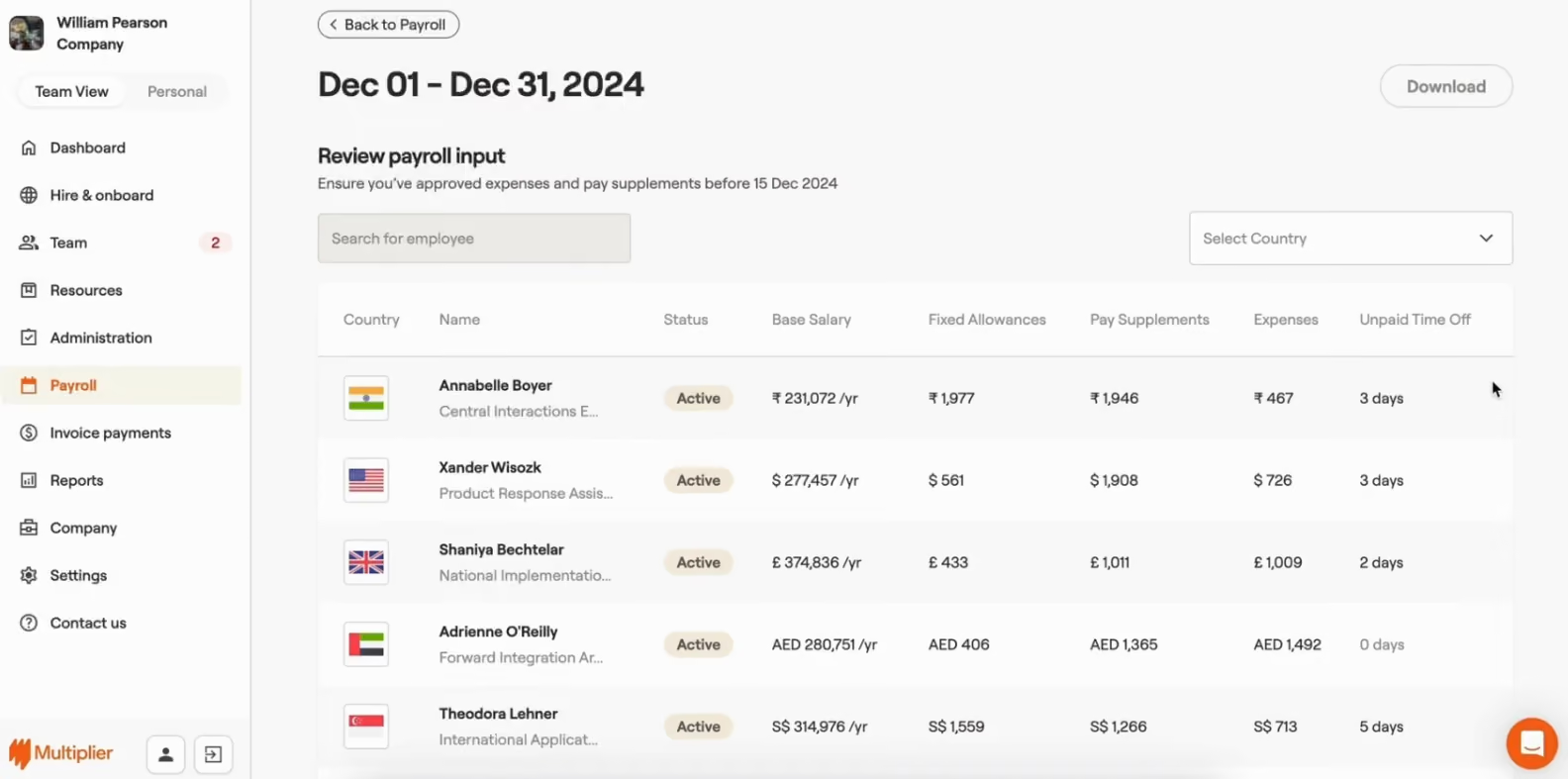
Multiplier Singapore EOR costs $400 per employee per month.
Best For
Teams that need quick onboarding, recurring or variable pay management, and support for equity across jurisdictions, and can tolerate a less elegant billing and reporting experience in exchange.
I use Multiplier regularly to manage global payroll and ensure compliance with local tax and labor laws on a monthly basis. The platform enables me to process payroll for our remote teams across multiple countries, ensuring that all employees and contractors are paid accurately and on time.
A key workflow involves setting up new employees or contractors, which is seamless and streamlined, as the platform integrates with local labor laws to simplify the process. I also use Multiplier to monitor tax filings and ensure that all required reports are submitted on time in each region.
The automation of payroll tasks, such as calculating taxes, deductions, and benefits, has significantly reduced manual errors and saved time for the HR team.
- The platform simplifies global payroll management and ensures compliance with local tax and labor laws.
- Setting up new employees or contractors is seamless, thanks to its integration with local labor regulations.
- Payroll automation reduces manual errors and saves significant time for the HR team.
- The compliance tools help us stay updated with regulatory changes, ensuring smooth operations across regions.
As an HR professional managing global payroll, Multiplier was transformative for our operations. The platform simplified payroll processing across multiple countries, ensuring compliance with tax and regulatory requirements in each region. It also addressed complex compliance issues, making the entire process much smoother for our HR team.
The interface was clean and user-friendly, reducing the learning curve for new users. Setting up employees and contractors globally was straightforward, and the integration with local labor laws reduced administrative headaches. Payroll automation was accurate and timely, leading to fewer errors compared to our previous solutions. I have personally used it for one year.
- The platform may not be necessary for businesses without remote or international teams.
- It is not ideal for smaller companies with limited payroll needs, as it might be overly feature-rich.
- There is a lack of deeper HRIS functionalities, which could enhance its utility for broader HR management.
While Multiplier excels in international payroll and contractor management, it lacks some of the advanced HRIS functionalities offered by other platforms. It is best suited for businesses with international teams, providing time-saving features and ensuring compliance.
Compared to competitors, its focus on global payroll and streamlined contractor setup stands out, making it an excellent choice for businesses expanding globally.
Consider whether your organization has a remote or international workforce, as Multiplier is designed for global payroll and compliance. Assess the complexity of your payroll needs and the number of contractors or employees across regions. Smaller companies with basic payroll needs might find the platform too robust, while those managing international operations will benefit greatly from its compliance tools and automation features.
I’m not sure as I have not worked on the tool for long enough to see changes.
- Businesses managing international payroll and contractors.
- Organizations with remote teams across different countries requiring compliance with local tax and labor laws.
- Companies looking to automate payroll tasks and streamline global operations.
- Small companies with limited payroll needs, as the platform may be overly complex for their requirements.
- Organizations without remote or international teams, as they may not need the global compliance features.

RemotePeople
Remote People hits a practical middle ground at $199 per employee per month, offering Singapore-centric EOR basics alongside useful add-ons like IT asset management, background checks, and office leasing that most competitors don't bundle. Its transparent payroll and invoice breakdowns make it especially appealing to finance teams that want full visibility into global employment costs.
PROS
- Competitive pricing at $199 per employee per month
- Useful add-ons including IT asset management, background checks and office leasing
- Transparent payroll and invoice breakdowns for finance teams
- Strong country hiring guides that go beyond basics and explain real compliance and payroll nuances.
- Affordable pricing (~$199/employee/month) compared to many EOR competitors.
- Covers 150+ countries, making it viable for broad international hiring.
- Clear payroll breakdowns with line-by-line visibility into costs and adjustments.
- Operational support services like IT equipment procurement and background checks.
- Free HR tools (salary calculators, offer generators, cost estimators) useful for planning hires.
CONS
- Narrower product ecosystem than larger EOR platforms
- Inconsistent support on complex or edge-case issues
- No phone support for time-sensitive situations
- Limited integrations compared to platforms like Deel or Remote.
- No phone support, and response times can vary for complex issues.
- Some services (e.g., visas, global payroll) only available in select countries.
If you want a lower-cost EOR with practical add-on services, Remote People is worth a look. Starting at $199 per employee per month, it stands out for offering many of the basics at a relatively modest price, while also allowing customers to add services like IT asset management, background checks, and office leasing as needed. We also liked its transparent payroll and invoice breakdowns, which should appeal to finance teams trying to keep a close eye on employment costs in Singapore.
The tradeoff is that the product ecosystem is narrower than what you get from some larger EOR platforms, and support can be uneven for more complex issues. There is also no phone support, which may matter if you expect urgent edge cases.
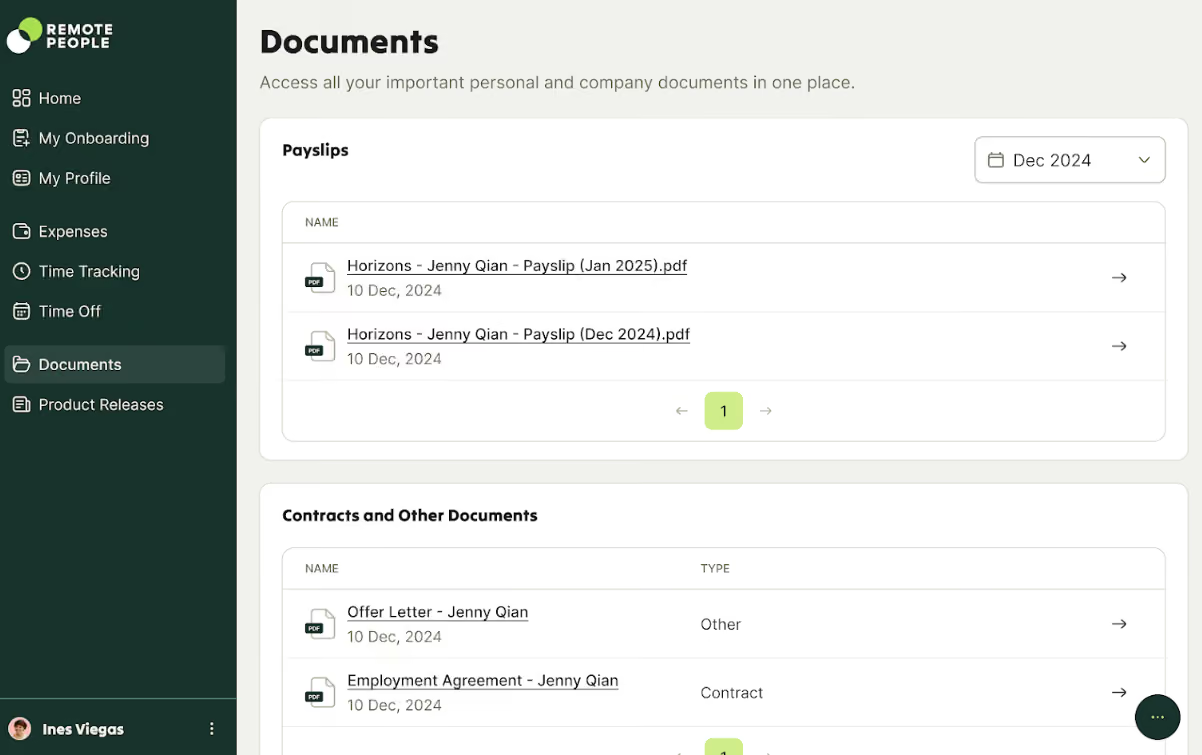
$199 per employee per month
Best For
Small to mid-sized companies that want affordable Singapore EOR coverage with the flexibility to add practical services as they grow, and whose finance teams want clear, itemized cost visibility.

We started using Remote for our international employment. The HQ is in Belgium, and we were expanding into France, Spain, and other countries yet to be decided. The tool offers a basic understanding of the social laws and costs associated with employment in these countries. Once candidates were onboarded, Remote supported the full process, including onboarding, holiday, and payroll management.
- Remote provides the basic information needed to investigate employment in a new country.
- The documents are freely available and in clear language.
- All foreign employees and contractors are managed in one tool.
- Remote is ideal for initial foreign expansion.
My previous company (at the time of writing, I have left the company) intended to grow within Europe. The goal was to have a small team of employees in multiple European countries. As each country has its own unique social laws, and we did not have an entity in every country, we needed a partner to support us with this growth. Remote provided this solution. They act as an intermediary partner, take employees onto their payroll, and support you with specialized HR topics unique to each country.
- Remote's pricing is high—it is good if you only employ a few people per country, but once the team expands, it is better to have your own entity.
- There is limited customization, as most processes must follow the structure provided by Remote.
- In some countries, Remote works with subsidiaries, which can slow down the onboarding process.
We chose Remote because of its clear pricing and the intuitiveness of the tool.
People need to keep the following in mind:
- In which countries do we want to employ people?
- How many people do we want to employ per country?
- Are we going to open a legal entity or not?
I’m not sure as I haven’t used Remote for long.
Remote is good for organizations looking to expand into multiple countries with small teams, without the hassle of legal administration.
Remote is a bad fit for companies with large employment in a single country. Once you have a team of 5 to 10 employees in one country, it no longer makes sense to have Remote as an intermediary.

Payoneer Workforce Management
Payoneer Workforce Management brings contract generation, compliant payroll, expenses, and HR reporting into a single dashboard at $199 per employee per month, giving you more workflow visibility than most platforms at this price point. Its multi-currency support and scalability further make it a solid foundation for companies building out headcount in Singapore and globally over time.
PROS
- All-in-one dashboard for contracts, payroll, expenses and HR reporting
- Strong multi-currency support for international teams
- Scales well across multiple countries and growing headcounts
- Starts at just $199 per employee/month—significantly lower than most EORs.
- Offers customizable Indian benefits and fully compliant payroll support.
- The platform includes contract generation, expenses, and HR reporting.
- Scalable, multi-currency setup ideal for global employment.
- Responsive client support with India-specific employment expertise.
- Unified dashboard improves visibility across HR and payroll workflows.
CONS
- Noticeable learning curve with an unpolished interface
- No mobile app
- Benefit costs and statutory deductions not always clearly itemized
- No mobile app; platform access is limited to desktop use.
- First-time users may find the UI non-intuitive.
- Social security and benefits costs aren’t clearly itemized.
- Occasionally, delayed responses due to back-and-forth between local partners.
- The portal may lack awareness of legacy or customized company policies.
If you want an affordable platform that gives you more visibility into your Singapore HR and payroll workflows, take a look at Payoneer Workforce Management. It starts at $199 per employee per month and includes contract generation, compliant payroll support, expenses, and HR reporting in a single dashboard. We also liked its multi-currency setup and broader scalability for companies building international teams.
But Payoneer is not as polished as some of the more mature platforms we’ve tested. The interface can take some getting used to, there is no mobile app, and some cost details, especially around benefits and statutory items, are not always broken out as clearly as we’d like.
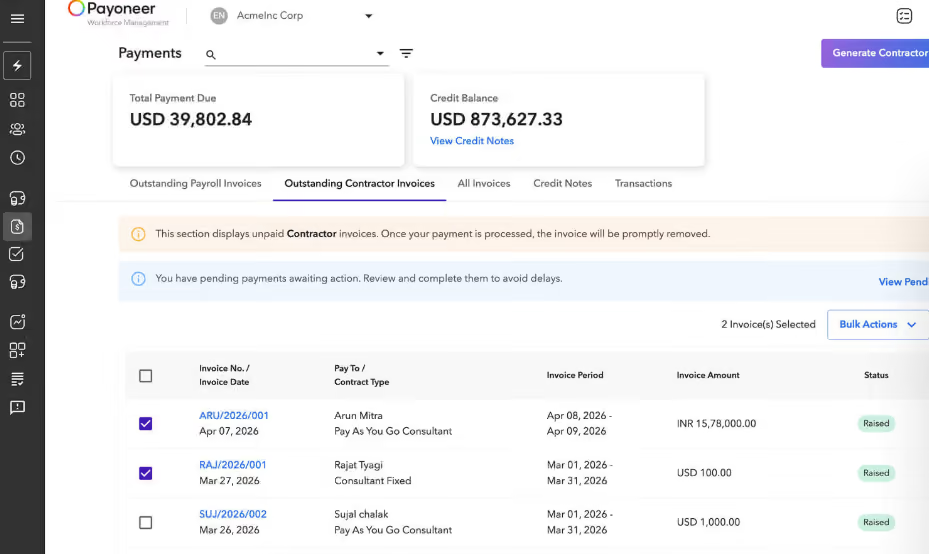
$199 per employee per month
Best For
Growing companies building international teams across Singapore and other markets who want consolidated HR and payroll visibility in one place and can tolerate a less refined user experience.

Native Teams
Native Teams offers the lowest entry price, at $99 per Singaporean hire per month, making it accessible to budget-conscious teams that still need compliant contracts, payroll, and benefits administration. Its built-in employee wallet and debit card, along with automated workflows for bonuses, leave, and tax allowances, add practical value that goes beyond what most entry-level EOR platforms offer.
PROS
- Lowest-cost EOR option at $99 per employee per month
- Covers compliant contracts, payroll, benefits and visa support
- Built-in employee wallet and debit card sets it apart from competitors
- Automated workflows for bonuses, leave tracking and tax allowances
- Good range of EOR services with compliant contracts, payroll, benefits, and visa support.
- Pricing is half the typical EOR rate, and a free trial is offered.
- Built-in wallet and debit card for employees, with 1% cashback on balances.
- Contracts are bilingual and can be partially customized with legal team review.
- Visa and mobility support embedded in-platform for 20+ countries.
- Automated workflows for bonuses, tax allowances, and leave tracking.
CONS
- No native HRIS integrations or open API
- Clunky interface with a steep onboarding learning curve
- Less polished than more mature EOR platforms
- User interface lacks polish, and navigation can feel unintuitive.
- Onboarding can be slow, especially when syncing legal documentation.
- No HRIS integrations or open API (planned for 2026).
- Does not offer compensation benchmarking or planning tools.
If you want the lowest-cost option to hire legally in Singapore and can live with a less-polished platform, consider Native Teams. Its pricing starts at just $99 per employee per month, which is far below what most EOR vendors charge, and in our review it covered the core essentials well: compliant contracts, payroll, benefits administration, and visa support in select countries. We also liked some of its more unusual features, such as the built-in wallet and debit card for employees, plus automated workflows for bonuses, leave tracking, and tax allowances.
Nevertheless, Native Teams does not yet offer native HRIS integrations or an open API, and the interface can feel clunky enough that some teams may need extra help during onboarding.
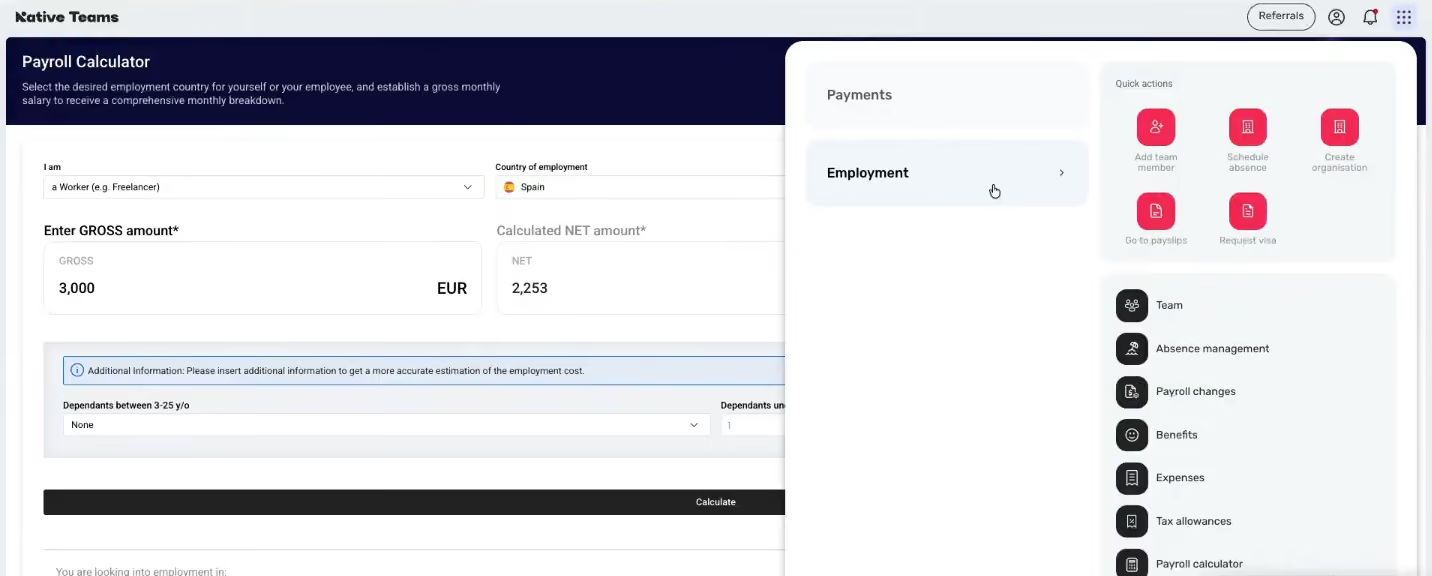
$99 per employee per month
Best For
Startups and small businesses that prioritize cost above all else and have straightforward international hiring needs with minimal integration requirements.

RemoFirst
RemoFirst is one of the most cost-effective EORs to recommend to startups and lean teams hiring in Singapore. It covers the basics well, moves fast enough for growing companies, and usually does so at a lower price than the bigger names in the category.
PROS
- Budget-friendly pricing compared to larger EOR providers in Singapore
- Startup-friendly workflows easy for lean HR teams
- Clear onboarding visibility for faster new hire activation
- Centralized payroll, employee records and compliance
- Well-suited for small teams with standard employment setups
- Published pricing is easy to find, with EOR starting at $199 per employee per month.
- Contractor management includes a free tier, plus premium contractor payments at $25 per contractor per month.
- Broad coverage supports hiring employees in 185+ countries and contractors in 150+ countries.
- Dedicated account managers and 24/7 support are included, plus chat and a knowledge base.
- Useful add-ons reduce the need for extra vendors, including RemoHealth, RemoVisa, background checks, and equipment provisioning.
- Contractor-to-employee conversion makes it easier to move from pilot hires to full-time employment.
- Integrations like BambooHR, GoCardless, and ADP Workforce Now help it fit into existing stacks.
CONS
- Limited flexibility for complex workflows and approval paths
- Reporting and dashboards weaker than more mature platforms
- Slow support response times for urgent or complex issues
- Slower product development than some competitors
- Fewer add-ons and advanced features than larger rivals
- EOR delivery often relies on exclusive in-country partners, so service consistency can vary by country.
- The integration catalog is improving but still smaller than what you get with full HR suites.
- Reporting and analytics are not as deep as enterprise-focused EOR platforms.
- The $199 rate is a starting point and total cost can still vary by statutory requirements in each country.
- Some features that matter for global teams can become add-ons, which can increase total spend.
If you want a no-frills EOR that keeps costs down and handles the core employment workflows reliably, RemoFirst is a sensible starting point for startups and small businesses expanding to Singapore. Users consistently described it as straightforward and well-suited to lean HR teams, and several highlighted the platform's visibility into hire status, pending items, and next steps as a genuine strength during first-time international hiring. It does not try to bundle in a wide stack of extra HR tools, which keeps the product lighter and easier to live with for smaller organizations with standard employment setups.
The limits show up quickly, though, once needs get more complex: reporting is not especially strong, workflows are not very flexible, support can be uneven under pressure, and the product has a reputation for evolving slowly. RemoFirst is a reasonable economical choice, but it is harder to justify for teams that expect richer analytics, deeper customization, or a platform that grows meaningfully over time.
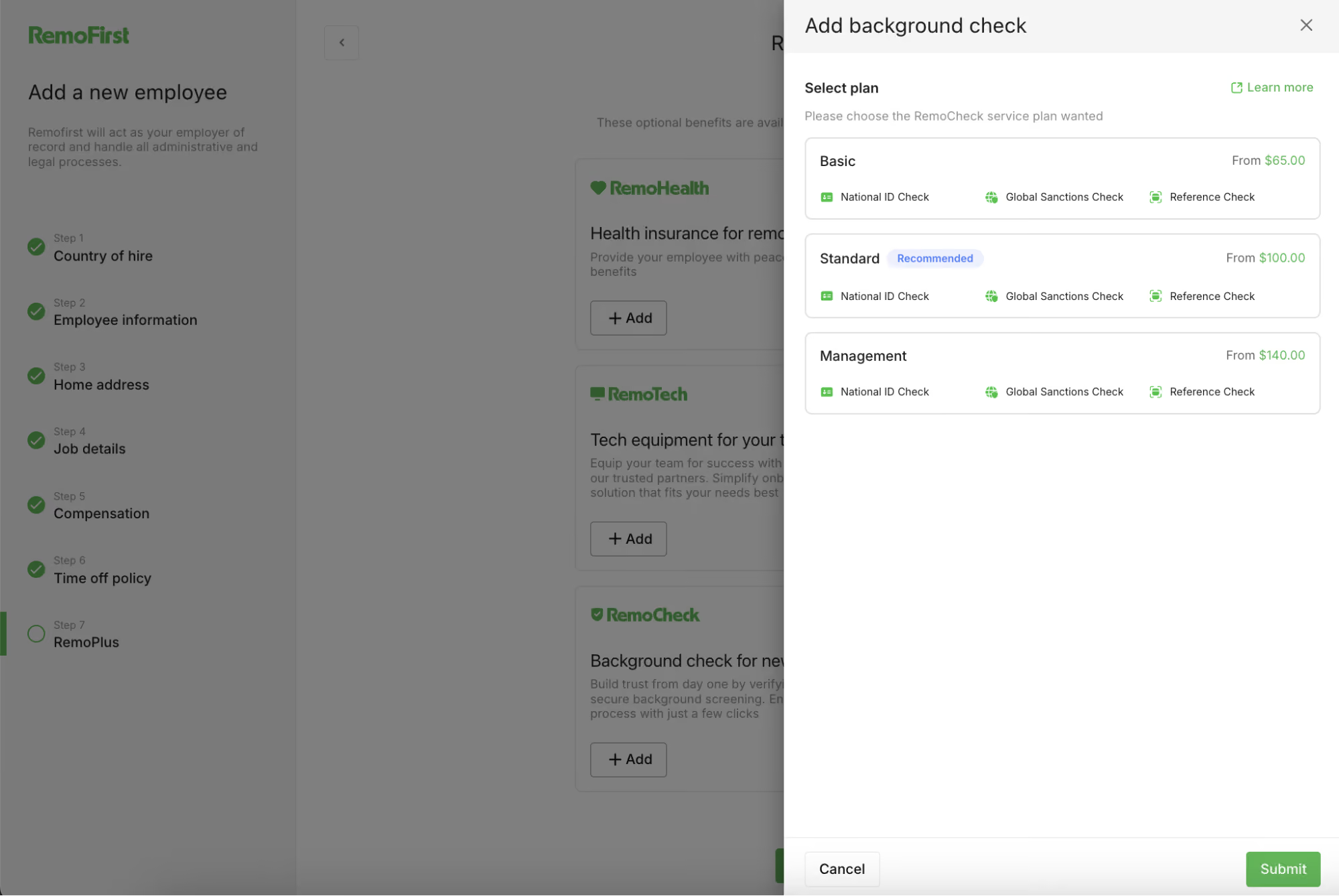
RemoFirst’s EOR service for hiring in Singapore starts at around $199 per employee per month.
Best For
Lean teams hiring in Singapore that want a lower-cost, easy-to-manage EOR.

Remote
Remote offers strong IP and invention-rights protection, country-specific benefits, and a platform that users we surveyed generally found easy to navigate, ensuring full compliance. For companies hiring employees in Singapore for product, engineering, or other IP-sensitive roles, that combination makes Remote especially compelling.
PROS
- Owned entity in Singapore provides stronger compliance foundation than third-party EORs
- Clear IP and invention-rights protection
- Country-specific benefits packages
- Well-organized payroll, onboarding, contracts and PTO workflows
- Simple, flat-fee pricing structure
- Employee mobile app included
- Fast and compliant payroll in 170+ countries.
- Live chat support with local payroll experts.
- Flexible, localized benefit packages.
- Flat-rate pricing structure, no deposits or hidden fees.
- Mobile app streamlines expense reimbursement with autofill from receipt photos.
CONS
- No phone support and complex issues can be slow to resolve
- No off-cycle pay runs
- Over-engineered for companies hiring only one or two people
- Billing and reconciliation friction reported post-payroll launch
- Doesn’t have a free trial.
- Redundant for organizations solely recruiting within the U.S.
- Help center documentation isn’t easiest to understand.
If you want an EOR in Singapore with strong compliance infrastructure and solid IP protections, Remote is one of the most reliable options we reviewed. Unlike many competitors that rely heavily on in-country partners, Remote acts as the direct legal employer, which gives it tighter control over contracts, payroll administration, and statutory obligations. We also liked its IP and invention-rights protections, which make it a particularly strong choice for companies hiring Singapore-based engineers, designers, or product staff whose work is closely tied to intellectual property. Users consistently described the platform as intuitive and praised the employee onboarding experience.
However, invoice reconciliation can be confusing, payroll funding timelines are not especially forgiving, and support tends to get uneven once questions become more complex. It is also not the most obvious pick if you are only hiring one person for a short-term engagement in the Lion City or if you need deeply customized workflows.
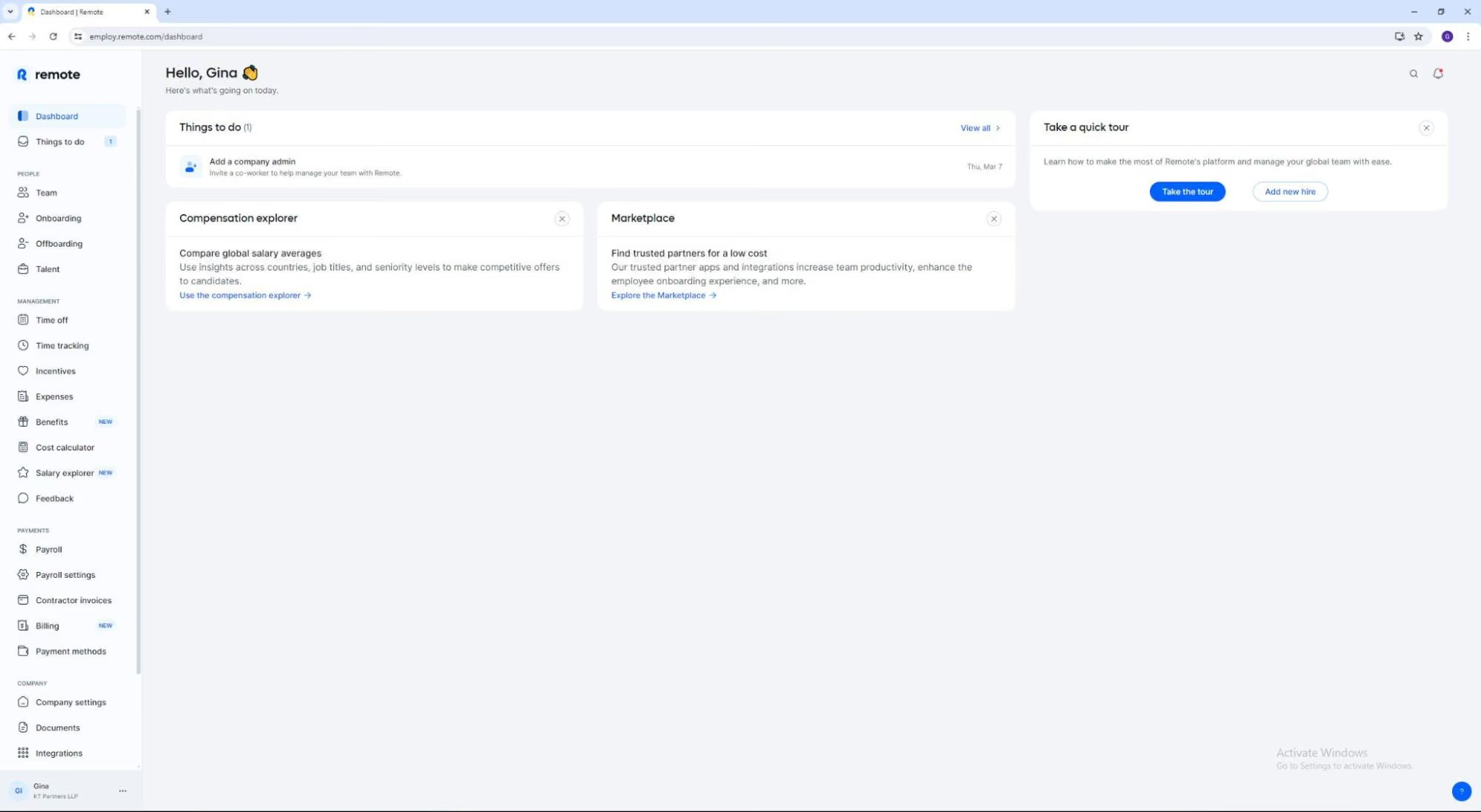
Remote’s EOR service starts at $599 per employee per month. Eligible startups and nonprofits may qualify for a discount.
Best For
Tech companies and product teams seeking a more controlled EOR structure and willing to trade some flexibility for Singapore employment compliance, contract integrity, and IP protection.

Remote is used by our firm to hire in locations like South Africa, Colombia and Brazil. We are able to use Remote as the Employer of Record and offer benefits just like they worked directly for our firm. You queue up the hire, Remote makes the offer in their system and makes all the employee information available via web portal. All expenses, benefits info, etc. can be accessed any time.
- Easy Onboarding - Remote does make onboarding hires in remote locations quite easy.
- Online Portal - great to have all the hires from all international locations in one place.
- Expenses - easy for employees and companies to track/pay expenses.
With a shortage of talent in the U.S., our firm needed to hire in locations where we did not have an entity. Global EORs offer a way to do that without setting up a legal entity first. Remote was an up-and-coming player in the space that made getting setup much faster, less complex than traditional partners like Velocity Global. We have used the system for approximately 2 years now.
- Billing/Invoicing - Remote has had multiple billing errors in our invoices and their system is incredibly confusing for reconciling what is outstanding vs. the errors they have made.
- Management - Remote has changed management recently and they have changed terms & conditions from our original invoices and have taken away promotions by saying they were "introductory promotions" rather than the "negotiated terms" like we originally discussed.
Remote was a leader in simplicity when we first began using their services a couple of years ago. Now, I believe certain competitors have caught up and surpassed them.
- Cash flow - these services require upfront payment for payroll so be prepared to pay month end payroll by the 17th of that month.
- Terminating employees - Employment laws vary country by country. Remote is offering a service to make it easier on your company to hire elsewhere; however, terminating employees can be quite difficult.
Remote was very startup friendly 2 years ago. Their management has changed and their culture has changed drastically. It is no longer a customer-focused culture going above and beyond to win customers.
Remote is good for an established company in search of a way to explore hiring people in other regions of the world.
Remote is not good for startups.
Why You Should Trust Us
Anh Nguyen is a writer and researcher covering recruitment software and staffing/agency solutions. She has more than eight years of experience in employment services and has worked directly with PEO and EOR providers in Singapore and globally since 2021. That exposure has given her a close view of the practical challenges companies face when hiring, onboarding, and supporting employees in Singapore.
Like all SSR buyer’s guides, this one is built to help readers make an informed decision. We focus on how the EOR providers actually perform for employers and employees, especially once the realities of compliance, onboarding, and payroll set in. Specifically, for this guide:
- We researched dozens of EOR providers and reviewed their websites, product materials, and pricing information.
- We sat through live demos, tested platforms firsthand when possible, and asked vendors detailed questions about hiring in Singapore.
- We surveyed real users to gain insights into their experiences with the EOR, particularly on support, payroll reliability, and daily ease of use. You can find some of the most significant feedback highlighted under each of our experts' product reviews. We hope this information gives readers a more holistic view of what each option has to offer.
- We drew on previous reporting and long-term vendor coverage to compare newer providers against established picks.
We evaluated each service against the criteria that matter most for employers hiring in Singapore, including digital nomad compliance, legal, payroll, pricing, support, and employee experience.
Who This Guide Is (and Is Not) for
This guide is for companies that want to hire a skilled workforce in Singapore legally and relatively quickly, especially if they do not have a local entity, are testing the market, or need to support small but growing remote teams without building local infrastructure first, facilitating their global expansion and market entry. It is also for employers comparing global EOR providers and trying to figure out which ones are actually strong in Singapore, not just broadly available there.
If you already have a legal entity in Singapore and only need HR systems, payroll & benefits software, you probably do not need an EOR like the ones we recommend here. A PEO will be a much better fit. Alternatively, if your main goal is to outsource talent sourcing, rather than an EOR, a staffing agency is the type of partner you’re better off with.
If you are hiring only short-term freelancers or contractors, an employer of record may be more than you need, making outsourcing a simpler option. A freelance management tool makes much more sense in this case.
Regarding Singapore EOR pricing, some providers are better suited to startups that want fast onboarding and lower rates. Others are better for larger companies that care more about controls, support, and long-term scalability. This guide is meant for both types of buyers, but it focuses most on the fundamentals: compliant hiring, reliable payroll, solid support, and a smooth experience for both employer and employee.
Key Singapore Employer of Record Services
Most EOR services in Singapore offer employment and contracting, payroll, benefits, work passes, and compliance and risk management, though the top ones handle these with greater clarity, better local guidance, and less back-and-forth.
- Employment and contracting: One challenge in Singapore is that some employment terms are so common they feel mandatory even when they are not. For example, probation is a matter of contract rather than a fixed statutory framework, and the Annual Wage Supplement (AWS), or “13th month pay,” is not compulsory unless the contract or collective agreement says so. At the same time, employers still need to set out clear key employment terms and ensure that contracts align with the Employment Act where applicable. A good Singapore employer of record helps by drafting locally compliant contracts and onboarding documents that reflect local norms without importing unnecessary terms from other markets.
- Payroll, salary timing, and statutory contributions: This is where many overseas employers make mistakes. A Singapore employer of record should run payroll on time, issue compliant payslips, and correctly handle employer obligations, such as the Central Provident Fund (where applicable) and the Skills Development Levy for employees working in Singapore. The real value is not just accuracy. It is giving employers a clear view of what the salary is, what is a statutory cost, and what is an employer fee.
- Statutory benefits and leave management: One of the trickier parts of hiring in Singapore is distinguishing legal minimums from market norms. Leave entitlements are statutory, but other items, such as AWS, often come down to contractual terms and market practice. Top Singapore EOR helps employers avoid two common mistakes: underestimating what must be provided, and overcommitting to perks they assumed were mandatory.
- Work passes and visa support: Foreign hiring is where Singapore becomes much less plug-and-play. Employment Pass and S Pass rules are different, and S Pass hiring also brings quota and levy issues. A capable employer of record should tell you early whether the hire is realistic, what approvals are needed, and what extra cost or delay to expect.
- Offboarding and risk management: Offboarding can also be more procedural than international employers expect. When a foreign employee or Singapore Permanent Resident leaves Singapore employment, the employer may need to seek tax clearance from the Inland Revenue Authority of Singapore and withhold monies due for that purpose. A good employer of record helps sequence final pay, tax clearance, and work pass steps correctly, which lowers the risk of missed deadlines and messy exits.
Singapore Employer of Record Service Pricing Breakdown
The Singapore EOR fee generally ranges from $99 to $899 per employee per month, with most falling between $199 and $599. Do keep in mind, though, that this is only one layer of cost. Employers should still expect salary, statutory employer costs where applicable, benefits, and sometimes extra charges for onboarding, work pass support, foreign exchange, off-cycle payroll, or one-time payments.
- At the low end, pricing can start around $99 per employee per month. That is usually the floor for simpler, more cost-conscious options, with Native Teams as an example of how inexpensive this category can get.
- The most common budget range is around $199 per employee per month. This is often where smaller companies begin their search, and RemoFirst, RemotePeople, and Payoneer Workforce Management are some of the providers that offer this price point.
- The middle of the market sits closer to $400 per employee per month, or roughly 540 Singapore dollars. Multiplier is a useful example here: more expensive than the budget tier, but still well below the highest-priced providers.
- At the premium end, pricing usually starts around $599 per employee per month and can climb higher for enterprise plans. Remote and Deel illustrate this bracket well, with Deel’s higher-tier plan reaching $899 per employee per month.
Other Singapore EORs We’re Watching
We plan to test Aniday, Oyster, Galaxy APAC, Gloroots, Leap29, and INS Global for this guide, expanding our sourcing to include more regional players. As we continue updating our Singapore EOR coverage, we’re looking more closely at lower-profile and regional providers that may appeal to companies with more specific hiring needs, whether that means budget sensitivity, hands-on support, or a stronger focus on Asia-based hiring.
EOR Resources and Tips for Expansion Beyond Singapore
- The Ultimate Guide to Hiring International Employees
- 6 Major Employer of Record Risks You Can't Afford to Overlook
- Best Employer of Record for Hiring in Canada
- Best Employer of Record for Hiring in India
- Best Employer of Record for Hiring in Mexico
- Best Employer of Record for Hiring in the Philippines
- Best Employers of Record for Hiring in the UAE
- Best Employers of Record for Hiring in the UK
Singapore Employer of Record FAQs
Can the EOR help us pay employees in SGD while we fund payroll in another currency?
Usually yes. Many Singapore-focused EORs let the employer fund payroll in one currency while the employee is paid in local currency, but you should ask exactly how the foreign exchange rate is set, when it is locked, and whether any foreign exchange spread or conversion fee is added.
Will the EOR help us understand the total employment cost in Singapore before we hire?
A good EOR in Singapore should give you a full pre-hire cost estimate, not just a monthly platform fee. In Singapore, that estimate should usually separate base salary, employer statutory costs, such as Central Provident Fund (CDF) for eligible Singapore Citizens and Permanent Residents, and Skills Development Levy (SDL) for all employees working in Singapore, benefits, visa or pass costs, if relevant, and the EOR fee itself.
Can the EOR support bonuses, allowances, commissions, or equity for employees in Singapore?
Usually, yes for bonuses, allowances, and commissions, but you should confirm exactly how they are processed through payroll. In Singapore, bonuses, allowances, and commissions can trigger Central Provident Fund contributions, and employee stock options or share gains can also create Singapore tax reporting obligations, so equity support should be checked carefully before you sign.
Can the EOR help with offboarding and final payments in Singapore?
Yes, a good Singapore EOR partner should handle the offboarding workflow, including notice-period administration, final payroll, and required paperwork. In Singapore, final salary is generally due on the last day of employment if the employee resigns with notice or if the employer terminates the contract; if the employee resigns without serving notice, final salary is generally due within 7 days of the last day of employment.
How easy is it to switch from an EOR to our own Singapore entity later on?
Usually it is doable, but it is not a one-click change. In practice, it is a transfer project: you need the new Singapore entity ready, new local employment contracts, payroll and benefits migration, and careful date alignment so the employee is not left in limbo between legal employers.
How do we know this EOR really understands Singapore employment law?
Ask them to explain, in plain language, how they handle the basics that actually matter in Singapore: salary timing, final salary timing, leave, CPF contributions, SDL, and work-pass limits. This is testable. For example, salary generally must be paid at least once a month and within 7 days after the salary period; CPF generally applies to eligible Singapore Citizens and Permanent Residents; SDL applies to all employees working in Singapore; and foreign workers must hold a valid work pass before starting work.
What hidden costs should we watch out for when using an EOR in Singapore?
The most common ones to ask about are foreign exchange markups, setup or onboarding fees, security deposits or advance payroll funding, benefits markups, off-cycle payroll charges, and termination or offboarding fees. In Singapore specifically, also ask whether the quote clearly separates statutory employer costs from the EOR fee, so you are not surprised later by CPF, SDL, visa, or reconciliation-related charges.
References
- 2026 Employer of Record Market Trends, Key Players, and Stats, Anh Nguyen
- Managing a Global Remote Team: The Ins and Outs of Digital Nomad Compliance, Lorna Ferrie
- PEO vs EOR: The Key Differences You Should Know About, Gerald Ainomugisha
- Employer of Record vs Staffing Agency: Differences & Use Cases, J.R. Johnivan
- How Much Does an Employer of Record Cost in 2026?, Athar Ali Khan, Rodrigo Vázquez-Mellado, and Anh Nguyen
- Variable wage components: AWS, bonus, variable pay, Singapore Ministry of Manpower
- Employment Act 1968, Singapore Statutes Online
- CPFB, Singapore Central Provident Fund Board
- Skills Development Levy, Singapore Central Provident Fund Board
- Employment Pass, Singapore Ministry of Manpower
- S Pass, Singapore Ministry of Manpower
- Becoming a Permanent Resident, Singapore Immigration & Checkpoints Authority (ICA)
About the Author


About Us

- Our goal at SSR is to help HR and recruiting teams to find and buy the right software for their needs.
- Our site is free to use as some vendors will pay us for web traffic.
- SSR lists all companies we feel are top vendors - not just those who pay us - in our comprehensive directories full of the advice needed to make the right purchase decision for your HR team.


