

12 Best EOR in the Philippines: Service & Fee Comparison - 2026
We made this guide to help give you a clear, realistic understanding of Philippines EOR providers' cost, services, and expectations for hiring in this country.











Hiring in the Philippines can be one of the soundest options to build a global team, especially if you’re seeking strong English skills and cost-effectiveness. However, the country’s employment laws and regulations are complex, and even a minor payroll error can lead to penalties or disputes. We’ve seen companies try to navigate this on their own, only to discover how much time it takes to get it right.
That’s why many teams turn to an Employer of Record (EOR). Philippines EOR legally employs your talent on your behalf, managing payroll, benefits, and regulatory obligations so you can focus on building your team rather than learning a new labor system.
This guide covers everything you need to know about EOR services in the Philippines: how they work, pricing, and how to choose the right provider for your goals. Whether you're hiring your first Manila employee or expanding across the country and regions, we'll help you make an informed decision.
To build this guide, we evaluated EOR providers that operate in the Philippines using self-assessments, vendor demos, and customer surveys. Because the long-term quality of an employer of record depends heavily on payroll accuracy, responsive support, and real-world compliance performance, we were intentional about separating what we could test ourselves from what only ongoing users can reliably assess.
What we tested directly
We conducted demos and product walkthroughs with leading EOR providers and reviewed their services and platform functions. During these sessions, we looked at how clearly onboarding steps were presented, how Philippine employment contracts were generated, and how dashboards handled payroll, benefits, and leave tracking.
We also examined how providers handle local compliance tasks, including contributions to the Social Security System, PhilHealth medical reimbursement, and the Pag-IBIG Fund. Sample contracts, onboarding packets, and health insurance guides helped us understand how each provider communicates its obligations under Philippine labor law and how transparent it is about pricing and service scope.
What we needed real users to tell us
Certain aspects of EOR risks and performance cannot be evaluated in a short testing window. Payroll timeliness, accuracy of government filings, and support quality during urgent situations only become clear through months of use.
To fill these gaps, we surveyed HR teams and employees currently supported by Philippine EOR providers. Their experiences gave us insight into how issues were handled. They also shared real accounts of how providers managed terminations and separation pay, which is difficult to judge from demos alone.
How we compared providers
After combining test results with user feedback, we evaluated each EOR across five criteria that consistently matter to employers hiring in the Philippines:
- Compliance expertise: Accuracy of contracts, filings, and legal processes
- Payroll reliability: Error rates, clarity of payslips, and contribution remittances
- Support responsiveness: How quickly and effectively issues are resolved
- Platform usability: Onboarding flow, employee self-service, and reporting
- Pricing transparency: Clarity around fees, add-ons, and total cost of ownership
For more details on our selection methodology, read the full rundown of how we choose HR tech to feature on the SSR buyer guides.


.png)
Deel

Deel earned a top spot in our Philippines EOR guide because it delivered the smoothest, most predictable hiring experience of any provider we tested. During demos and hands-on walkthroughs, Deel handled Philippine compliance with a level of precision that made it feel almost automatic, and users consistently told us it was the least stressful path to rapid onboarding.
PROS
- Onboards employees in as little as two days
- Clean, intuitive platform for contracts, payroll, benefits, and leave
- Accurate, reliable handling of Philippine statutory requirements
- Acquisition of Omnipresent strengthens EOR's employee-facing experience
- Broad selection of local and global healthcare plans
- Excellent 24/7 customer service with fast onboarding (2-3 days) and local payroll experts in each jurisdiction.
- Seamless integration with platforms like QuickBooks, BambooHR, and Greenhouse, plus custom integration options.
- User-friendly, self-service features enable quick setup; identity verification often takes under 24 hours.
- Automated invoices simplify payments, provided they're in English.
CONS
- Higher pricing than most competitors
- Contract templates can feel rigid for edge-case roles
- Customer support slows during payroll cutoff weeks
- Key features like onboarding automation are add-ons, which may increase costs.
- Limited flexibility in modifying contracts or service agreements; changes often require an addendum.
- Invoices cannot be generated in languages other than English.
For employers who want an EOR that confidently covers the fundamentals, Deel came closest to that standard. During demos, the platform’s workflows were clear and well-structured, guiding us through contract creation, mandatory benefits setup, and payroll readiness without unnecessary steps or ambiguity. This matters more in the Philippines than in many other hiring markets, because correct handling of SSS, PhilHealth, Pag-IBIG, and thirteenth-month pay is both mandatory and highly unforgiving of mistakes. Deel’s interpretation of these requirements was one of the most precise we saw.
Speed is another strength. We repeatedly heard stories of teams needing to hire for urgent projects or clients expecting immediate staffing, and Deel’s two-day turnaround held up in practice. We saw how this happens: much of the workflow is prebuilt, and the platform automates data validation and contract generation, cutting out the back-and-forth typical of EOR onboarding.
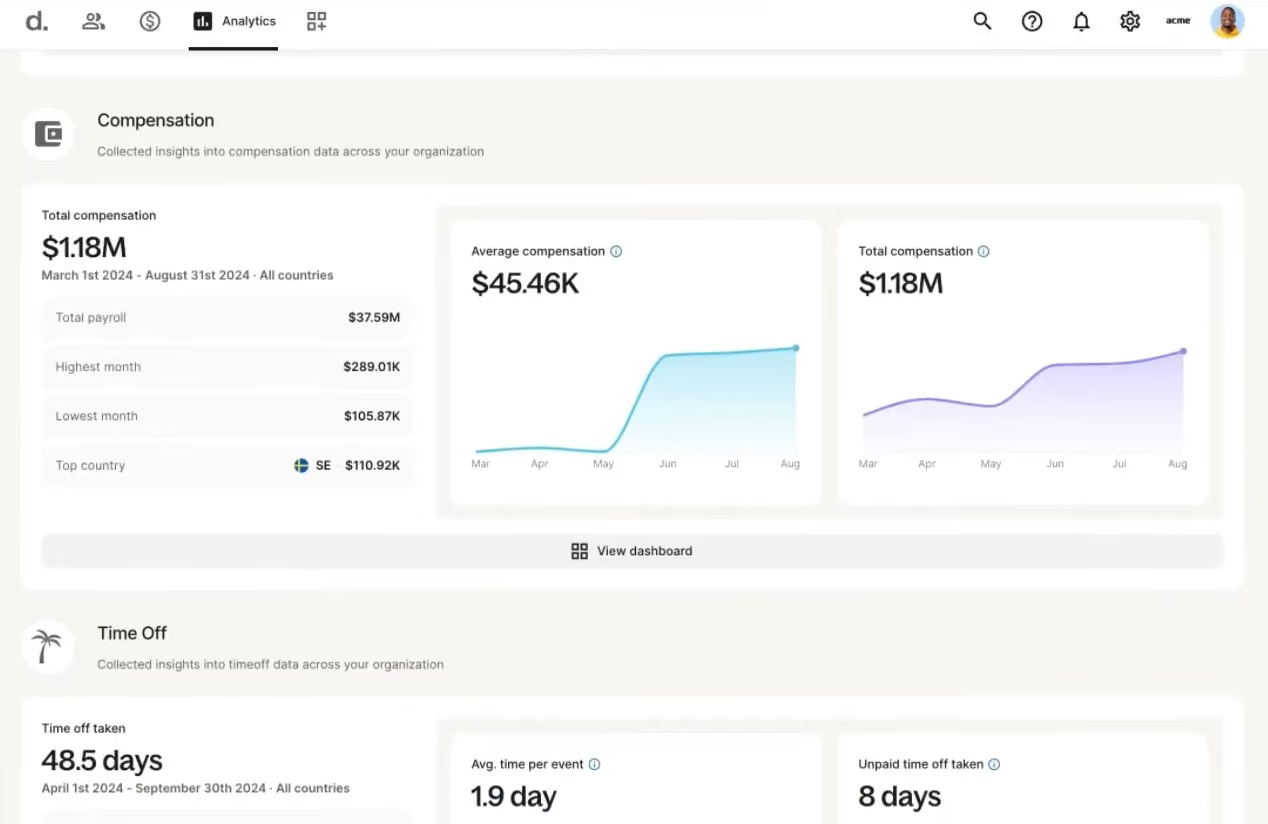
Deel’s platform is also one of the easiest to work with after onboarding. Employers get clear visibility into payroll cycles and remittances, while employees get a streamlined dashboard for benefits, payslips, expenses, and leave. The breadth of available HMO and international health plans also gives companies room to adjust benefits depending on budget or seniority.
The tradeoffs are real, though. Deel’s pricing sits noticeably above lower-cost competitors like RemoFirst or Multiplier, and its polished system can feel rigid when companies need heavy customization. Several customers also mentioned that while support is generally solid, response times dip during payroll week, which is when most HR teams feel pressure.
Deel Hire's Employer of Record offers two pricing tiers: Standard, starting at $599/employee/month, and Enterprise, starting at $899/employee/month.

Best For
Companies that need fast, low-friction hiring in the Philippines.


Deel is used daily by the HR team, as it integrates all the necessary tools into a single system. The team uses the recruiting platform along with the Deel Talent Network of recruiters. The global-first platform provides visibility into the entire worker lifecycle, allowing us to monitor employee trends across departments and levels of the company.
Recently, Deel released new modules, including a workforce planning module, which has been helpful for growing teams within the organization. This module has supported growth tracking through custom approval workflows.
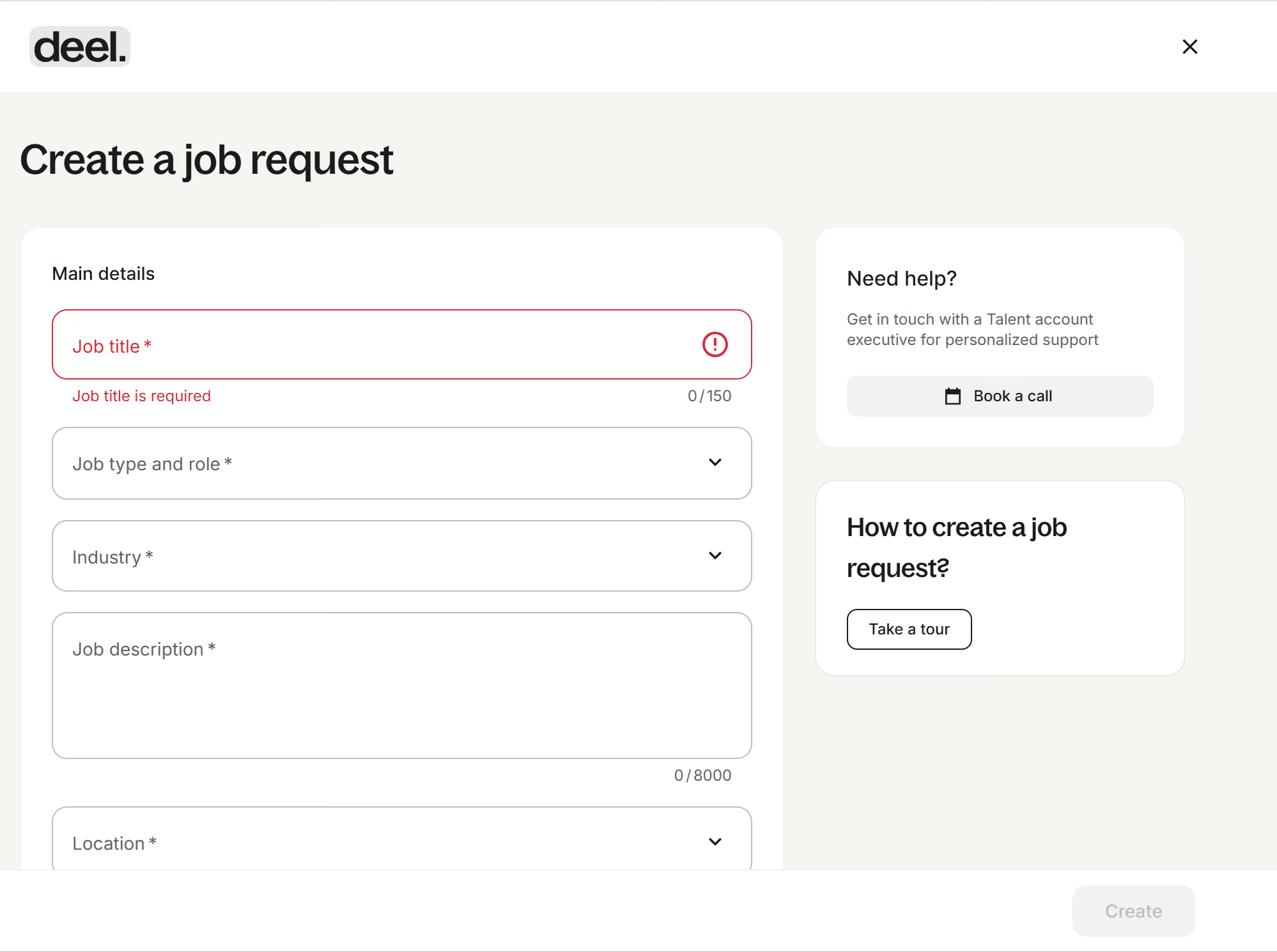
- I like their AI-led ATS, which sets them apart from many competing systems.
- The Deel Talent Network is a valuable resource for finding recruiters and recruiting firms without signing additional contracts or sourcing them independently.
- Deel continues to evolve to meet user needs, and the system regularly alerts users to compliance changes. For example, there was an alert that the state of Hawaii will increase its minimum wage in 2028, allowing users to remain compliant with state laws.
The organization I worked for chose Deel for its global compliance capabilities. The company has employees across multiple countries, so it was important to find a platform that could help the team manage compliance from one country to another.
The key features that stand out beyond the global platform include their AI-led ATS and their talent network of pre-vetted recruiters. These tools helped streamline recruiting and compliance within one system. The platform has been in use for about one year.
- Deel is not an affordable option for many companies.
- For domestic-only companies, even though Deel offers strong services, it may not provide the best value.
- With frequent updates and new features, HR teams must dedicate time to learning and keeping up with system changes.
Its global compliance capabilities are a major differentiator from competitors, along with its AI-led ATS.
Before purchasing Deel, consider where your employees are located. If your workforce spans multiple countries, this may be a strong option. If your organization is primarily domestic, evaluate whether the cost aligns with the value provided. Deel is technology-focused, including AI-driven features, so teams that prefer simpler systems may find it overwhelming.
Deel frequently releases new modules, including the recent workforce planning module.
A global organization with employees in two or more countries can benefit from Deel.
Domestic-only companies do not need Deel.

Multiplier
Multiplier delivers compliant hiring at one of the lowest price points we found while offering unusually strong coverage across Asia. For companies expanding regionally, Multiplier’s ability to manage hires in multiple Asian countries through a single platform is a meaningful advantage.
PROS
- Among the most affordable EOR options available
- Excellent Asia-wide coverage for scaling across multiple countries
- Clean, easy-to-use interface for employees and administrators
- Reliable handling of payroll, taxes, and statutory documentation
- Strong hands-on help from account managers for country-specific issues
- Multi-currency payments in local currencies
- Multi-lingual contracts made instantly
- Compliance, payroll, onboarding, and timesheets, all in one platform
CONS
- Many workflows still require manual email support instead of in-platform tools
- Verification and onboarding steps can be slow or buggy
- Limited customization and fewer advanced features compared with top-tier EORs
- Occasional delays in employee payments reported by users
- Multi-entity or multi-approver workflows can feel limited
- Limited integrations. As of Summer 2024, Multiplier only integrates with BambooHR, Personio, Workday, and HiBob for HCM-type tools, although they are working on adding more.
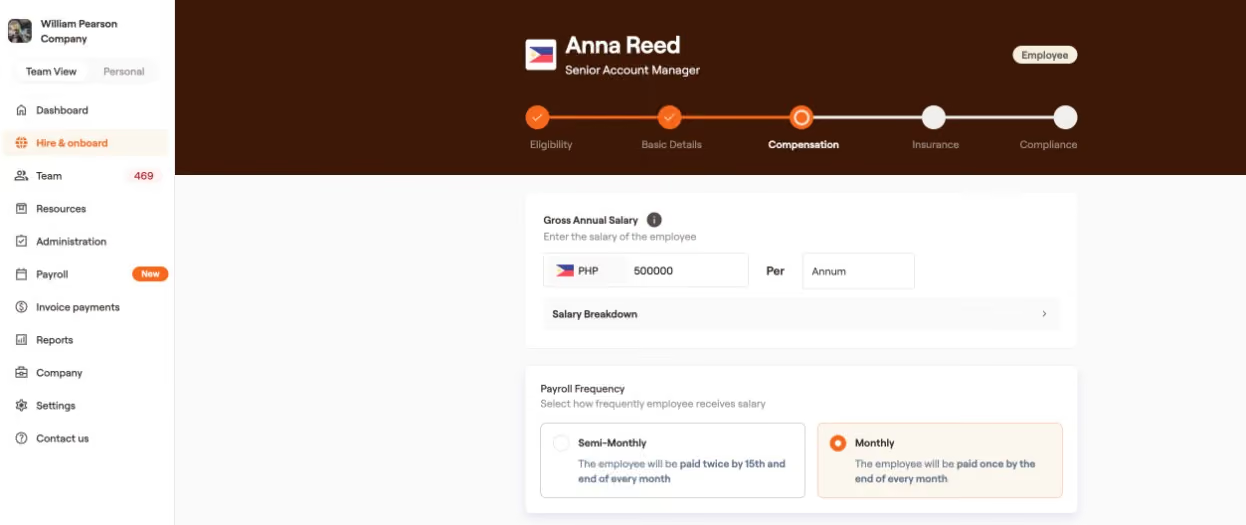
Multiplier stands out primarily for its pricing. For companies hiring in the Philippines that want a compliant setup without paying enterprise rates, Multiplier offers one of the lowest entry points among the EORs we tested. Teams operating on tighter budgets consistently highlighted affordability as the deciding factor. The platform also centralizes essential tasks well. Payslips, contracts, and required documents are stored in one place, making it easier for both HR managers and employees to stay organized.
The other major advantage is regional scale. Multiplier is one of the few EORs built from the ground up with Asia expansion in mind. Employers seeking global hires across markets such as Singapore, Malaysia, Indonesia, India, Vietnam, and the Philippines appreciated being able to manage everything within a single, consistent system. For HR teams trying to avoid the overhead of juggling multiple country-specific vendors, this regional coverage is a meaningful time-saver.
The platform itself is simple and approachable. Payslips, documents, and contract details are easy to find, and employees generally told us the interface “just makes sense.” For small teams or those hiring their first person in the Philippines, that level of clarity removes a lot of friction.
Where Multiplier begins to show its age is in the backend processes that haven’t yet been automated. Several users noted that support still relies heavily on email, and even simple requests, such as uploading additional files or initiating certain workflow steps, often require contacting an account manager. Some teams also mentioned that the system occasionally encountered bugs during verification or invoice generation, though support teams resolved issues.
Multiplier’s customer service quality varies by agent. Employers praised account managers who proactively took on complex tasks, including country-specific registration steps that would normally require travel. But they also mentioned situations in which support answered questions exactly as asked, without offering broader context or preventive advice, which led to longer back-and-forth exchanges.
Regional hiring comes with its own complexities, and this is where Multiplier’s strengths and weaknesses intersect. The company’s Asia-wide footprint gives it an edge for expansion, but the platform isn’t yet equipped with the deeper analytics, workflow customization, or integrations that larger employers might expect.
Starts at $400 per employee per month.
Best For
Budget-sensitive companies hiring in the Philippines and across Asia.

I interact with the platform daily to manage and oversee various aspects of employee engagement across our international operations. Key workflows include onboarding new international crew members, handling global payroll in compliance with local regulations, and managing employee benefits packages. Additionally, we use Multiplier to maintain compliance documentation for our global staff, ensuring that all personnel operate within the legal frameworks of their respective countries. This tool is vital for supporting our global workforce efficiently and effectively.
- Global Compliance Ease: Multiplier simplifies compliance with international labor laws, making it much easier to manage our diverse global workforce.
- Efficient Payroll Processing: It streamlines payroll operations across different countries, ensuring timely and accurate payments.
- Robust Employee Management: Multiplier provides comprehensive tools for onboarding, benefits management, and maintaining employee records, enhancing HR operations.
LMC adopted Multiplier to streamline the complexities of managing a diverse, international workforce. With crews and support staff based globally, we needed a solution to handle payroll, compliance, and employee management across different countries. Multiplier was introduced over two years ago to address these challenges effectively. It has been instrumental in ensuring compliance with local labor laws, simplifying payroll processes, and managing employee benefits efficiently. The ability to onboard international employees without setting up local entities has been particularly beneficial, enhancing our operational flexibility and reducing administrative overhead.
- Complex Interface: The user interface can be complex and less intuitive, requiring a steeper learning curve for new users.
- Limited Customization Options: Some features lack the flexibility to be fully customized to meet the specific needs of our global operations.
- Response Times: Customer support response times can be slow, especially during critical payroll and compliance deadlines.
Multiplier stands out primarily due to its comprehensive handling of international labor compliance and the ability to manage payroll and HR functions across multiple countries without the need to establish local entities. Unlike other HR platforms that focus primarily on either payroll or compliance, Multiplier integrates these services seamlessly, which is particularly beneficial for companies like Liberty Maritime Corporation that operate globally. Its one-stop solution for international employment management makes it preferable for businesses looking to expand or maintain a global workforce.
- Global Compliance: Ensure the tool efficiently manages compliance with international labor laws, crucial for companies operating across borders.
- Integration Capabilities: Look for a platform that seamlessly integrates with your existing HR and payroll systems to streamline processes.
- Scalability: The tool should grow with your business, handling increases in employee numbers and geographic expansion without performance issues.
The platform has significantly improved its user interface to simplify navigation and reduce complexity. Additionally, it has expanded its customization options to better cater to the diverse needs of various industries and enhanced its integration capabilities with other HR tools for a more cohesive user experience.
It is ideal for businesses expanding internationally that need to onboard, pay, and manage employees across multiple jurisdictions efficiently. This makes it valuable for companies in industries such as technology, shipping, and consulting, where flexibility and compliance are critical.
Multiplier may not be a good fit for smaller organizations or startups that operate solely within a single country and have minimal international employment needs. These organizations might find the platform's comprehensive features for global compliance and payroll management more complex and costly than necessary for their limited scope of operations.
G-P
G-P remains one of the most dependable choices for companies that expect complexity or growth. Its support teams handle end-to-end HR and compliance requirements with consistency, and its employment guidance is among the strongest we evaluated. Smaller teams may not need this level of infrastructure, but for fast-scaling companies, the stability is worth it.
PROS
- Strong support during complex HR events and compliance-sensitive situations
- Flexible payment options and broad global expansion coverage
- Dedicated customer support provides dependable compliance guidance and contract clarity
- Their G-P Meridian platform is heavily focused on the EOR space, but it’s offered in several plans that can cater to varying needs, even those that might only need to hire people as contractors.
- Using their tool also implies access to a team of HR and legal professionals with significant experience in each country they operate in.
- Their UX has evolved continuously and gotten more intuitive and modern each time we delve into the product.
CONS
- Platform can feel slow, with long loading times on some pages
- Documentation and access during initial onboarding could be clearer
- More infrastructure than small teams may need
- Customizing a contract is only possible with the G-P Meridian Prime plan.
- Features like background checks, equity management, and IT equipment— to name a few— are only available as add-ons.
- There is no way to try out the software product unless you sign up for a demo and request a proposal.
G-P is one of the most enterprise-ready EOR providers we tested, and it shows in how it handles the situations that tend to make employers nervous. During interviews, multiple HR teams told us that G-P was steady. When a performance issue required careful documentation, or when a role needed to convert from probationary to regular status, G-P provided step-by-step clarity rather than generic guidance. This consistency makes a meaningful difference in the Philippines, where missteps in due process or documentation can lead to costly disputes.
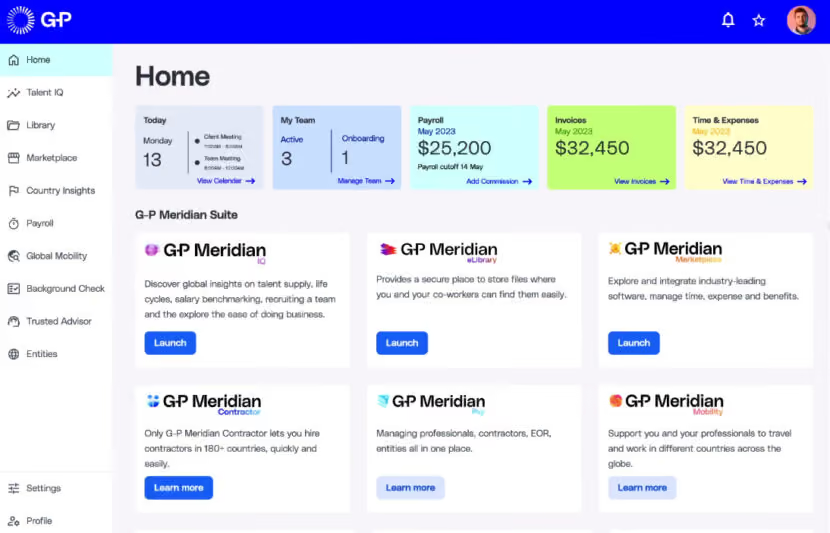
In our demo, G-P's platform felt structured and methodical, almost conservative in its design choices. It doesn’t race you through onboarding, but the steps are clear, and once an employer account is fully set up, the process moves predictably. Payroll alignment with SSS, PhilHealth, Pag-IBIG, and thirteenth-month pay was handled cleanly in every scenario we simulated or heard described by long-term users.
The support experience is one of G-P’s brightest spots. Instead of chatbot-first triage, G-P’s live chat routes users directly to a real support specialist. Employers repeatedly mentioned how critical this was during urgent questions or sensitive issues. When something went wrong (i.e., an unexpected employee request, a policy adjustment, or a last-minute compensation change), G-P’s staff stepped in early and with context.
The downside to all this infrastructure is that the platform itself can feel heavy. Several users noted that pages loaded slowly, especially on older hardware or during peak usage. G-P also brings more structure and process than some early-stage companies want. If you’re hiring one engineer or one marketer in the Philippines, the enterprise-grade approach may feel oversized.
Custom Pricing.
Best For
Fast-growing companies seeking an enterprise-grade EOR partnership.

The primary use was payroll. We added the employee to the system under G-P legal entity in Canada, dictated how often they'd be paid and what their salary was, and G-P handled the rest, including benefit offerings. We also used the platform to process bonus payments, as we have a yearly bonus that is paid to all employees. Although G-P does offer other services, such as background checks, integrations, and reports, we did not use those features.
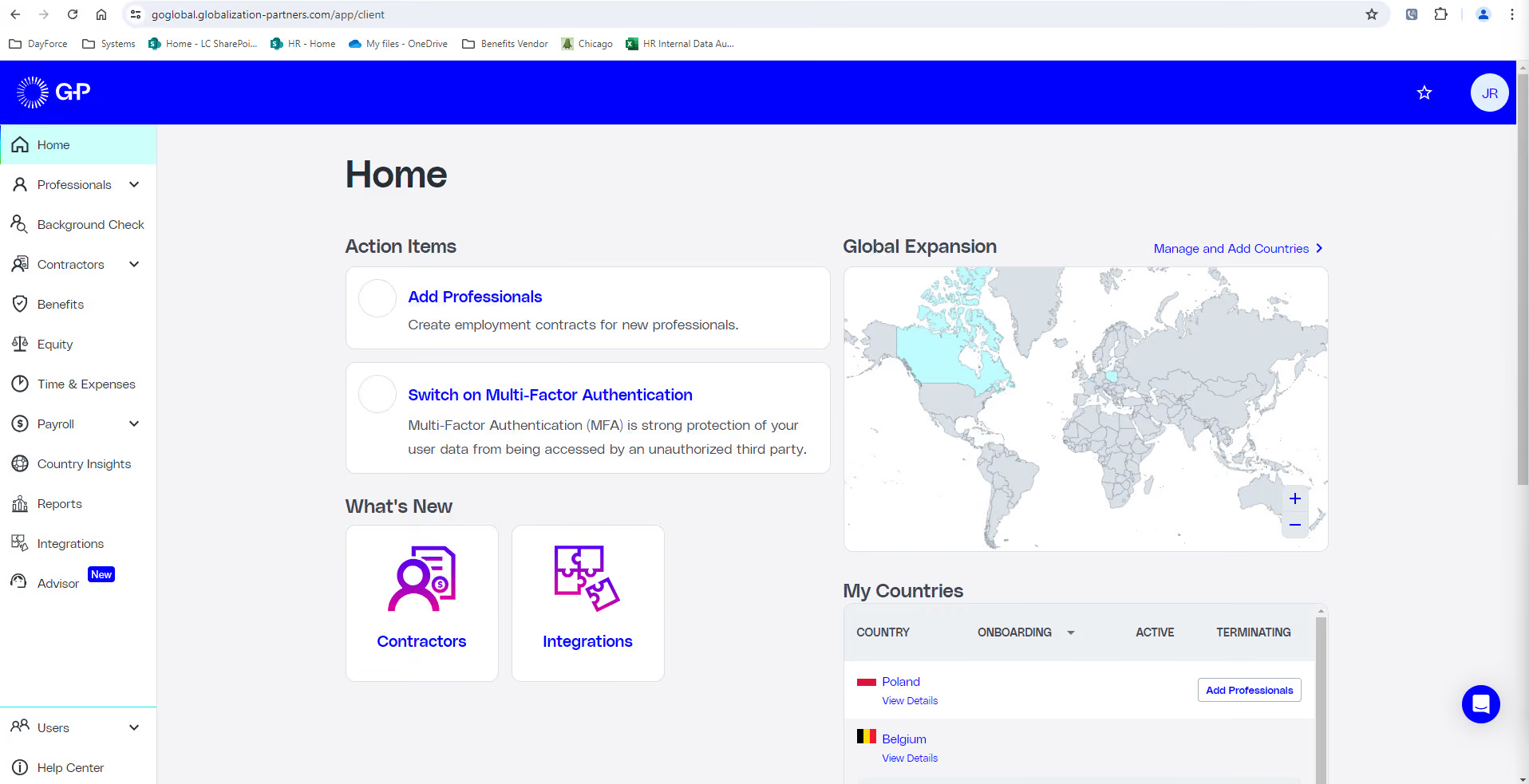
The breakdown of costs is easy to understand, as the pay slip provides the cost of wages, social fees and taxes, and the management fee. It is easy to add new employees to the solution, as the onboarding process is straightforward. The widespread coverage of G-P is very good, as they cover many countries, making setup easy.
We had a key member of our staff relocate to Canada, where we did not have a legal entity set up to pay them. We needed to continue to payroll this employee, provide benefits, and comply with Canadian employment laws. G-P was able to do this on our behalf for a reasonable price, and we did not have to manually process any payroll. They handled engaging our employee, paying them directly, and addressing any disputes raised by the employee or the government. We used them for just over a year.
Payroll is cumbersome, and there is no clear way to learn how to do it without trial and error. Adding something as simple as a bonus was unclear. Customer service is slow and unprofessional. Without a phone line, emergency situations are not resolved quickly, and their answers to questions are short and incomplete. The website is also hard to navigate, as you lose the navigation panel whenever you go into a module.
G-P is similar to other global payroll/HCM systems but is more cumbersome than the competition. The price isn't better to warrant this lack of intuitiveness either. They recently added a direct Advisor feature, which is very nice, but other competitors have had this feature for some time.
If you are doing business outside of your home country, you need to invest in an EOR/HCM system that is responsive and easy to navigate. It's hard enough to learn each country and their payroll/compliance laws. The partner you pick needs to be engaging and responsive. G-P is on the lower end of the responsiveness scale. I suggest increasing your budget for an EOR tool because of this, as cheaper is not always better.
Yes, they recently added an Advisor feature that will help streamline client issues moving forward.
It is suitable for businesses and HR admins that need to expand to other countries where they do not have a legal entity. Outside of that, G-P is not better than any other HCM service.
If you are looking for a payroll solution or an HCM solution to support your legal entity in a country you operate in, there are far better options than G-P.
KMC Solutions
KMC Solutions offers something global EOR platforms cannot: deep, decades-long local expertise. With in-country HR teams, ISO-certified processes, and hands-on knowledge of how audits, labor inspections, and government filings actually play out in the Philippines, KMC is uniquely positioned to support employers that want more than a digital workflow. For companies that value human support, cultural nuance, and on-the-ground reliability, KMC stands apart.
PROS
- Decades of Philippine HR, payroll, and labor compliance experience
- Strong knowledge of audits, government processes, and industry norms
- Offers recruitment, workspace, and back-office services in addition to EOR
- ISO-certified processes that emphasize accuracy and control
- Decades of Philippine HR, payroll, and labor compliance experience
- Strong knowledge of audits, government processes, and industry norms
- Offers recruitment, workspace, and back-office services in addition to EOR
- ISO-certified processes that emphasize accuracy and control
CONS
- Platform and dashboards are less polished than competitors
- Pricing is not as transparent and often requires consultation
- Slower to adopt automation and integrations compared with tech-powered EOR platforms
- Platform and dashboards are less polished than competitors
- Pricing is not as transparent and often requires consultation
- Slower to adopt automation and integrations compared with tech-powered EOR platforms
KMC Solutions is the closest thing to a “true local partner” that we evaluated. Whereas many global EOR platforms manage Philippine employment from abroad, KMC operates fully within the country, with HR, payroll, and compliance teams who handle these tasks every day. That proximity translates to a level of nuance that software-first providers rarely match, especially when it comes to government agencies, labor inspections, and employee relations.
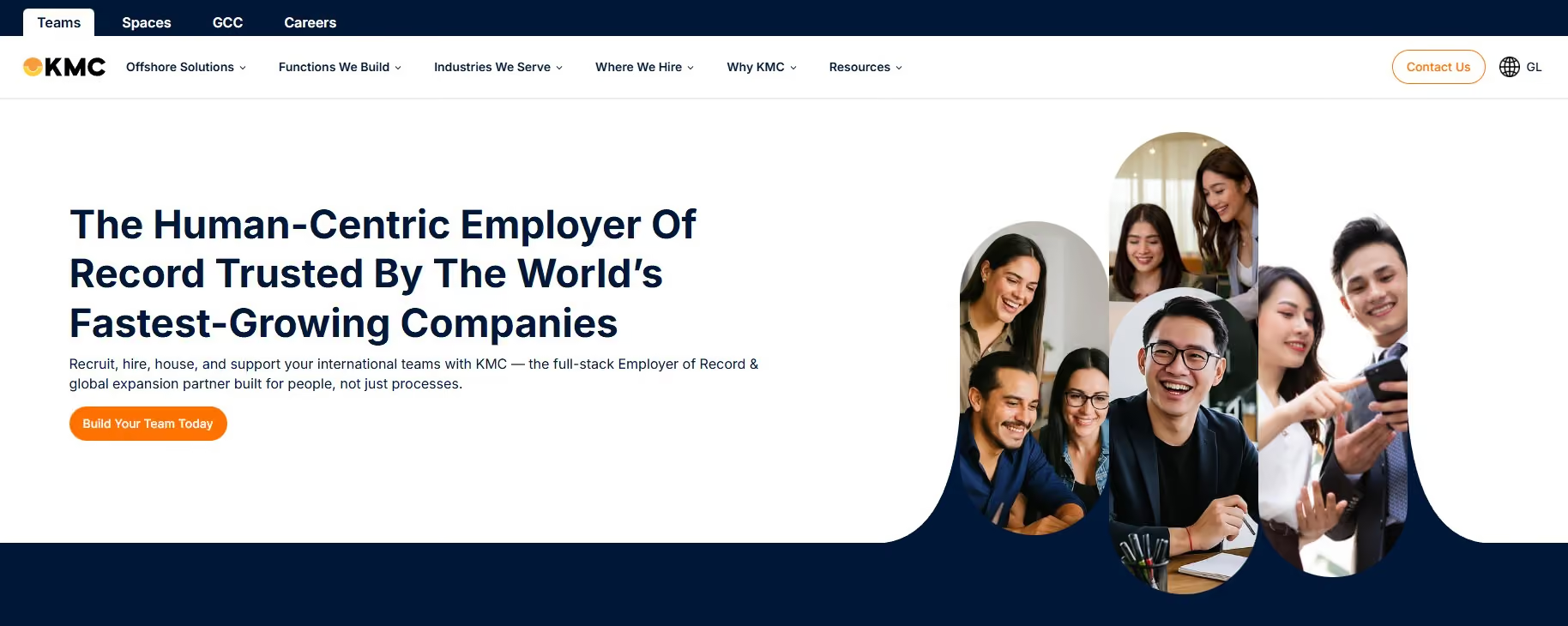
In our testing and interviews, KMC showed particular strength in handling real-world HR scenarios: answering employee concerns, navigating regularization, interpreting company policy under local law, and managing documentation during performance issues or sensitive disputes.
KMC’s experience also shows in the way it manages payroll and benefits. The company has long-standing processes for SSS, PhilHealth, and Pag-IBIG filings, and employers told us that remittances were accurate and predictable. The ability to speak directly with a Philippine payroll specialist (rather than submitting a ticket to a global queue) was repeatedly cited as a key benefit, especially during onboarding or months with unusual compensation adjustments.
The drawback is that KMC is not built like Deel or Papaya Global. The platform is functional but less polished, and reporting tools feel more utilitarian than sleek. Some employers may find that workflows rely more on coordinated communication than on self-service automation. For companies that simply want a fast, digital-first solution, these differences can feel like friction rather than value.
Custom Pricing.
Best For
Companies that want hands-on Philippine time zone HR support.

RemotePeople
If your priority is an economical option combined with good operational support, RemotePeople (formerly Horizons) is a strong candidate. The EOR operates through its own legal entity, features relatively affordable pricing and strong country hiring resources, and can assist with a few other key employment services such as IT asset procurement and background checks.
PROS
- Operates through a locally registered entity in the Philippines.
- Competitive pricing compared with many EOR providers.
- Clear payroll reporting with detailed breakdowns of employer costs.
- Helpful country hiring guides covering Philippine essential labor law and employment practices.
- Optional services like IT asset procurement and background verification.
- Supports hiring in 150+ countries if companies expand beyond the Philippines.
- Strong country hiring guides that go beyond basics and explain real compliance and payroll nuances.
- Affordable pricing (~$199/employee/month) compared to many EOR competitors.
- Covers 150+ countries, making it viable for broad international hiring.
- Clear payroll breakdowns with line-by-line visibility into costs and adjustments.
- Operational support services like IT equipment procurement and background checks.
- Free HR tools (salary calculators, offer generators, cost estimators) useful for planning hires.
CONS
- No phone support available for urgent issues.
- Some users report slower response times for complex compliance questions.
- Integrations with HRIS and ATS tools are relatively limited.
- Limited integrations compared to platforms like Deel or Remote.
- No phone support, and response times can vary for complex issues.
- Some services (e.g., visas, global payroll) only available in select countries.
RemotePeople is not the only employer of record service that lets companies hire in the Philippines without setting up a local entity, yet what this vendor does particularly well is combine global hiring coverage with practical operational support.
While testing the platform and reviewing its resources, we found that RemotePeople doesn’t try to compete purely on advanced HR tech. Instead, it focuses on making international hiring logistics easier. Beyond handling employment contracts, payroll, and statutory benefits, the platform also offers services such as IT asset procurement and background verification, many of which are capabilities that most EOR tools at the same price point tend to leave to third-party vendors.
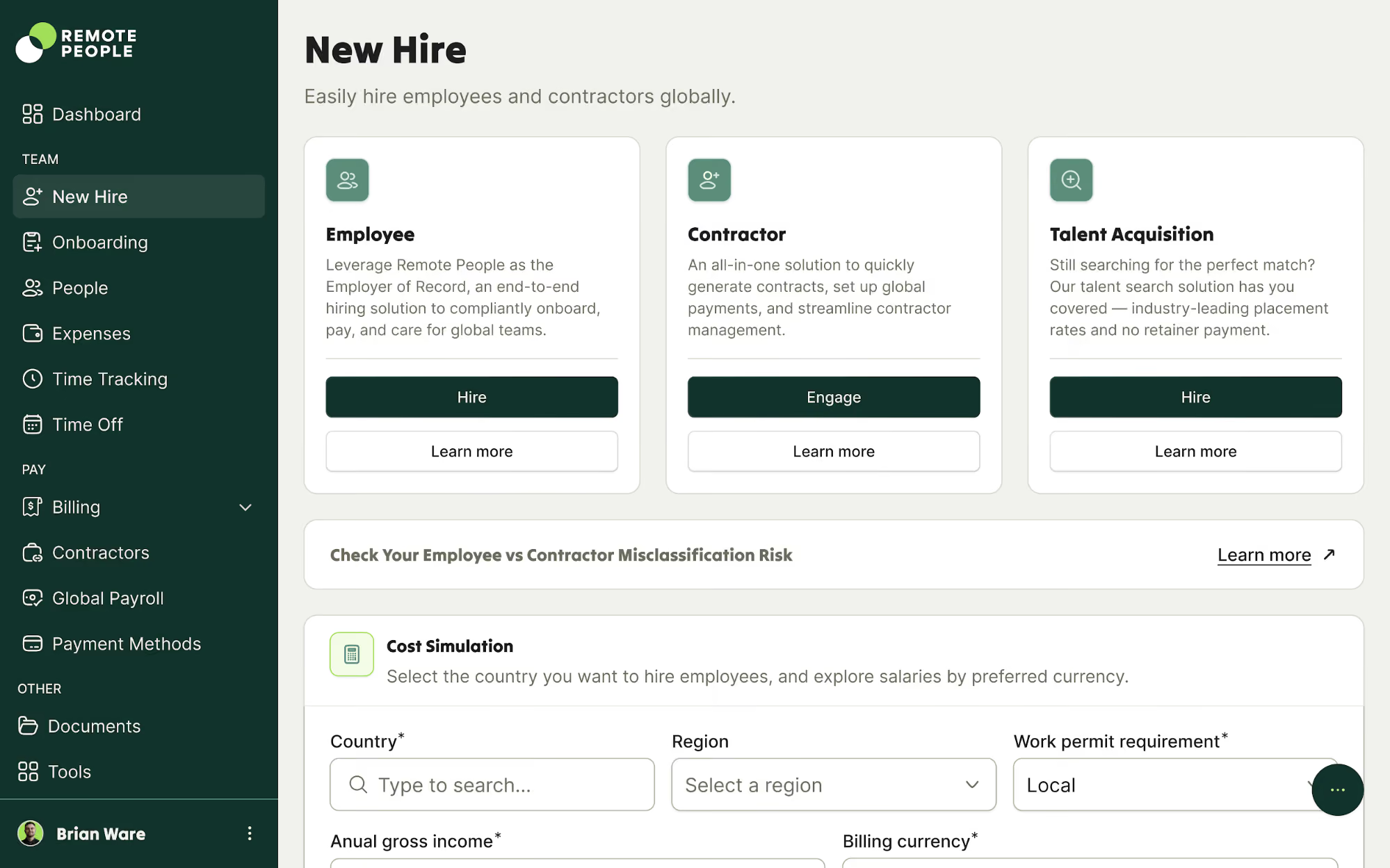
Another area where RemotePeople stood out during our evaluation was its country hiring guidance. The vendor provides market guides that, according to our spot checks, walk through labor law basics, payroll obligations, termination rules, and cultural expectations for hiring in the Philippines in detail. For companies entering this talent market for the first time, this kind of guidance can be valuable.
Finance teams may also appreciate the platform’s transparent payroll reporting. Payroll invoices include line-by-line breakdowns of employer costs, including recurring salary components, employer contributions, and adjustments such as overtime or benefit changes. Having this level of visibility can make it easier to understand the real cost of hiring in the Philippines, especially when managing multiple employees across different countries.
That said, if you’re looking for an EOR provider with extensive integrations or enterprise-grade HR tooling, you may want to consider alternatives like Deel or Remote, given RemotePeople's small integration ecosystem. Additionally, support options are also somewhat limited, with no phone assistance and response times that can vary depending on the request’s complexity.
Starts at $199 per employee per month.
Best For
Small businesses seeking a low-cost EOR platform to hire employees in the Philippines.

Native Teams
Native Teams made our list because it enables you to employ Filipino talent legally, run a localized payroll, and manage government contributions at a fraction of the cost of most EORs. For companies hiring just a few employees to start, the simplicity and cost structure are hard to beat.
PROS
- Fully localized employment with contracts compliant with Philippine labor law.
- Supports mandatory contributions: SSS, PhilHealth, Pag-IBIG.
- Employee wallet and prepaid card, ideal for remote-first compensation.
- 1% cashback on wallet balances is added to total rewards at no additional employer cost.
- Simple pricing and no entity setup required.
- Responsive legal review of employment changes.
- Good range of EOR services with compliant contracts, payroll, benefits, and visa support.
- Pricing is half the typical EOR rate, and a free trial is offered.
- Built-in wallet and debit card for employees, with 1% cashback on balances.
- Contracts are bilingual and can be partially customized with legal team review.
- Visa and mobility support embedded in-platform for 20+ countries.
- Automated workflows for bonuses, tax allowances, and leave tracking.
CONS
- Currently lacks HRIS/accounting tool integrations, though this is planned for the future.
- Lacks salary benchmarks, market rate insights, or workforce analytics.
- Covers fewer countries than competitors (e.g., Deel, Remote).
- Platform design is functional but not modern.
- User interface lacks polish, and navigation can feel unintuitive.
- Onboarding can be slow, especially when syncing legal documentation.
- No HRIS integrations or open API (planned for 2026).
- Does not offer compensation benchmarking or planning tools.
Native Teams offers a stripped-down, affordable EOR platform that covers the essentials for legally employing full-time workers in the Philippines. While many providers emphasize advanced workflows or enterprise-grade customization, Native Teams focuses on simplicity and cost efficiency, making it a compelling choice for early-stage or budget-conscious companies.
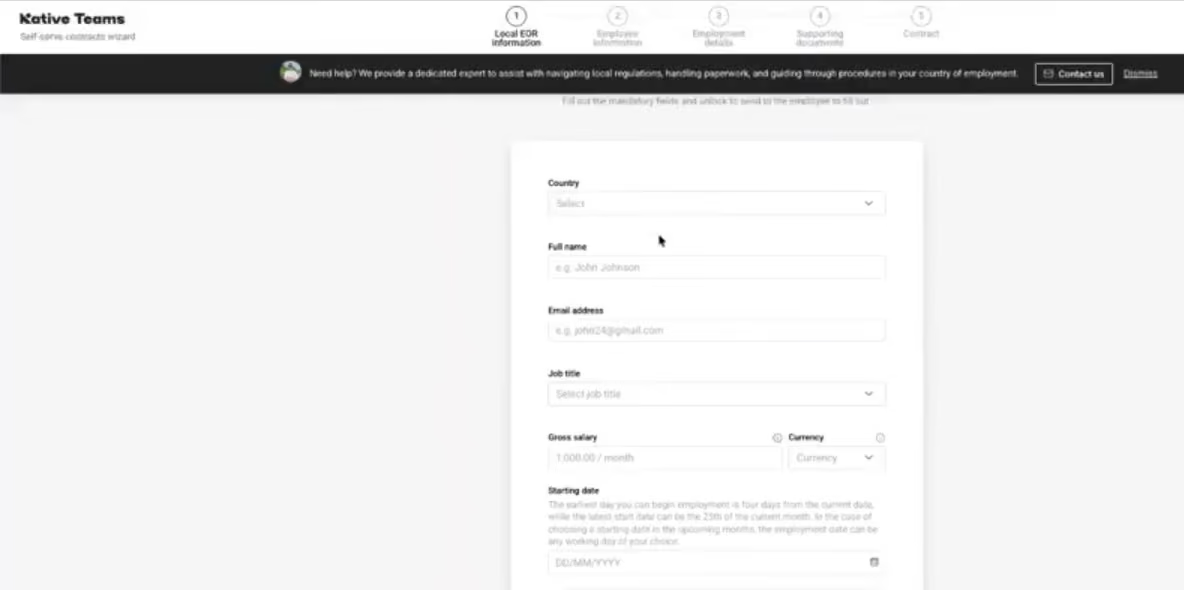
With pricing starting at $99 per employee per month, the service includes legally compliant employment contracts, payroll processing in Philippine pesos (PHP), and administration of required government contributions such as SSS, Pag-IBIG, and PhilHealth. The setup meets core employment needs without requiring a local entity, allowing companies to enter the market quickly.
We also liked Native Teams’ employee wallet system. Filipino employees receive a Native Teams Mastercard connected to a digital wallet, enabling payouts in PHP or foreign currencies, direct card spending, and transfers to personal accounts. This setup mimics familiar e-wallet experiences while adding a 1% monthly cashback incentive on wallet balances. In a region where competition for remote employees is becoming increasingly stiff, this could be a small but meaningful financial perk.
Mobility services, including visa assistance for foreign hires relocating to the Philippines, are also available but less relevant unless you're relocating international talent into the country. More commonly, Native Teams is used by international companies hiring Filipino workers remotely from day one.
As for drawbacks, perhaps the most noticeable is the user interface. Similar to KMC Solutions, Native Teams’ platform focuses more on function than aesthetics, which some users might find clunky. Additionally, as of this writing, the platform still lacks integrations with key HR systems. And given its focus on small to midsize businesses, if you manage a larger team or require built-in compensation intelligence, you’ll likely outgrow the system.
3k+ companies, including Semos Cloud, Mad Head Games, and Kaiko Systems.
Starts at $99/month per employee. Free trial available.
Best For
Native Teams is a strong fit for startups and distributed teams hiring a few full-time employees in the Philippines, especially those looking for low-overhead payroll and compliance without setting up a local business.

RemoFirst
RemoFirst doesn’t have the deep feature set, integrations, or ecosystem of Deel or Remote, but it covers the fundamentals cleanly at a price that undercuts nearly every major provider. For teams that care more about reliability than bells and whistles, RemoFirst delivers one of the strongest value propositions we found.
PROS
- Significantly more affordable than most competitors, starting around $199 per employee
- Accurate handling of Philippine payroll, benefits, and regularization requirements
- Support teams give clear, straightforward explanations without heavy legal jargon
- Simple platform that covers core employer needs without unnecessary complexity
- Strong fit for early-stage hiring or testing the Philippine market
- Published pricing is easy to find, with EOR starting at $199 per employee per month.
- Contractor management includes a free tier, plus premium contractor payments at $25 per contractor per month.
- Broad coverage supports hiring employees in 185+ countries and contractors in 150+ countries.
- Dedicated account managers and 24/7 support are included, plus chat and a knowledge base.
- Useful add-ons reduce the need for extra vendors, including RemoHealth, RemoVisa, background checks, and equipment provisioning.
- Contractor-to-employee conversion makes it easier to move from pilot hires to full-time employment.
- Integrations like BambooHR, GoCardless, and ADP Workforce Now help it fit into existing stacks.
CONS
- Much smaller feature set and fewer integrations than larger EOR platforms
- Some platform workflows, especially verification steps, can feel confusing
- Documentation is thin; teams often need to ask support for clarification
- Younger provider with less mature infrastructure and fewer long-term tools
- EOR delivery often relies on exclusive in-country partners, so service consistency can vary by country.
- The integration catalog is improving but still smaller than what you get with full HR suites.
- Reporting and analytics are not as deep as enterprise-focused EOR platforms.
- The $199 rate is a starting point and total cost can still vary by statutory requirements in each country.
- Some features that matter for global teams can become add-ons, which can increase total spend.
RemoFirst’s strongest appeal is that it gets the core responsibilities of an Employer of Record right at a price far lower than most competitors. In a landscape where many Philippines EORs charge $400-$600 per employee, RemoFirst’s flat monthly rate of around $199 is a meaningful advantage for cost-conscious teams.
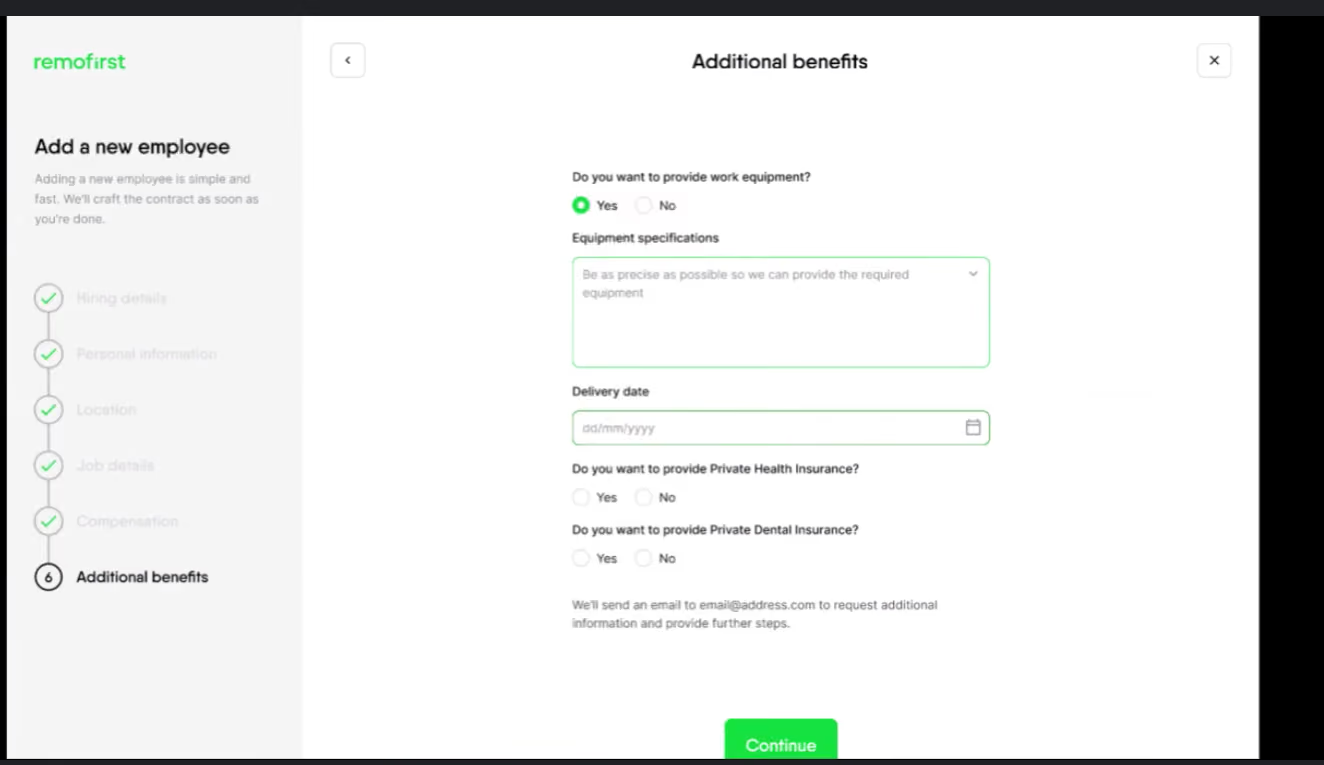
In our demos, the platform felt simple and functional. It doesn’t have the advanced reporting dashboards, automated workflows, or deep integrations seen in Deel or Remote, but it does give employers a clear view of payroll activity, contract status, and employee records. For small teams or companies hiring their first person in the Philippines, that level of functionality is often enough.
User feedback reinforced RemoFirst’s strengths in responsiveness. Several employers told us they received clear, easy-to-understand explanations of regularization rules, benefit requirements, and payroll timelines, which are often confusing for companies new to Philippine labor law. This is where RemoFirst compensates for its thinner documentation: support tends to fill in the gaps quickly.
The trade-offs, however, show up in backend polish. Employee users mentioned that the verification upload process felt confusing and that reminders continued arriving even after documents were submitted. Others wished for clearer in-app access to support or more transparency about who is reviewing employee information. These aren’t dealbreakers, but they do highlight that RemoFirst is still building out parts of its platform and internal systems.
Service coverage is also narrower than that of competitors like Deel. If you need advanced integrations, custom benefits, equipment provisioning, or layered approval workflows, RemoFirst may feel limiting.
Starts at $199 per employee per month.
Best For
Startups and lean teams that want the most affordable compliant hiring in the Philippines.

I use Remofirst for managing global team onboarding and ongoing employment workflows. I typically log in weekly, though this fluctuates depending on workload and hiring trends.
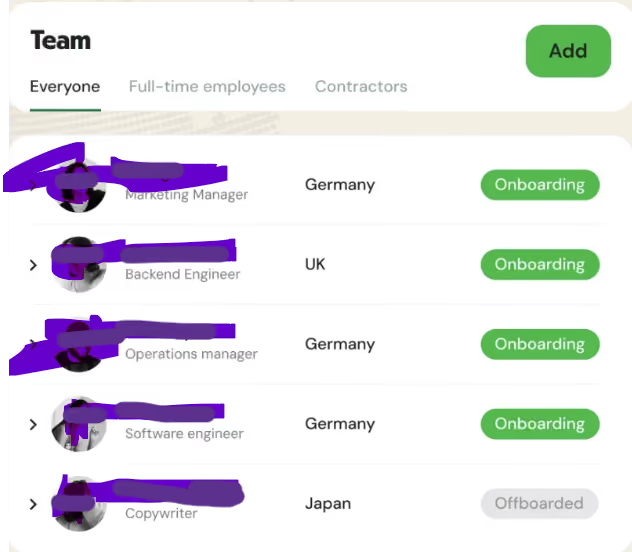
The core workflows I use include initiating onboarding, coordinating in-country contracts and compliance documentation, and tracking status at each step to avoid delays. I also rely on it for payroll workflows—confirming pay schedules, reviewing inputs or changes, and identifying issues early.
When changes occur (role updates, compensation adjustments, or offboarding), I use it to maintain consistency and compliance with clear records and handoffs. It reduces the manual back-and-forth in global hiring and provides reliable visibility into who is onboarded, what’s pending, and what needs attention.
I’ve used this tool with two clients in the past and built SOPs for using it operationally. Both clients continue to use Remofirst.
As a consultant, my feedback is as follows:
- The onboarding workflow provides clear status visibility, helping hires move faster without getting stuck in emails or unclear steps.
- Payroll coordination is centralized, easy to track, and simplifies managing pay changes, resolving issues quickly, and maintaining a consistent team experience.
- Administrative overhead is reduced for small teams thanks to standardized, repeatable HR tasks and well-organized recordkeeping.
My client purchased Remofirst to solve the operational and compliance burden of hiring and paying a distributed team across multiple countries without building an internal legal or payroll infrastructure.
The pain we were addressing involved the time, risk, and complexity of handling cross-border onboarding, contracts, local labor requirements, and compliant payroll/benefits while still moving quickly as a growing team.
The platform provided a centralized system to streamline global hiring and contractor/employee management, reduce administrative overhead, and improve consistency in onboarding and documentation.
The biggest benefits were a 27% increase in speed to hire, improved compliance, and a user-friendly interface for team members managing payroll and employment support. I personally used it for 12 months, but recently moved to a new client and am no longer an active user.
- Some workflows lack flexibility, particularly for organizations with diverse or variable contracts, custom approval paths, or complex multi-country requirements.
- Reporting and dashboards are less effective than those in a dedicated HRIS or analytics tool, often requiring manual data exports for KPI tracking.
- Support response time can vary depending on the complexity of the issue and time zone differences, which creates challenges during urgent onboarding or payroll cases.
Compared to larger competitors, it feels more focused on core contractor workflows rather than bundling in HR functions and tools that can increase complexity.
I’ve used comparable tools, and the biggest practical differences are smoother onboarding, clearer workflow tracking, and faster execution of contract and payroll changes.
Start with country coverage and compliance capabilities in the geographies you plan to hire in—specifically how contracts, benefits, and local labor requirements are handled, and what is standard versus customized.
Assess whether core workflows offer the speed, clarity, and alignment needed to fit into internal compliance and HR policies. If it’s difficult to operate day-to-day, it won’t scale well.
Evaluate support quality and SLAs across your working geographies, as payroll and onboarding issues are time-sensitive.
Finally, review total cost, customization options, and integration/reporting capabilities if you need data to flow into HRIS or finance systems.
With only a year of experience using the tool, I’m not certain I saw significant changes. I appreciated the customer feedback requests we received, but I’m unsure how that feedback was used, as I didn’t see it reflected in the product roadmap.
Small to mid-sized companies that are scaling a remote, international team and want to hire compliantly without setting up local entities. Remofirst is a strong fit for founder-led or lean People Ops teams.
Large-scale enterprises with established entities in their countries of operation and heavy regulatory or high-volume global hiring requirements will need to look at tools that are more robust than Remofirst.

Borderless AI
Borderless AI stands out for its automation-first approach to EOR operations in the Philippines. Its AI engine can draft contracts, identify compliance risks, and streamline payroll tasks. While the company is newer and still refining parts of its experience, the technology offers a compelling option for employers seeking speed, automation, and real-time compliance insights, rather than manual processes.
PROS
- AI-driven workflows automate contracts, compliance checks, and payroll tasks
- Modern, clean interface that feels faster and more intuitive than many legacy tools
- Real-time risk alerts that help catch compliance issues early
- Employees report smooth onboarding and easy communication with support
- Strong potential for teams that want to minimize manual HR involvement
- HRGPT agent delivers quick, reliable, and personalized answers on contracts, policies, and compliance.
- Payroll processes are among the fastest in the industry, with no requirement to pre-fund salary deposits.
- Questions and technical issues are handled by in-country Borderless account and success managers.
- They have partnered with local experts from the Big Four accounting firms for accounting and tax compliance.
- Both the web platform and the mobile app are intuitive, quick to figure out, and easy on the eye.
CONS
- Limited number of native HRIS and payroll integrations
- Support responses can be slower during high-volume periods
- Still maturing as a provider, with occasional inconsistencies
- No direct integrations with major HRIS platforms, which could limit larger teams seeking ecosystem compatibility.
- Reporting and analytics features remain basic, offering limited drill-down capabilities for detailed audits or trend analysis.
Borderless AI positions itself as a next-generation EOR platform, and that focus shows immediately in its workflow design. During testing, tasks like contract drafting, risk identification, and document preparation felt faster and more automated than with traditional competitors. Users we interviewed highlighted the AI engine’s ability to produce locally compliant contracts and quickly flag potential issues. This benefit can shave hours off onboarding timelines for companies hiring in the Philippines.
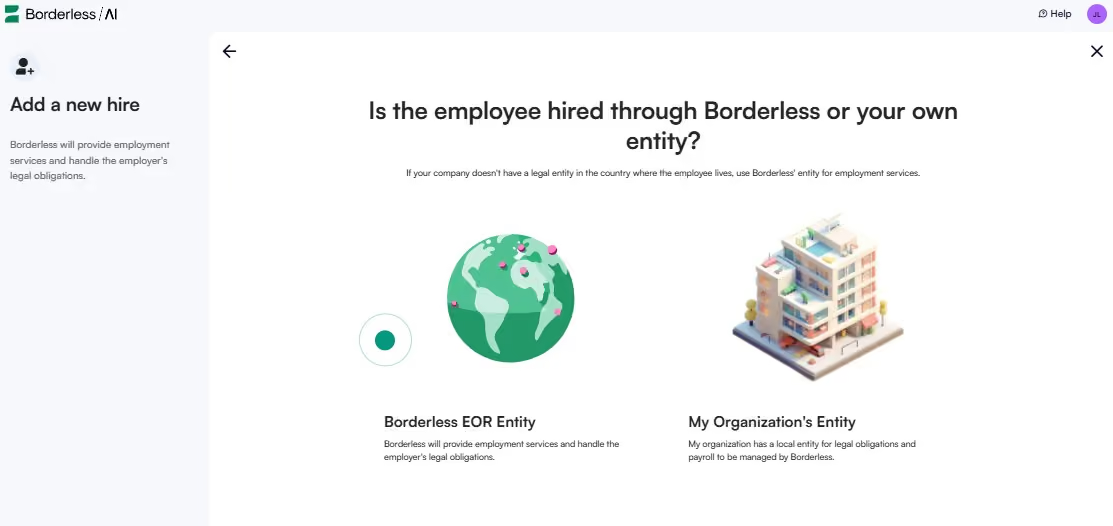
The broader appeal is the automation that replaces routine HR tasks. Borderless AI aims to reduce manual back-and-forth by generating documents, validating compliance, and preparing payroll artifacts in advance. Product teams we spoke to said this shift freed them from low-level administrative work, allowing HR to focus more on high-value activities rather than data entry or document formatting.
However, the strengths of AI also introduce new considerations. Several users mentioned that the platform can feel overwhelming at first, especially for teams that are accustomed to traditional step-by-step onboarding. While the AI performs most tasks automatically, users often feel the need to double-check outputs, particularly around contracts or compliance-sensitive details. This isn’t unusual for AI-assisted systems, but it does mean the “automation benefit” comes with a required layer of human validation.
Execution consistency is still a developing area. Long-term users praised Borderless AI’s support teams for being responsive, but they also noted slower turnaround times depending on the issue. A few employees reported payroll delays of a week or more, which is a significant concern for any EOR provider. These issues appear to be intermittent rather than systemic, but they suggest the company is newer and still scaling its operational backbone.
Starts at $579 per employee per month.
Best For
Companies that want an automation-first EOR.

Remote
Unlike providers that mark up benefits or obscure their total costs, Remote publishes its pricing publicly and keeps things predictable for employers. Its onboarding flow is simple, the UI is polished, and employees consistently reported that Remote made everyday tasks fast and frustration-free.
PROS
- Transparent, publicly listed pricing with no markups on benefits
- Fast onboarding, typically completed within three business days
- Clean, intuitive interface for multi-currency payroll, payslips, expenses, and time off
- Strong employee experience with user-friendly notifications and access to documents
- Robust Native IP Guard feature ensures strong intellectual property safeguards
- Competitive benefits packages tailored for the Philippines
- Fast and compliant payroll in 170+ countries.
- Live chat support with local payroll experts.
- Flexible, localized benefit packages.
- Flat-rate pricing structure, no deposits or hidden fees.
- Mobile app streamlines expense reimbursement with autofill from receipt photos.
CONS
- Recent fee increases narrow its affordability advantage
- Support chat uses AI first, which can feel unhelpful for sensitive issues
- Payment timelines may lag behind local expectations
- Net salary estimates aren’t always visible until the first payslip
- Reporting and filtering tools are more limited than competitors
- Doesn’t have a free trial.
- Redundant for organizations solely recruiting within the U.S.
- Help center documentation isn’t easiest to understand.
Remote is the EOR provider we found most committed to transparency. While other platforms tend to obscure pricing or introduce unexpected markups, Remote publishes its fees openly and keeps benefit costs predictable. For employers onboarding their first Philippine hire, where budgeting for taxes, contributions, and benefits can be confusing, this clarity is a meaningful advantage.
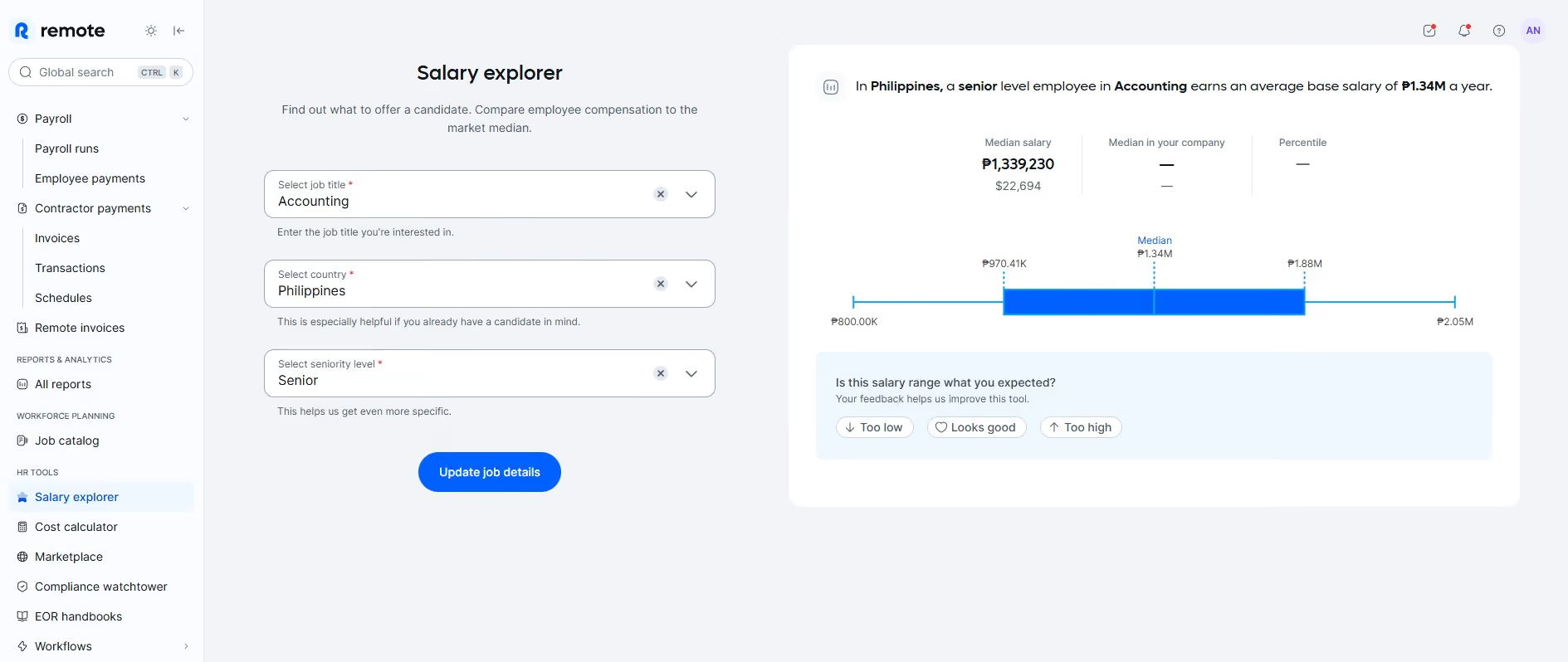
During testing, Remote’s platform stood out for its thoughtful UX. Payslips, expenses, leave requests, and employment documents are all easy to locate, and employees receive notifications the moment new information is posted. Several users told us they appreciated how quickly they could pull their payslip or understand a line item after chatting with support. The interface feels more like a well-designed consumer app than an HR operations tool, which reduces friction during onboarding.
Remote’s policies and documentation are also straightforward. Employers we spoke to said they valued having clear rules about what Remote handles, what they handle, and what timelines to expect. In a market where statutory filings and payroll cycles can be rigid, Remote’s clarity helps reduce uncertainty.
However, the drawbacks are worth noting, especially for fast-moving teams. Remote’s support workflow begins with an AI assistant, which employees told us felt frustrating when questions involved pay discrepancies or legal documents. Some also said salary deposits occasionally arrived later than expected by Philippine standards. This isn’t unusual for global EORs pushing payments across borders, but companies with tight payroll expectations should be aware.
Remote has also raised its pricing over time, and several users called out that the fee is no longer as competitive compared with newer entrants. Employers wishing for deeper reporting tools will find Remote’s analytics functional but not particularly sophisticated.
Starts at $699 per employee per month.
Best For
Teams that prioritize transparent pricing and a simple, well-designed platform.
Why Use an Employer of Record in the Philippines?
Companies turn to an EOR in the Philippines for five reasons that come up again and again in our research and conversations with HR teams: speed, cost savings, more bandwidth for HR, compliance, and flexibility.
- Speed: Registering a Philippine corporation would have taken at least 2 to 6 months. The benefits of using an EOR are clear in this case, as it can shave that down to a few days.
- Cost savings: Based on the latest EOR statistics, 63% of organizations use employer of record services to reduce costs associated with establishing and managing local entities. This approach is usually more economical for small teams or initial hires.
- More bandwidth for HR: Instead of spending hours learning Philippine labor law, managing government filings, or navigating benefits enrollment, they could focus on building products, supporting customers, and managing teams. The operational and psychological relief of “someone is handling this correctly” is one of the biggest advantages for early-stage companies.
- Compliance: Philippine labor law set by the Department of Labor and Employment (DOLE) is strict on matters such as regularization, 13th-month pay, and SSS/PhilHealth/Pag-IBIG remittances, and even a minor mistake can lead to fines or disputes. An EOR handles all of this automatically, which takes pressure off teams that don’t have in-house expertise.
- Flexibility: The Philippines is one of the strongest global employment markets thanks to its deep BPO talent pool, high English proficiency, and competitive labor costs. Whether you need a single specialist or a small remote team, an EOR lets you access that talent without making long-term commitments or navigating the overhead of maintaining a legal entity.
Philippines EOR Pitfalls: What to Watch Out for
The most common pitfalls of using a Philippines EOR include inconsistent support after onboarding, limited contract flexibility, indirect employee communication, hidden fees, limited local visibility, and higher long-term costs as your team grows.
- Inconsistent support after onboarding: Some providers respond quickly during setup, but slow down once you’re a customer. To avoid this, ask for a written commitment outlining response times, require a named account manager rather than a shared inbox, speak directly with the support team during evaluation (not just sales), and ask for references from current clients with employees in the Philippines who can verify the quality of support.
- Limited flexibility in employment contracts: Most EORs rely on standardized templates that may not accommodate custom clauses, unique schedules, or specialized benefits. But you can avoid this by requesting the full contract template before signing, submitting your required changes early, confirming whether changes trigger legal fees, and checking whether the provider has successfully handled similar customizations for other companies.
- Employee experience depends on the EOR, not you: Because the Philippines EOR is the legal employer, employees often route pay and benefits issues to them. Slow or unclear communication from the provider thus can reflect poorly on your company. However, if you have the bandwidth, you should establish a joint communication channel for quick triage, schedule monthly check-ins with the provider’s HR team, and ensure employees receive clear guidance on who to contact for what.
- Unexpected fees: Some EORs charge extra for offboarding, visa processing, contract amendments, or enhanced benefits. Request a fully itemized list of all possible fees, verify whether health insurance premiums are passed through at cost or marked up, ask how often fees change, and confirm that all one-time charges are disclosed before signing to help you avoid these surprises.
- Limited visibility into HR processes: If the EOR’s HR team isn’t based in the Philippines, it can be harder to verify how issues like benefits claims or leave escalations are handled. An EOR provider operating a legally registered entity in the Philippines is a strong indicator of how sensitive or time-critical issues, such as benefits claims or leave escalations, are handled within their local operations.
- Higher long-term costs as your team grows: EOR fees make sense for early hires but may become more expensive than running your own entity as headcount increases. Plan ahead by asking for pricing tiers that reduce fees as you scale, identifying the headcount at which a local entity becomes more cost-effective, confirming that the provider can support a smooth transition to your own entity, and ensuring employee tenure and benefits continuity will be honored during that transition.
How Does a Philippines EOR Work?
Working with an EOR in the Philippines typically follows a clear, repeatable process:
- Initial consultation: You share your hiring plans, role requirements, budget, and timelines. The EOR confirms whether the role is suitable for EOR employment, outlines costs, and explains any market-specific considerations (like typical salary ranges or benefits expectations).
- Contract preparation: The EOR drafts a locally compliant employment contract based on your offer details and makes sure it is aligned with Philippine labor laws.
- Benefits setup: The EOR enrolls the employee in all mandatory government programs (SSS, PhilHealth, Pag-IBIG) and sets up 13th-month pay and any additional perks you want to offer (e.g., HMO, allowances, equipment).
- Onboarding: The employee reviews and signs the contract, provides the required documents, and is added to the EOR’s payroll system. From this point, the EOR becomes the legal employer, while you handle onboarding to the role, team, and tools.
- Ongoing management: Each month, the EOR runs payroll, withholds and remits taxes, manages statutory contributions, tracks leave, and supports HR compliance. You remain responsible for day-to-day management: setting goals and KPIs, giving feedback, and directing the employee’s work.
EOR vs. PEO vs. Entity Setup in the Philippines
If your goal is to hire in the Philippines quickly and with minimal legal risk, a Philippines employer of record is the simplest and fastest option. A Professional Employer Organization (PEO) is useful only if you already operate a local entity, and setting up your own legal entity makes sense only when you have long-term, large-scale plans in the country.
- An EOR hires the Filipino employee on your behalf, manages payroll, taxes, benefits, and compliance, and lets you start within days. It’s best for companies testing the market, hiring a small team, or operating globally without plans to open a Philippine entity.
- A PEO supports HR processes only after you’ve set up a local entity. It reduces administrative work but does not absorb legal risk as you remain the employer of record and are responsible for compliance. Read our comparisons of PEO vs EOR for more details.
- Setting up a legal entity offers full control but requires months of registration, higher upfront costs, and ongoing compliance with Philippine labor and tax agencies. It is appropriate only for companies planning to scale significantly or establish a long-term presence.
Key Services Provided by EORs in the Philippines
Employer of Record providers in the Philippines handle all legal, administrative, and HR responsibilities tied to employing staff locally. Here is a breakdown of the key services you can expect:
- Payroll management: Salary calculation, payroll processing, payslips, tax filings, withholding, and employer/employee contributions.
- Government compliance: Enrollment and monthly remittance for Social Security System (SSS), the Philippine Health Insurance Corporation (PhilHealth), and the Home Development Mutual Fund, commonly known as the Pag-IBIG Fund.
- Mandatory benefits administration: Setup and management of 13th-month pay, paid leaves, holiday pay, overtime rates, and regularization compliance.
- Employment contracts: Drafting compliant employment agreements, managing probation terms, and handling contract renewals or conversions.
- Onboarding support: Document collection, identity verification, system setup, and onboarding instructions.
- Employee management: Attendance tracking, leave management, basic HR inquiries, and performance documentation guidance.
- Offboarding: Compliance with notice periods, due-process requirements, separation pay (if applicable), and government deregistration.
- Risk and compliance management: Monitoring labor law updates, audit support, and guidance on contractor misclassification and just-cause termination.
Besides these, some other EOR services you can optionally opt for include expanded benefits, equipment procurement, support for immigration, advanced HR, finance, and compliance, as well as recruitment.
Philippines EOR Costs and Pricing Models
Most Philippines EOR providers use one of two pricing structures. The first is a flat rate, typically $199-$699 per employee, which works well for standard roles where payroll, benefits, and compliance tasks are straightforward. The second is a percentage of gross salary (usually 8%-15%) and is more common for senior or specialized roles that require extra HR support or customized benefits. Some providers use a hybrid model, charging flat fees for routine hires and percentage-based pricing for higher-level positions.
Additional costs may apply for onboarding, equipment procurement, premium HMO plans, or visa and permit processing, depending on the provider.
While EOR costs may appear higher than running payroll internally, they are often more cost-effective than setting up a Philippine entity, which typically costs $10,000-$20,000+ and takes two to six months before you can legally hire. For example, hiring three employees through an EOR for $1,200-$1,800 per month allows you to start immediately and avoid penalties from incorrect SSS, PhilHealth, or Pag-IBIG filings.
How to Choose the Right EOR Provider in the Philippines
Choosing the right Philippines EOR comes down to three things: local expertise, service scope, and reliable support.
- Local expertise matters most. Your service provider should operate a legally registered Philippine entity and have in-country HR and compliance specialists who understand employment laws and regulations. This becomes especially important if you’re unfamiliar with local labor law or plan to transition contractors into full-time roles.
- Next is the service scope. Some Philippine EORs focus on core payroll and compliance, while others offer broader support, including custom employee benefit packages, onboarding and performance documentation, offboarding guidance, visa processing, equipment procurement, and platform integrations. Smaller teams typically benefit from more hands-on HR help, while larger teams may prefer stronger automation and reporting tools.
- Support quality is often the real differentiator. Ask who your primary contact will be, whether you’ll have a dedicated account manager, how quickly they respond during payroll cycles, and how experienced they are in handling employee issues or terminations. Consistent, knowledgeable support prevents minor questions from turning into bigger problems for your team.
Compliance and Legal Considerations
Hiring in the Philippines requires full compliance with a well-defined set of labor laws that outline working hours, leave entitlements, regularization, overtime rules, and employee protections. An EOR ensures every employment agreement reflects these standards and includes all mandatory benefits and government contributions: SSS for social security, PhilHealth for healthcare, Pag-IBIG for housing, and the legally required 13th-month pay. These statutory benefits must be managed each month accurately, and mistakes can lead to penalties or back payments.
Proper employee classification is another critical area. Philippine labor law protects full-time employees, and misclassifying workers as contractors can create legal and financial liability. EORs help prevent this by issuing compliant employment contracts, tracking working arrangements, and ensuring the role meets the definition of employee status.
Termination rules in the Philippines are also stricter than in many other countries. Depending on the situation, employers may be required to provide just cause, follow a specific notification procedure, and pay separation or redundancy compensation. An EOR solution guides employers through these requirements, documents performance issues appropriately, and ensures offboarding is handled in line with local employment regulations.
Trends and Future Outlook
The Employer of Record landscape in the Philippines is moving toward faster automation, richer employee benefits, and deeper strategic involvement because of rising talent demand, more complex remote teams, and higher expectations for speed and accuracy.
- Automation is reshaping core EOR operations: Providers are investing in artificial intelligence and workflow automation to reduce manual tasks like payroll calculations, contract creation, and government filings. This shift is driven by the rising volume of remote hiring and the need for predictable, audit-ready compliance, which manual processes cannot scale efficiently.
- Demand for EOR support in higher-skill roles is growing: Businesses are hiring beyond the traditional business process outsourcing talent pool, tapping into local engineering, design, and analytics talent. EORs are adjusting by offering more customization, faster contract localization, and greater role-specific support, which helps employers scale team functions they once assumed required a full legal entity.
- EORs are evolving into long-term workforce management partners: As companies build multi-role remote teams in the Philippines, they rely on EORs for HR advice, salary benchmarking, retention strategies, and risk prevention. Providers are responding by building stronger HR advisory capabilities, adding people ops tools, and offering more hands-on support for performance and employee relations.
- Integrated platforms are improving visibility and employer control: Employers increasingly expect a single place to view payroll, time-off balances, performance data, and compliance updates. EORs are integrating their systems with world-class HRIS software and building dashboards that tie daily operations to local labor rules. This shift is happening because employers want clarity and control without needing to understand every Philippine regulation.
FAQs About EOR Services in the Philippines
Any other noteworthy Philippines EOR providers I should check out?
Yes, though these may not always be the top choice for standard hiring in the Philippines:
- Velocity Global for detailed compliance oversight and strong global payroll.
- RemotePeople (formerly Horizons) for international teams with complex immigration/relocation cases.
- Safeguard Global for enterprise audit capabilities and high-volume hiring.
- Atlas for a solid list of direct legal entities.
We have recently qualified Native Teams after a thorough demo with the vendor and our own evaluation of the platform. We are also evaluating Oyster and Remote. Revisit this page soon for updated findings!
How long does it take to onboard a new hire through an EOR in the Philippines?
Most hires are fully onboarded in about one to two weeks. This depends on how quickly documents are submitted and whether background checks and other pre-employment assessments are needed.
What happens if I need to terminate an employee in the Philippines while using an EOR?
The EOR ensures the process follows Philippine labor rules, including due process, notices, and separation pay when required. You provide the business reason and they handle the legal steps.
Can I convert a contractor in the Philippines into a full employee through an EOR?
Yes. The EOR can issue a compliant employment contract, register them for government benefits, and set up payroll to make the transition smooth and legal.
Will using an EOR affect how I manage my employee in the Philippines?
No. You keep full control of performance expectations, daily tasks, and work schedules. The EOR only manages what is legally required for local employment.
About the Author


About Us
- Our goal at SSR is to help HR and recruiting teams to find and buy the right software for their needs.
- Our site is free to use as some vendors will pay us for web traffic.
- SSR lists all companies we feel are top vendors - not just those who pay us - in our comprehensive directories full of the advice needed to make the right purchase decision for your HR team.


