

Gusto is a payroll system with HR features built around it, sold at prices you can read on a web page. Rippling is an employee database that runs HR, payroll, and IT from one record, sold module by module through a quote.


Choose Gusto if…
You run a U.S. team of under 50 people in a single legal entity, and you don't need your HR software to manage laptops or security. You get payroll, benefits, and onboarding without a sales call or a contract, and you’re comfortable knowing that recruiting, PTO rules, and growth past about 70 employees will test Gusto's limits.
Choose Rippling if…
You are past 50 employees or will be soon, you manage laptops and app access for every new hire, or you plan to hire outside the U.S. You prefer one system that covers all of it, and you accept a quote-based price, a term contract, and more administration than an SMB-focused alternative like Gusto requires.
Customer Reviews
Gusto

I use Gusto approximately every day. Some key workflows are onboarding users (employees) and storing important demographic information and compensation information, paying users (we used to pay employees on the platform, now it's just contractors), and staying in payroll compliance - Gusto gives you a to-do section that shows you all of the things you need to do to stay in compliance.
Rippling

As an HR user, Rippling is used almost daily for HR operations. It plays a key role in recruiting, benefits management, and absence/time tracking. An HR admin can vet candidates, configure and manage benefits, track and pay PTO, and handle compliance documentation. The system supports various workflows, making HR processes more efficient.
Both keep HR and payroll on one record, but only Rippling extends it to IT and finance.
The Gusto customers we spoke with felt the limits of Gusto’s employee record at onboarding. One company that grew from about 25 to 73 employees in 5 months said onboarding had become chaotic around access: Who needs which tool, who the admin is, and how new hires get set up.
Another, at 67 employees, described Gusto’s onboarding as simple and good for when they implemented, but short for what they needed to track and manage as they expanded. For example, Gusto keeps HR and payroll on one record and can create and remove accounts in apps like Slack and Google Workspace, but Gusto sells no device management or single sign-on of its own.
Rippling’s record, which is one for the whole system, covers IT and finance, so a termination, for instance, can end payroll, revoke app access, and start retrieval of the employee’s laptop with just about one click. However, that only pays off if you buy the IT products, which Rippling sells separately on top of their required Unity platform and prices by quote. For a 15-person team with a handful of laptops, Gusto plus an offboarding checklist covers most of the same ground. If nobody on staff owns laptops and access, Rippling takes that work off an office manager; if a managed service provider already handles it, Gusto is quite enough.
Gusto’s prices are public and Rippling’s are quoted, but past 100 employees Rippling may undercut Gusto Premium.
Rippling lists their core HR platform at $8 per employee per month and U.S. payroll at another $8, so a company with about 105 employees would pay roughly $20,000 a year for HR and payroll at published rates, before adding recruiting or any other module. One Rippling customer at that size told our advisors they pay about $19,000 to $21,000 a year with applicant tracking included. Recruiting appears to have been added through negotiation, which is one of many instances we know of vendors meeting prospects on price once they name a budget.
This is also between what Gusto's published rates would charge at the same headcount on Plus ($16,080) and Premium ($29,880) which both include a recruiting module. That said, reaching an exact number with Rippling takes persistence. A former customer who wanted to return spent about 7 weeks in meetings without a quote: "I'm just struggling to get pricing from them", she said.
Gusto's customers know their bill in advance and can leave on short notice. A Gusto customer with about 100 employees described a monthly bill they could cancel with roughly 30 days' notice. Gusto's costs still climb with headcount, though: Per-person rates rise from $12 on Plus to $22 on Premium, and Gusto bills for every employee not marked dismissed, even in months they aren't paid. Under 50 employees, Gusto is the faster decision. Past 100, get a Rippling quote and hold it against Gusto Premium.
Gusto is built for 70-100~ headcounts, and Rippling targets companies of up to 5,000.
Our advisors put Gusto’s comfortable range at roughly 25 to 50 employees. Some of the customers we spoke with this year who described specific problems all had between 67 and 100. One had grown from about 25 to 73 employees in 5 months, planned offices abroad, and found that the health plan Gusto offered as their broker didn’t work for employees outside their home state. Another, at 70~ employees, hit repeated PTO errors and lost admin permissions without notice during an audit. The third, at about 100, runs each of their 5 locations as a separate legal entity, and Gusto sets up each entity as its own company with its own plan and billing.
Recruiting also seems to be an issue with Gusto as teams get too big for their ICP. One customer said declined applicants drop out of the pipeline count, and others described it as good, but basic. On the flipside, it’s perfectly doable to use a separate ATS and integrate it with Gusto, which is a set up we see often.
By contrast, Rippling runs payroll for multiple legal entities from a single account, splitting payroll runs and tax filings by entity, and offers global payroll, employer of record services, and recruiting alongside it. Rippling’s CEO has said the company aims to win customers of up to 5,000 employees, so a team leaving Gusto at 100 is unlikely to outgrow Rippling, but might also be overdoing it if they stay under 150. Recruiting-wise, we’ve tested the tool and the flow for candidates straight from the interview pipeline straight into onboarding is quite fluid.
For teams whose only international need is contractors, though, the move can be an overcorrection: Gusto pays contractors in more than 120 countries with no monthly per-contractor fee, and Gusto’s employer of record option, run by Remote, covers full-time salaried hires, so it might be worth checking out for smaller operations.
Gusto is easier to run day to day, but both vendors' support frustrated the customers we spoke with.
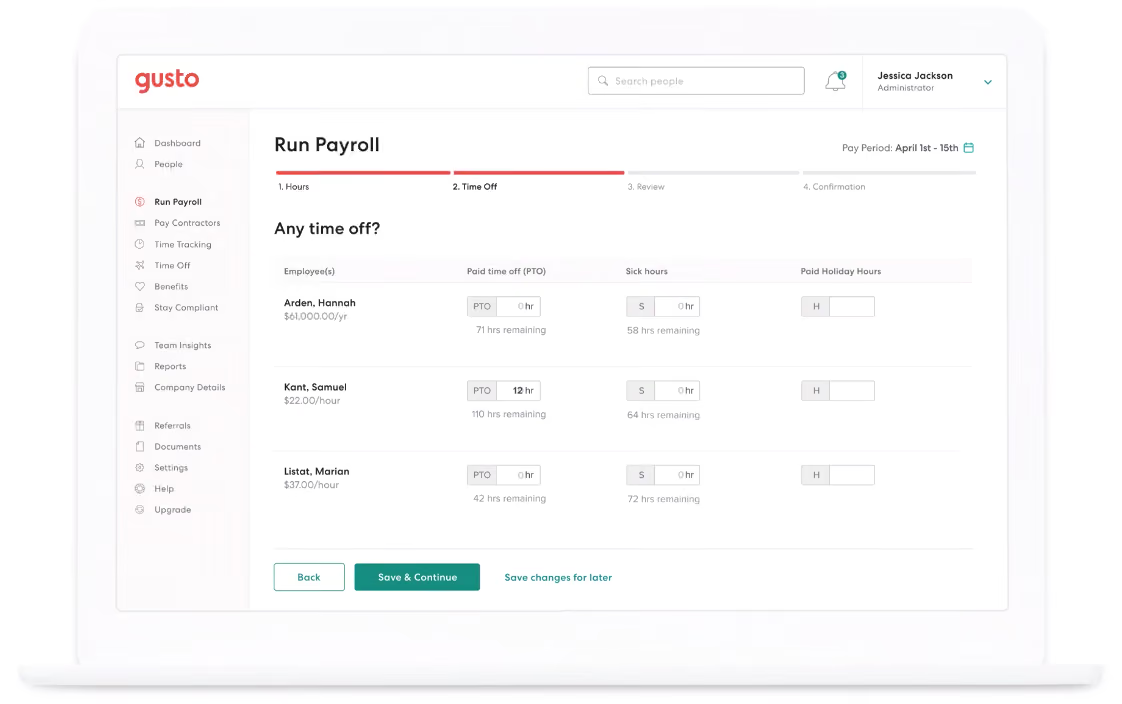
A Gusto customer who reportedly had worked with several enterprise HR systems before, called Gusto "very user friendly" and "very easy to navigate." Most of the buyers we’ve met with were running HR alone, and perfectly happy with the tool as a straightforward HRMS.
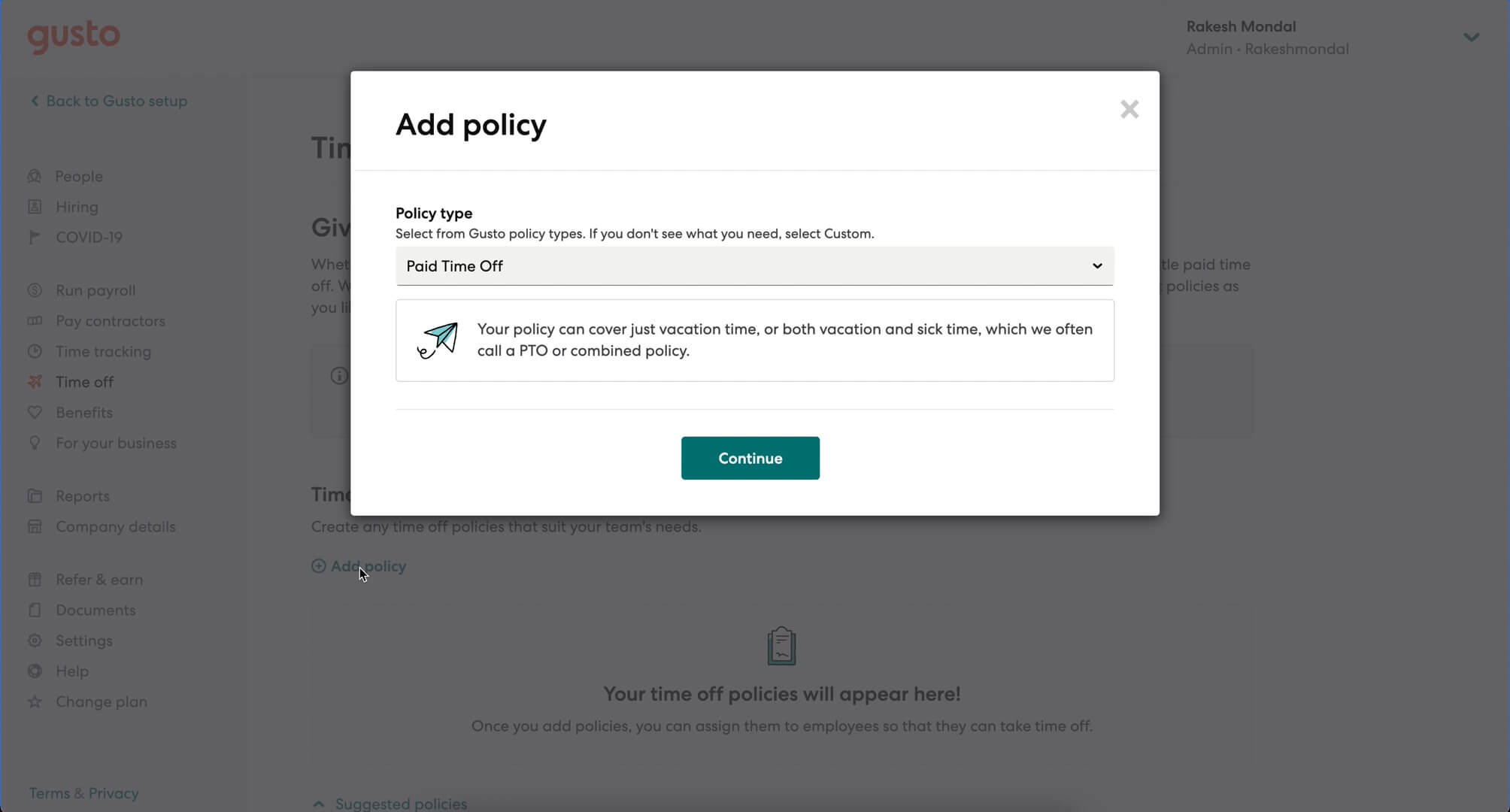
Gusto's Premium plan adds a dedicated service advisor and certified HR experts. Simple and Plus customers can add priority support for $30 a month plus $3 per person. While this is a great offer, it does seem to be where things get trickier. The same customer hit repeated PTO errors, including seniority-based accrual changes that did not update automatically. Support's suggested fix was building a new policy and moving employees onto it, which she said would lose data. She also lost admin permissions without notice after a Gusto change and discovered it in the middle of an audit.
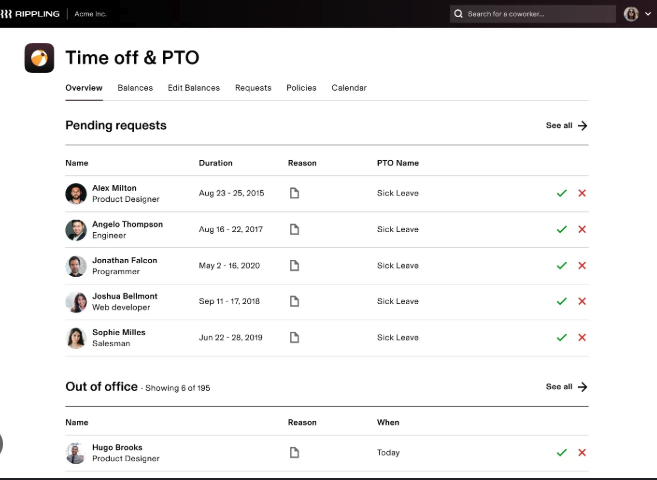
At the same time, the Rippling customers we met, at 105 and 130 employees, both named support as the aspect they’d most like to see improved. One said front-line support is offshore and "very surface level," and that reaching someone who can solve a problem takes several loops, as a lot of it is automated. The other said she had to contact support repeatedly for features that should have worked automatically, and that everyone at her company finds Rippling tricky to figure out. The 105-employee customer also called reporting "just not intuitive," while describing onboarding as "pretty seamless."
The more modules you run in Rippling, the more of your week depends on Rippling's support queue. A team with 1 person in HR and no IT staff will find Gusto the lower-risk system until it needs something only Rippling does.
Final Words
None of the buyers we spoke with left either vendor over the payroll run itself. The decision gets made on everything around payroll: how you add people, what you pay as you grow, and who fixes the system when something breaks.
Gusto is the better fit for a U.S. team under 50 that wants a price it can see, a contract it can leave, and software one person can run. Rippling is the better fit once you manage devices, multiple entities, or hires abroad, provided you are ready to negotiate a quote, sign a term contract, and own a more complex system. Teams between 70 and 100 employees on Gusto should start comparing now rather than at the potential breaking point, especially if running increasingly complex payroll in multiple jurisdictions, and/or expecting to recruit voraciously with the same tool.
For a wider field, see our Payroll Software and HR Software buyer guides. To test your own situation, our HR Tech GPT draws on thousands of conversations between our advisors and HR buyers. If you want a person, our advisors can tell you what companies like yours chose.
More Gusto comparisons:
Review Methodology
We take our research process seriously and want to make sure we are presenting our readers with the very best solutions in a given software category. Check out this guide to learn how we evaluate vendors before featuring them in our buyer guides.
Learn MoreYou might also be interested in the following buyer guides:
Join 85,000+ HR Tech Nerds who get our weekly insights