

11 Best Benefits Administration Systems (2026)
The best benefits administration systems, hand-picked and field-tested by SelectSoftware Reviews' HR tech experts. See info on pricing, features, integrations, and more below.












As a benefits leader, you have the rewarding job of making your company a great place to work. After all, employee benefits packages and other perks can help you attract top talent, retain current employees, and build a culture that aligns with your values.
The downside, of course, is all the administrative work that benefit plans and benefits enrollment creates for you. Fortunately, benefits administration software can help you automate your benefits management, improve efficiency, and streamline open enrollment — all while staying compliant.
Benefits administration software serves as a one-stop-shop for all your employee benefits. With everything centralized, the setup and management is easier for you and open enrollment is easier for your employees.
The result? Employees make smarter, more informed decisions about their benefits, and you have less administrative work to manage. To help you find the right benefits management software, we put together the following guide with top software platforms, features to look out for, common mistakes to consider, pricing, and more.
We assessed dozens of benefits administration software platforms with special consideration given to the three most critical functions performed by this type of tool: integration/configuration, self-service for employees, and compliance.
We used our HR industry experience to refine the scope of our research and applied our multi-dimensional assessment process to test each contender for these quality standards.
- Integration and Configuration: First-class benefits administration software integrates smoothly with each customer’s tech stack.To test for this, our team compared the quality and quantity of integration partners against a list of common business ops tools.
Our HR tech experts also determined the most important workflow automations, and we audited each product for the ease with which a user could configure these features.
- Self-Service for Employees: Self-service features reduce the burden of data entry on your HR team, improve the accuracy of employee information, and support employee empowerment. Our expert researchers performed simulations using each tool as if they were an employee and graded each platform's performance on the ease with which they could enter and change information across different data types.
- Compliance: Legal compliance is imperative, so we scrutinized the fine print, checking for each company’s capacity to keep customers complaint. We considered the product's state-by-state adaptability, as well as its capacity to handle multi-national organizations.
We’re data nerds and love a good dashboard, so we also checked for each tool’s reporting and analytics capacity. To learn more about how we approach our work from the granular to the gigantic, read this article on how we assess HR tech vendors.


ForUsAll

ForUsAll is a great choice for small and medium-sized businesses (SMBs) because it is very quick to set up and quite affordable.
PROS
CONS
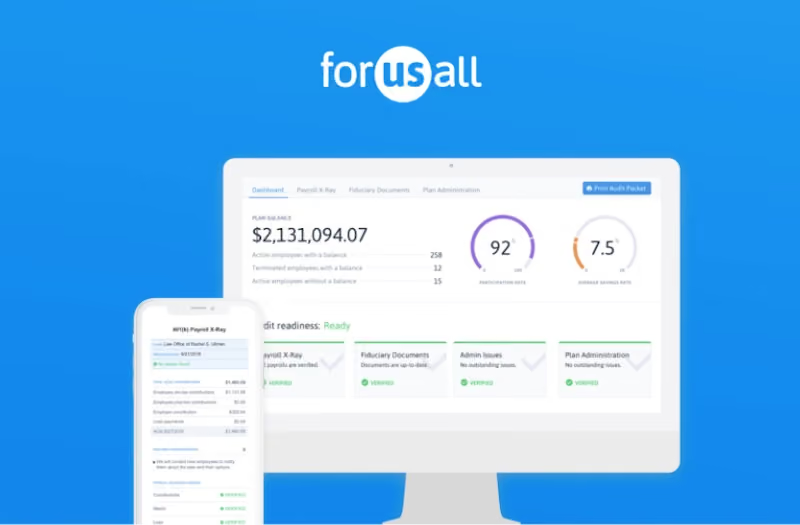
ForUsAll is a cloud-based 401(k) administration platform for small and medium-sized businesses. Acting as both your 3(38) and 3(16) fiduciary, ForUsAll ensures you stay compliant while automating manual tasks such as contributions, 401(k) loans, eligibility tracking, hardships, and notifications. You can integrate ForUsAll with most cloud-based payroll systems for an automatic synchronization of your data. Payroll integration also allows it to automatically update deferrals, notify new participants when they become eligible, and more.
CMC Properties, Lever, Arbor Lodging, Smart Biz, Bolt Threads
ForUsAll costs as follows:
- For the employer: Employers using ForUsAll pay a base monthly fee of $120 with an addition of $6 per participant per month.
- For employees: Employees pay 0.50% of assets under management annually.

Best For

Deel
Deel localizes your offerings in accordance with local guidelines so that you can stay compliant with your global workforce.
PROS
- 24/7 in-app support and an impressively fast onboarding speed of 2-3 days.
- Access to local payroll experts in various jurisdictions, and support is available for contractors navigating the process of setting themselves up as an LLC.
- Self-service approach with tech-enabled features helps workers swiftly adopt the tool.
- Worker identity verification is reported to take less than 24 hours on average, and sometimes mere minutes.
- Offers APIs as well as over 100 native HR software integrations.
- Automated invoices (English language only).
- Excellent 24/7 customer service with fast onboarding (2-3 days) and local payroll experts in each jurisdiction.
- Seamless integration with platforms like QuickBooks, BambooHR, and Greenhouse, plus custom integration options.
- User-friendly, self-service features enable quick setup; identity verification often takes under 24 hours.
- Automated invoices simplify payments, provided they're in English.
CONS
- Some of Deel’s best features, like onboarding automation, are add-ons, which can be cost-prohibitive.
- Modifying contracts or service agreements with Deel is difficult and often requires addendums for any changes.
- Each payout comes with a $5 fee.
- Invoicing feature is limited to generating invoices in English, with no option for other languages.
- Key features like onboarding automation are add-ons, which may increase costs.
- Limited flexibility in modifying contracts or service agreements; changes often require an addendum.
- Invoices cannot be generated in languages other than English.
If your benefits-management needs feel complex due to the presence of team members in different geographies, Deel Benefits is worth looking into.
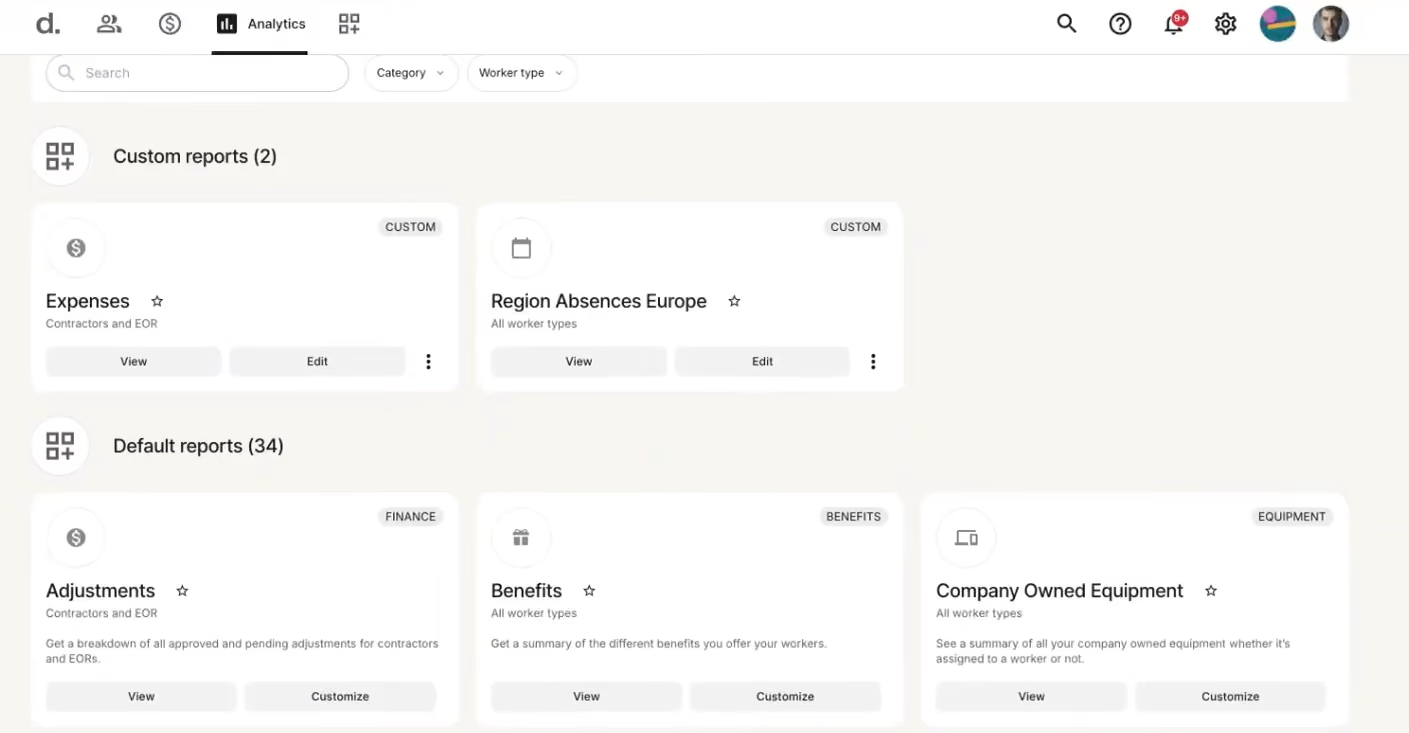
Deel Benefits can help with hiring and providing benefits and perks for people in various geographies. The benefits themselves would vary depending on the region. Still, you’d streamline their management through the same platform you’d use for payroll, contracts, timesheets, invoicing, and even some core HR functions.
As to the specific benefits offered, the best way to vet them is to go to their benefits tool on their website. You select a country and the type of benefits, and they present what they can provide.
For example, if you want to hire in Canada, you can choose Statutory and/or Common benefits. These include employment and worker compensation insurance, transportation and electronic coverage, and certifications.
40,000+ companies, including Andela, Brex, and Makerpad.
Deel Benefits has three plans whose pricing is custom:
- Benefits Admin: Global benefits administration (EOR, PEO, & global payroll) with unified management, covering plan admin, enrollment/renewal reporting, QLE management, and carrier integration.
- Benefits Marketplace: Purchase global benefits plans (statutory and optional) via a trusted brokerage network, offering competitive prices and comparison tools.
- Managed Benefits: Comprehensive benefits administration, including employee support, QLE management, offline carrier sync, and renewal coordination.
As a new product, Deel has changed a lot since its inception. Its newest offering, DeelHR, allows companies to complete most of their HR operations tasks in Deel.
Best For
Deel Benefits is a good bet for those businesses that want to provide benefits on top of payroll for an overseas workforce, whether it’s through an EOR arrangement or for their contractors. It’s worth noting that they have a way for you to offer interesting perks apart from the law-required benefits.


I use Deel multiple times each month as our system for hiring, onboarding, and paying people in different countries. I start by adding new hires or contractors, collecting their contracts, IDs, direct deposit details, and any tax forms required by compliance in the platform.
I then add country-specific details—e.g., salary, currency, pay frequency, and mandatory deductions—so that payroll runs smoothly without manual calculations.
Each pay cycle, I review the payroll dashboard, check costs per country, and approve payments so that Deel can send money in the employee's or contractor's local currency.
Then I export payroll reports and employer-side payslips for the record of employment documents and to provide them to the finance team.
I also use Deel for benefits administration, including medical, health, dental, pension, and life insurance.
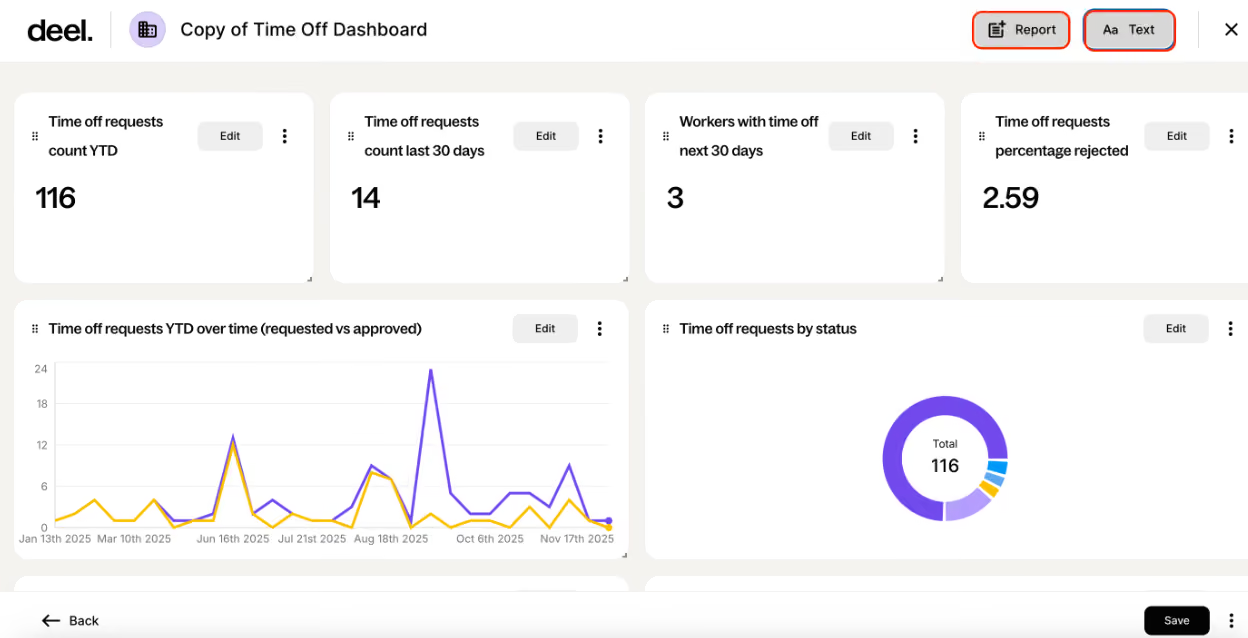
- I like Deel because it lets us hire and pay in many countries from one place, without setting up an entity.
- Another reason I like this solution is that it calculates payroll, payroll taxes, and any contributions automatically for each country, which saves time and reduces errors.
- A third is the compliance support. No matter how deep we research, local experts are always better and help us align with market practices.
We bought Deel when we moved from a single country to a distributed team across several countries and regions. We needed one system to hire employees through EOR, pay contractors, and run payroll where we had entities, without juggling a different local vendor in every country.
The main benefit for us is centralized global payroll with automated local tax, contributions, and multi-currency payments, so payroll and compliance work shifted from spreadsheets and email to one workflow.
Another main benefit is compliance support, with local contract support and country rules in the platform, which gives our HR and legal teams more confidence when entering new markets.
Having Deel admin access reduced the time spent coordinating with external payroll providers and internal finance each cycle, since everyone now works from the same global reports and dashboards.
- Some features feel less mature than those in a dedicated HRIS, which means we have to pair Deel with other systems for deeper HR needs.
- I also dislike that very basic changes require support tickets, and even then, resolutions take longer than expected or are never resolved. I had a case where one employee was added by mistake—they said it would disappear from the account, but it never did. That employee now appears twice, which confuses headcount and creates extra admin work.
- Reporting and workflow customization feel limited, so for more complex reporting, we still have to rely on Excel or other tools.
The main reason I picked Deel compared to other EOR providers was their broader country coverage, which helped with pricing.
Another reason was that the portal seemed user-friendly—it is easier for new employees to go through onboarding flows, submit expenses, or provide other information, as the portal is very self-explanatory.
Define your requirements and map your countries and hiring types first. Know exactly which countries you need now and over the next 12 months, plus your mix of EOR, contractors, and owned entities, since not every tool covers all equally well.
Check pricing and any hidden costs. Get a full breakdown of per-employee fees, including any additional tools you use (like I used benefits, which impacted total pricing depending on the insurance plan each employee chose), and compare the pricing with your budget.
Test integrations and workflows—confirm that it connects smoothly to other HRIS systems and accounting tools, and run a trial of the core features like payroll and onboarding. Evaluate the depth of compliance support.
When I started using Deel in 2021, it mainly covered contractors. Later, they added EOR and global payroll. Over time, they added other HR features like benefits administration and device management. Nowadays, I am also noticing AI tools in the portal.
Deel is really good for startups or companies that want to expand their team in different countries without setting up entities.
I see Deel as a good fit for marketing agencies, consultancies, and e-commerce businesses with distributed teams, where speed to hire and payment reliability matter more.
Companies with simple domestic payroll needs and no international hiring should look for local expert options.
Also, companies with fewer than 15–20 people in just 1–2 other countries should consider a local market vendor, as Deel’s pricing can be expensive compared to local alternatives.
Paycom
Paycom’s Benefits Administration stands out for connecting benefits, deductions, eligibility, and life events directly to payroll, automating tasks and decisions across the entire employee life cycle and reducing the need to move employee data between systems.
PROS
- Benefits data flows directly into payroll for deductions and eligibility.
- Employees can complete enrollment, review plans, and preview payroll impacts live via desktop or Paycom’s mobile app.
- Flexible controls support eligibility, waiting periods, coverage levels, and effective dates.
- HR teams can batch-update premiums and deduction amounts before open enrollment.
- Enrollment reporting shows incomplete tasks and employees’ upcoming benefit selections.
- Proprietary HR, payroll, time, and learning tools run on one database.
- Strong employee self-service tools for managing personal, payroll, benefits, and time-off information.
- Single database keeps employee data consistent across HR and payroll workflows.
- Deep HR and payroll integration enables automation across the employee life cycle.
- Broad automation reduces manual work across everyday HR processes.
CONS
- Benefits Administration is an add-on to Paycom payroll, rather than available as a standalone product.
- Payroll is required to use Paycom’s broader Global HCM software.
- Paycom does not provide enough public information to assess benefits-specific customer volume or pricing.
- Pricing can be high compared with more focused HRIS options.
- Reporting can be complex and cumbersome for administrators to customize.
- Requires customers to run payroll with Paycom to access the HR suite.
- Limited flexibility for organizations that rely on external integrations.
Paycom’s Benefits Administration takes a different approach from standalone benefits tools by keeping benefits and payroll in the same software and database. During our research, the payroll connection stood out as the biggest strength: deductions, eligibility, and life events can flow through payroll rather than requiring HR teams to maintain separate data between systems.
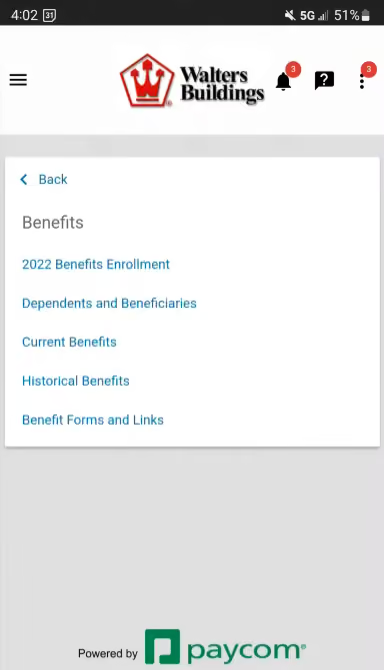
The employee enrollment experience is also flexible. Employees can enroll from a desktop or through Paycom’s mobile app, while HR teams can configure deduction amounts, enrollment dates, effective periods, new-hire waiting periods, eligibility rules, plan options, and coverage levels. Paycom also supports batch updates to plan premiums and deduction amounts ahead of open enrollment, which can reduce repetitive administrative work.
We also like the visibility HR gets into enrollment. Paycom provides reporting on where employees are in the enrollment process, which benefits tasks remain incomplete, and which benefits employees have selected for the upcoming year. That gives HR teams a straightforward way to identify employees who still need to complete their elections.
The main drawback is the bundling requirement. Paycom’s Benefits Administration comes with Paycom payroll rather than functioning as a standalone benefits administration system. That makes the platform particularly compelling for organizations already looking for an integrated payroll and HR system, but less attractive for companies that want to add benefits administration to an existing payroll environment.
Custom pricing.
Best For
Mid-sized and enterprise organizations that want benefits, payroll, and employee data managed in one system rather than across separate platforms.

I don't use it as much as my team, but we do use it consistently for: tracking and reporting on various employee data, doing payroll, managing benefits, timesheets (clock in/out for hourly folks too), and storing documentation.
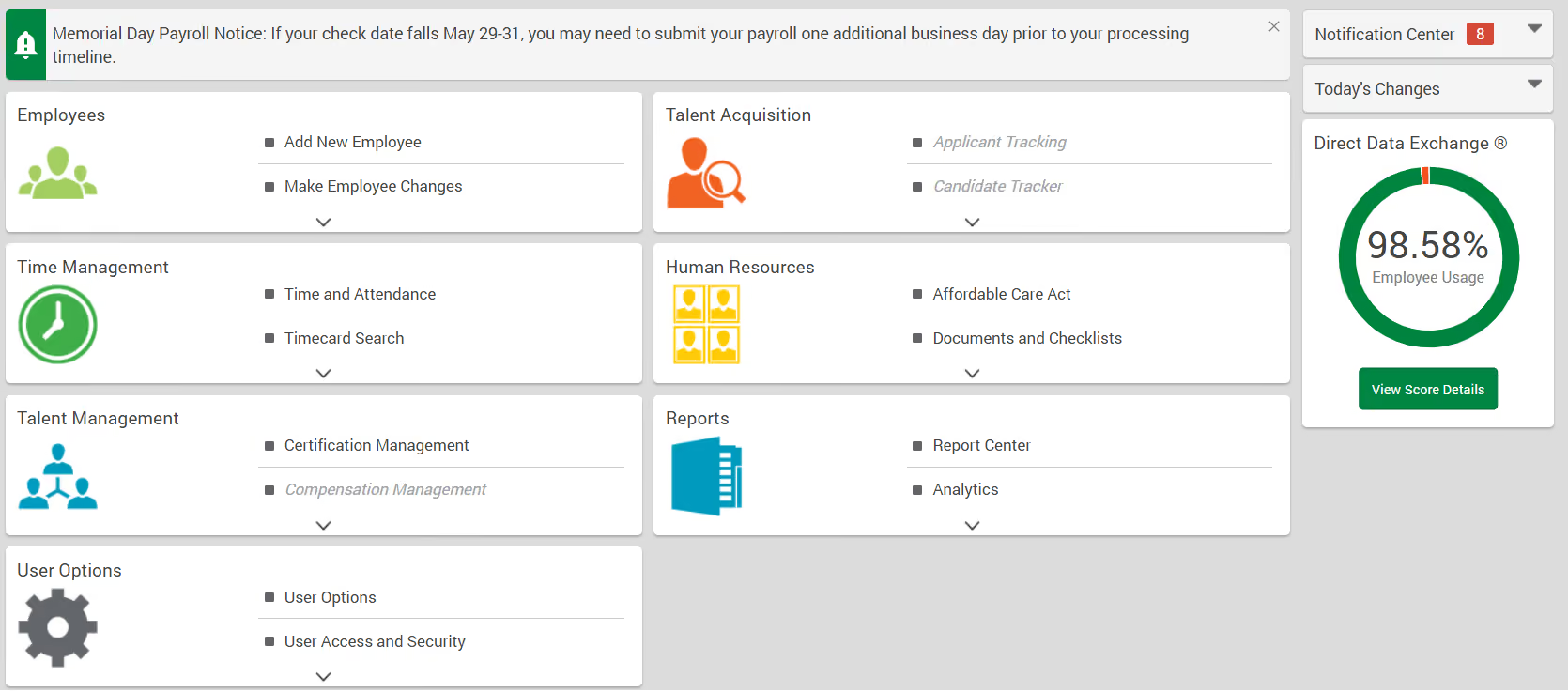
It is able to handle centralized payroll for multiple entities, affordable compared to some competitor options, has views for both managers and employee self-service, and allows employees to review and ‘approve’ their paychecks in advance.
We have worked with Paycom for about 5 years. We had outgrown BambooHR (at least at the time, they didn't have integrated payroll) and then had a really bad experience with BeyondPay. We needed a combined HR/payroll system that could accommodate multi-state as well as multiple legal entities (we have affiliates managed by central HR/acct). Paycom was the most affordable option that could accommodate our needs at the time.
- The reporting functions aren't great: the filtering options rarely work as they are supposed to so we often do a workaround where we run a huge report file and then use XLS filters to get the data we need as opposed to producing a report from the system that is what you need from the start.
- Limited customization options: we have many things we’d like to track and there is cap on the number of custom fields that can be added.
- The clock in/out functionality is clunky: it works fine if people all work under one company code/work type. If you need to assign hours to different projects (say you want to track learning hours, or you have funding partners and you need to track hours on their grant) it’s very cumbersome for hourly employees.
How much customization do you need” is an important thing to consider and also whether you need data sync between other platforms. If so, Paycom may not be the best fit for you.
Honestly don't feel like they've evolved much in the time we've used them.
Small, fairly simple organizations
Large and/or complicated organizations

Paylocity
Paylocity combines benefits administration, payroll, and HR in one platform, with guided enrollment, automated eligibility and carrier processes, decision support, and integrated spending accounts.
PROS
- Guided enrollment and personalized decision support simplify benefits selection.
- 100+ pre-built carrier integrations support automated data connectivity.
- Payroll integration helps keep eligibility and deductions aligned.
- Supports medical, dental, vision, FSA, HSA, and other benefits.
- Automated reminders, eligibility alerts, and workflows reduce administrative work.
- Paylocity’s customer support is highly rated for always being available to answer questions.
- Global payroll support for 100+ countries.
- Provides free and unlimited training modules on the website.
- Paylocity’s mobile app has a good UI and functionality
- The tool is easy to use for both employees and employers.
- Has 350+ pre-built integrations.
CONS
- Some standout capabilities are powered by partners rather than built natively, including benefits decision support (Reclaim) and retirement (Vestwell).
- Benefits administration pricing is not publicly disclosed.
- Undisclosed pricing.
- It doesn’t have a free trial or free plan.
- Support is available in English only.
- It isn’t the best solution for remote teams looking for a tool to manage payroll and benefits for their contractors.
Paylocity's benefits administration software makes a strong case for companies already running Paylocity payroll and HR. It covers guided setup and enrollment, decision support, carrier EDI file generation, compliance workflows, spending accounts, and connections to HR and payroll.
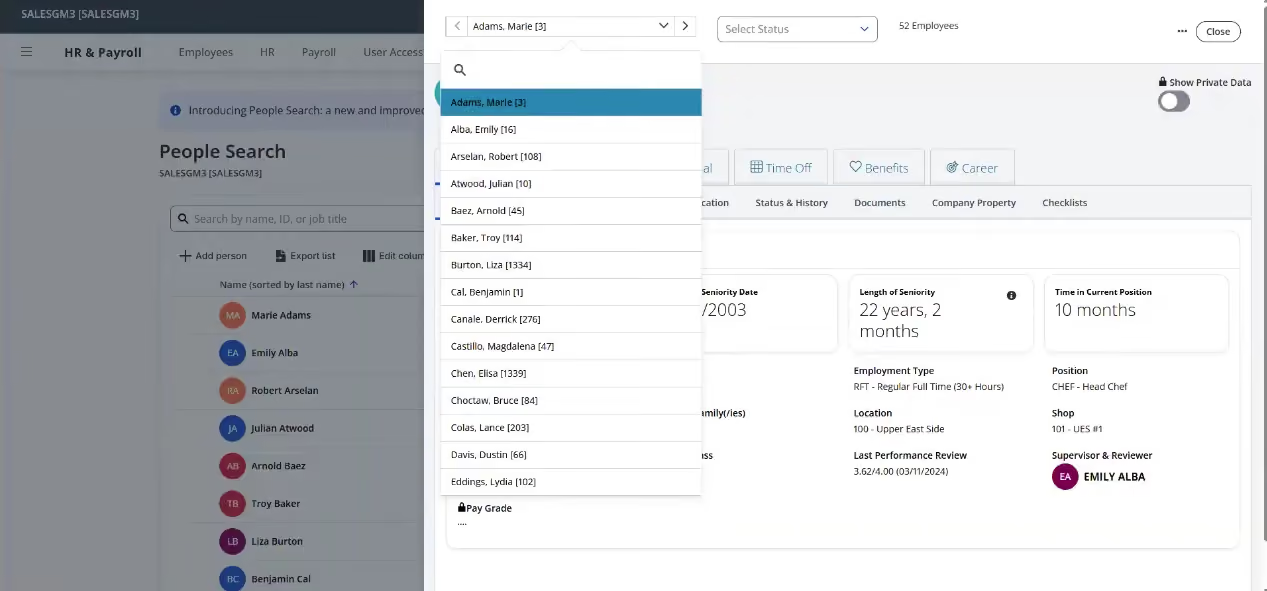
The enrollment experience is well curated. Paylocity offers guided setup for HR teams and brokers, while employees get a step-by-step process with cost breakdowns, tooltips, and personalized recommendations through Benefits Decision Support, powered by Reclaim. We like pairing standard enrollment workflows with decision support, since benefits selection confuses many employees and better guidance can cut the questions HR fields during open enrollment. Automated reminders and eligibility notifications keep things moving without manual chasing.
On the administrative side, the platform leans on automation. You can monitor enrollment statuses and alerts from a dashboard, build workflows for routine requests, and generate and send EDI files to carriers. Paylocity says it has prebuilt integrations with over 100 carriers, though feeds are configured and tested per client, so buyers should not assume every integration is plug-and-play.
Paylocity Retirement, powered by Vestwell, embeds 401(k) and 403(b) workflows into the platform, with payroll as the contribution data source and self-service for employees. As with decision support, this is a partner-powered layer, so we'd confirm which capabilities and integrations a given proposal includes before signing.
Paylocity serves 40,000+ companies; Green Lawn Fertilizing/Green Pest Solutions is one documented benefits customer.
Custom pricing.
Best For
Paylocity is best suited to mid-sized U.S. companies already using Paylocity payroll and HR that want to consolidate benefits administration and employee data in one platform.

We use Paylocity for various purposes, such as payroll, onboarding, and managing employees' work hours and wages. Our payroll processing is done weekly. Each week, we review the hours reported by our employees in Paylocity to ensure that the final payment is accurate and make any necessary adjustments for deductions, such as child support, health insurance, paid time off, or pending payments.
The onboarding module is used once or twice per week, depending on the number of new employees. With the module, you can add an employee's basic information, employee earnings, PTO, deductions, and simultaneously send a candidate a link to access the Paylocity platform, where they can review and sign necessary documents such as policies, NDA, and handbooks. This helps us streamline the onboarding process, ensuring that new employees have all the required documents and knowledge for their first day of work.
- Their customer service is quick and easy to reach.
- You can integrate modules and customize them according to the company's needs.
- The payroll module integrates with the workforce time management module, allowing employees to clock in and out and generating reports for payments.
- They keep you informed about changes in federal and state employee laws, especially those related to taxes and changes that may affect your company's payroll.
We are a growing company and can no longer manage payroll manually. In 2020, we started using Paylocity. It has greatly improved the time it takes to process payroll and the accuracy of the payments, particularly for our hourly employees. Additionally, our onboarding was done manually. We spent a lot of time sending emails, attaching documents, and transcribing applicants' information into our system. This task could take a full day and did not allow the HR team to focus on other tasks.
To address this problem, the company decided to purchase the onboarding module. It helped us automate the process and save time. Now, on one platform, employees can authenticate, sign, and submit documents, as well as input their information. This has reduced the need for printing and handling physical documents. I have used Paylocity for the past four years, and I believe it is an excellent tool worth the investment.
- The platform is challenging to navigate.
- You still need to add information manually to the payroll, such as holiday pay.
- The employee clock-in and clock-out system sometimes freezes or stops working without reason, requiring a reinstallation of the app.
I have worked with several tools, most of which are similar, but the workforce time management module stands out. It effectively tracks employee hours worked daily and is simple to use. It also integrates seamlessly with the payroll module, offering an advantage that no other HR system provides.
If you are looking for an efficient HR system that you can customize according to the organization's needs, Paylocity is a great tool. Also, if you are looking for payroll software but know that you will need performance appraisal or another HR process in the future, Paylocity allows you to acquire and integrate more modules.
Paylocity continuously changes to offer a better experience to its customers, especially HR departments. When I started working with them, some processes were still manual, but over time, they improved and automated these processes, saving us time that we can now invest in other tasks.
Paylocity is a valuable tool for companies with hourly workers as it allows for easy tracking and control of their time.
Paylocity is an excellent tool for any organization. It is important to define the company's priorities to understand which modules are correct for the organization.

Gusto
Gusto provides full-service payroll services with benefits and HR. The software takes care of the administration and deductions by syncing them with payroll and makes things easier for you and your employees with its built-in employee self-service.
PROS
- Gusto has an eye-catching UI and is compatible with several devices.
- Automatic payroll deductions for easier benefits administration.
- The dashboard feature keeps tabs on compliance tasks.
- The hiring and onboarding sequence is nicely streamlined between HR and the new hire
- Post-offer, pre-start tasks are made easy with integrations like CorpNet and Checkr.
- Easy payroll for U.S.-based W-2 folks, domestic and international contractors.
- Phone support, email, and other customer service resources.
- Licensed benefits advisors for all plan users.
- The business model is responsive to customer needs.
- Transparent pricing structure. Doesn’t require long-term contracts.
- Free account setup.
- Ability to create onboarding checklists, send offer letters, collect signatures, and store all onboarding documents online.
- The dashboard feature keeps tabs on compliance tasks
- The hiring and onboarding sequence is nicely streamlined between HR and the new hire
- Post-offer, pre-start tasks are made easy with integrations like CorpNet (state tax set up) Checkr (background checks)
- Easy payroll for U.S.-based W-2 folks, domestic, and international contractors
- Person-to-person phone support, email, and other customer service resources
- The business model is responsive to customer needs
CONS
- Gusto facilitates payments for international contractors but not for employees.
- There is no built-in accounting feature, so the management of earnings and expenses can’t happen in one place.
- Analytics dashboard capabilities are underwhelming
- Simple plan users do not have access to native time tracking, necessitating third-party integrations.
- Users of the Simple plan cannot access federal and state compliance alerts – they are not even available as add-ons.
- Plus plan users have access to compliance alerts, but they must be added on.
- No free trial or free version
- Gusto can support payments for international contractors, but not employees
- No native accounting feature to keep earning and spending under the same roof
- Analytics dashboard is simplistic
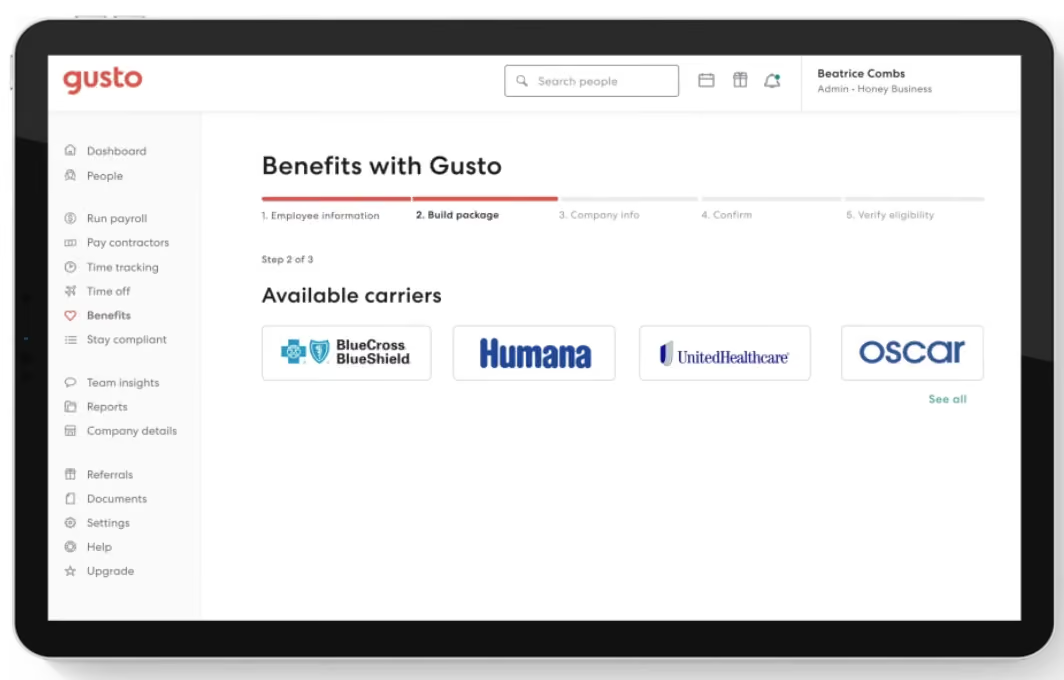
We have had a positive experience with Gusto's benefits administration features. The software seamlessly integrates payroll and benefits administration, simplifying the process with automatic deductions and syncing capabilities. The built-in employee self-service functionality is also a nice touch that makes it easy for employers and employees to manage benefits and access relevant information.
Gusto's user interface is visually appealing. Being browser-based lets it provide a smooth user experience across multiple devices. Additionally, Gusto provides licensed benefits advisors to assist and guide users in optimizing their benefit plans.
We appreciate Gusto's customer-centric approach, as they remain responsive to customer needs and continuously improve their services based on feedback. Their transparent pricing structure and flexibility without long-term contracts add to the appeal. Moreover, Gusto offers free account setup, making it convenient for businesses to get started.
The availability of person-to-person phone support, email assistance, and other customer service resources reflects Gusto's commitment to providing excellent support. However, it's worth noting that some features, such as federal and state compliance alerts and integrating existing broker and health insurance plans, are only available in the Premium plan or as add-ons for the Plus plan. Simple plan users may need to consider third-party integrations for certain functionalities like time tracking.
While it doesn't offer a free trial, Gusto's consistent focus on core functionalities sets it apart from other platforms that often get sidetracked by unnecessary features.
Gusto powers HR and benefits management for over 400,000 businesses across the U.S.
Gusto’s benefits management tools are part of its HR software packages, with pricing starting at $49 per month plus $6 per employee. Premium plans cost more but unlock expanded HR features, including access to certified HR experts and advanced benefits administration tools.
Best For
Even budget-strapped startups can afford Gusto’s basic plan. For companies with some bank capital to invest in human capital, the top-tier Premium plan is a great choice, especially if they have an HR department of one person.

Day-to-day I used Gusto to manage payroll, benefits, and tax forms.
Gusto's automated payroll is solid and I never had an issue with the main payroll functions, although we had a few issues due to confusing UI with the custom earnings and dismissal payroll workflows.
Gusto's quarterly tax filings and reminders about compliance checks/updates were incredibly useful to us. The Docs section and reporting features turned out to be a helpful resource for all kinds of administrative tasks. Around 2021 I started receiving notices that some of our state tax forms weren't being filed on time. Although Gusto did resolve them eventually without penalty, it was concerning that they didn't keep us in the loop.
Gusto's benefits department is its weakest link. I never participated in the initial setup, but I managed 4 or 5 open enrollments through Gusto, and each was an unmitigated disaster. During two separate years, I sent 4+ requests to discuss new providers and never received a response. Not a peep. I have also had to clean up multiple enrollments and COBRA errors.
I speak to Gusto's support team a few times a month. Their support used to be outstanding, but recently they seem to have shifted to a script model, and the agents' competence is hit or miss. There is often an unrealistically long response time when issues are escalated to a specialist, and it is frustrating to wait days or weeks for an answer only to receive an unhelpful form response. Since Gusto handles so many regulated processes, agents are quick to default to a "we cannot advise" answer, and they often provided bad information that caused more problems than they solved. To be fair, I have also worked with agents that helped me pull off miracles, but I wish the quality were as consistent as it used to be a few years ago.
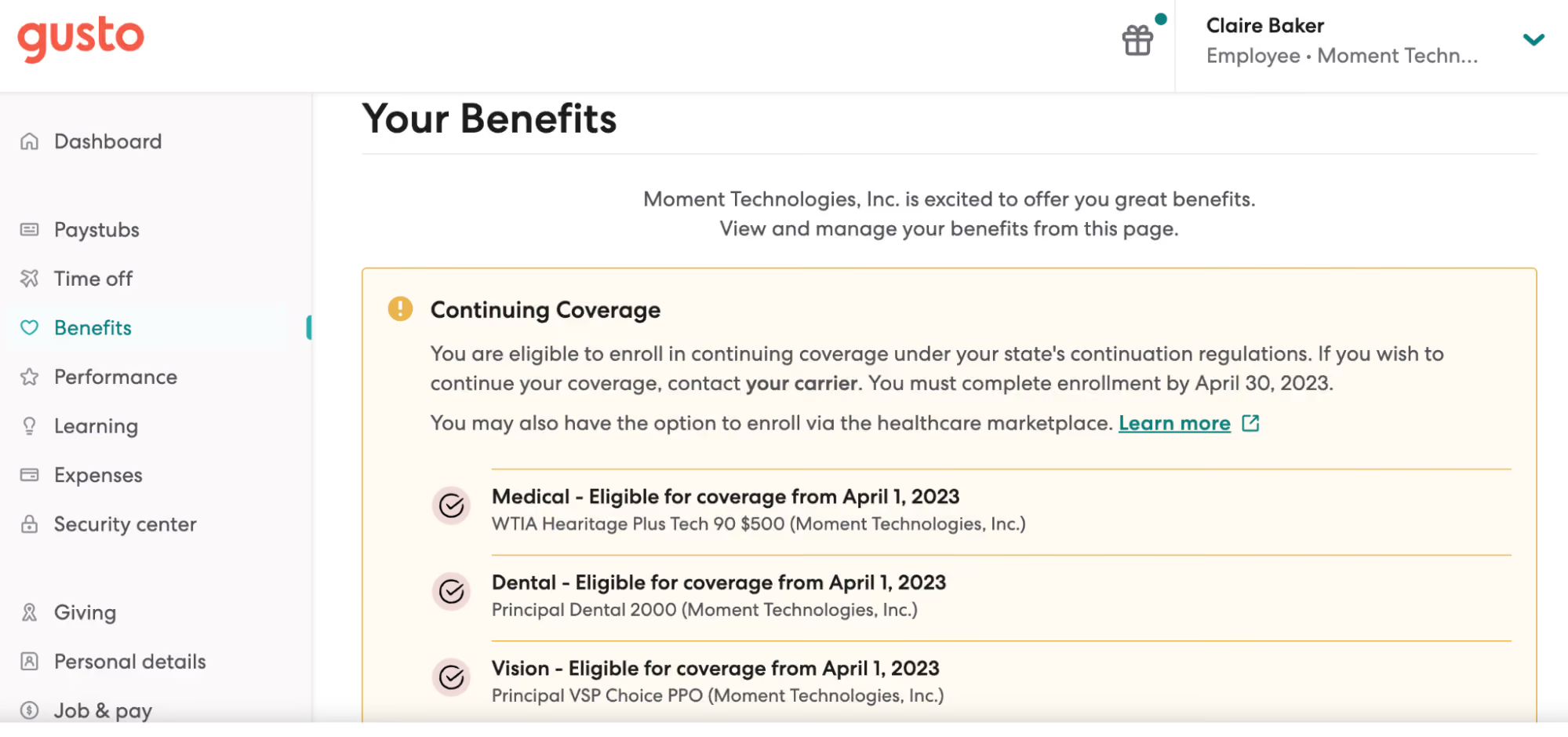
The UI is clean, intuitive, and (mostly) easy to use. I very seldom had issues with automated processes. They make onboarding new employees incredibly simple. I also really like the friendly tone of the brand's "voice." The marching pig on the loading screen that changes with the seasons never gets old; it still sparks joy each time, even after all these years!
I have used Gusto since 2018 in 3 different early-stage tech startups. Gusto has a reputation as the go-to in Silicon Valley incubators and accelerators, although I've seen Rippling gradually gaining market share in the past few years. In all 3 cases, we selected Gusto because of their breadth of services. Gusto makes it easy to set up everything our organization needed to begin hiring and paying employees. What's nice about Gusto is that it makes processes that are intimidating to many founders into a "set it and forget it" task. Automating payroll, benefits, filing government forms, and quarterly taxes helped free up time for our founding team to focus on a growing set of other responsibilities.
Gusto's benefits department is unresponsive and it's nearly impossible to get answers from support about even simple benefits questions.
I have seen quite a few concerning errors across the platform (mostly with benefits), including employees not being enrolled in benefits programs, dismissed employees not being removed from benefits programs, incomplete COBRA enrollment, and late tax filings.
The information from Support is unreliable and often inaccurate.
The dismissal payroll workflow is misleading and we've had a few serious problems as a result.
When a Gusto admin is dismissed, their admin privileges are not removed automatically, which is a serious privacy concern.
I wish Gusto made it easier to set up a business entity in new states. They partner with a company called CorpNet, but I found the level of service wasn't worth the price and went back to handling state registration myself.
I love Gusto's friendly casual-but-professional tone compared to other providers in the space.
Gusto is best for small teams, the smaller the better. It is a great option for founders and single-person People teams who have less time to dedicate to payroll, benefits, and compliance. It makes many benefits available and affordable for small groups that would not have the numbers to access plans through traditional providers.
Gusto becomes less useful as a team grows and compensation & benefits become more complex. I would definitely recommend Gusto to founders, but I recommend moving off of their benefits platform as soon as you have a full-time person to manage benefits administration. Its payroll functionality is solid, but payroll administrators should be aware that they will get limited guidance from the Gusto support team.
Gusto's functionality has grown over the time I've used the platform as they've added additional features and integrations. However, the accuracy and quality of support have suffered over time. I used to be a Gusto evangelist, but these days I recommend that growing companies move off of Gusto as soon as is practical. New features have become less useful over time, and I wish they would focus on maintaining the quality of their core product rather than trying to expand into new services.
Company founders or admins inexperienced in payroll and benefits. Very small teams with a single person managing payroll and benefits administration among many other HR responsibilities.
Larger organizations with 50+ employees. HR teams with specialists in each area. Companies with complex and highly-regulated compensation structures.

Remote
While Remote is mainly known for its global payroll and EOR products, it also handles benefits administration for internationally distributed teams. Unlike many vendors, Remote owns local entities in the countries where it operates. This means, in very general terms, that its customers can offer employees a more straightforward, more “local” experience regarding payroll and benefits.
PROS
- Remote provides flat rates, so you can easily compare its pricing with other vendors. The platform doesn’t add a markup on any benefits premiums.
- Self-service options for employees.
- Local specialists provide 24/7 support.
- Benefits plans are locally curated. Health, dental, vision, life, mental health support, and disability are all covered, as is pension/401(k).
- Helpful resources are available on their site, offering tips for specific to geographic regions.
- Equity-based compensation is available.
- Fast and compliant payroll in 170+ countries.
- Live chat support with local payroll experts.
- Flexible, localized benefit packages.
- Flat-rate pricing structure, no deposits or hidden fees.
- Mobile app streamlines expense reimbursement with autofill from receipt photos.
CONS
- Some employers reported a steep learning curve in learning to navigate the software.
- No off-cycle pay runs are available at the moment.
- Though the current live chat and email support have been great, there is no phone support users can reach out to.
- Remote offers limited integration options, yet you can access its custom API for free.
- Doesn’t have a free trial.
- Redundant for organizations solely recruiting within the U.S.
- Help center documentation isn’t easiest to understand.

Remote lets you offer customized benefits packages to fit each country where you have employees. The platform enables compliance by providing country-specific benefits and perks that adhere to local laws. We like that Remote is one of just a few vendors that own local legal entities in countries that the platform services. Since it has no intermediaries, it can offer more flexibility and speed.
Though they were a bit hard to locate in their respective app stores, both the Android and iOS apps are in good shape – they are easy to use and equipped with essential features.
Arduino, GitLab, Paystack, Loom, cargo.one, Secureframe, Phaidra.
- Contractor Management plan: $29/contractor/mo
- Employer of Record plan: $599/employee/mo (when paid annually)
- Global Payroll and Remote Enterprise plans: Customized pricing – contact Remote for details
- Startup and nonprofit discount: Eligible startups and nonprofits can get 15% off EOR and Contractor Management services for 12 months.
- Refugee discount: Up to 10 employees free when hiring refugees
Best For
Remote is a robust solution for startups and distributed teams to provide their employees and contractors with country-specific benefits and easy onboarding and payroll.

We started using Remote for our international employment. The HQ is in Belgium, and we were expanding into France, Spain, and other countries yet to be decided. The tool offers a basic understanding of the social laws and costs associated with employment in these countries. Once candidates were onboarded, Remote supported the full process, including onboarding, holiday, and payroll management.
- Remote provides the basic information needed to investigate employment in a new country.
- The documents are freely available and in clear language.
- All foreign employees and contractors are managed in one tool.
- Remote is ideal for initial foreign expansion.
My previous company (at the time of writing, I have left the company) intended to grow within Europe. The goal was to have a small team of employees in multiple European countries. As each country has its own unique social laws, and we did not have an entity in every country, we needed a partner to support us with this growth. Remote provided this solution. They act as an intermediary partner, take employees onto their payroll, and support you with specialized HR topics unique to each country.
- Remote's pricing is high—it is good if you only employ a few people per country, but once the team expands, it is better to have your own entity.
- There is limited customization, as most processes must follow the structure provided by Remote.
- In some countries, Remote works with subsidiaries, which can slow down the onboarding process.
We chose Remote because of its clear pricing and the intuitiveness of the tool.
People need to keep the following in mind:
- In which countries do we want to employ people?
- How many people do we want to employ per country?
- Are we going to open a legal entity or not?
I’m not sure as I haven’t used Remote for long.
Remote is good for organizations looking to expand into multiple countries with small teams, without the hassle of legal administration.
Remote is a bad fit for companies with large employment in a single country. Once you have a team of 5 to 10 employees in one country, it no longer makes sense to have Remote as an intermediary.

OnPay
OnPay ensures compliance and takes no upfront payment for its benefits administration software. When you decide to use it, you'll be connected with their team of licensed brokers so that your employees can get their favorite benefits from the best companies.
PROS
- Transparent pricing is among the most budget-friendly in the industry.
- Offers a one-month free trial.
- The plan combines payroll, benefits, and HR tools.
- Supports several pay types: regular hours, salary, overtime, and bonus. You can also create your own.
- Ability to act as an insurance broker to help businesses find medical, vision, and dental insurance in 50 states.
- Special payroll services for certain industries like restaurants, farms and agricultures, churches and clergy, and nonprofits.
- Free tax form handling for W-2 employees and 1099 contractors.
- Some HR services included within the plan at no additional cost.
- 30-day free trial available (starts after OnPay verification).
- Well-developed online help resources.
CONS
- Incompetent mobile app with poor ratings (2.1/5) from iOS users.
- Limited integrations.
- Takes two to four days for direct deposit. No faster direct deposit option is available.
- Lacks advanced HR features like employee surveys and performance reviews.
- Poor functioned employee mobile app.
- Requires payment four days before payday for direct deposit.
- Doesn’t support automatic payroll.
- Customer support sometimes hard to reach.

We recommended OnPay because, besides being a solid cloud-based payroll software solution, it also offers features for HR management and benefits administration at an affordable, transparent monthly price. For businesses in certain industries like restaurants and agriculture, the platform also provides special payroll services (tip calculations, separate tax filings, etc.) without charging additional fees.
OnPay partners with several low-cost benefits administration providers so that you can choose several health insurances and 401(k) retirement plans for your employees. While we found that OnPay’s integration is quite limited compared to its rival Gusto, its feature-rich HR tools are offered without requiring users to upgrade their plans or pay more, making the platform a more cost-effective option for several startups and small businesses.
- OnPay charges a base fee of $40 plus $6 per employee per month.
- Setup and migration of employee data are free of charge.
- You can use the price calculator on their website to see exactly how much it’ll run you for your team size.
- One-month free trial is available on the website.
Best For
Businesses looking for an affordable software tool that can carry HR, payroll, and benefits in one place. Its special payroll offerings also make the software a better bet for businesses in industries like restaurants, farms and agricultures, churches and clergy, as well as nonprofits.
We use OnPay regularly, typically once a week, to manage payroll processes in the organization. The tool has helped us automate payments to employees and contractors, calculate taxes, and file them on time. We also use it to track employee benefits and time off, making it easy to keep everything organized. OnPay is especially helpful for generating reports, which we use for financial planning and compliance. Overall, it has streamlined payroll and HR tasks, reducing manual work through automation.
- Payroll processing is made simple for users of all levels by OnPay’s user-friendly interface.
- Its comprehensive suite of payroll solutions ensures accuracy and saves time, offering features like direct deposit, automatic tax calculations, and compliance management.
- The customer service provided by OnPay is excellent, with professional support agents available to help with any queries or issues.
My company chose OnPay because we needed a less time-consuming and more straightforward solution to manage employee benefits and payments. Before OnPay, we had trouble tracking taxes and ensuring accuracy. Payroll automation, tax computation, and benefit tracking became easier with OnPay. It has helped us save a lot of time and minimize errors over the past year. Additionally, the customer service has been excellent in answering queries and providing support.
- Compared to some of its competitors, OnPay offers limited integration with third-party apps, which can hinder seamless data flow for companies relying on multiple software programs.
- The pricing structure can be expensive for smaller firms that require more services or products beyond the basic payroll package.
- There are limited options for customizing payroll settings and reporting, which can make it challenging to adapt the system to specific business requirements.
OnPay sets itself apart from rivals by offering a simple, user-friendly interface that makes payroll processing accessible, even for those with minimal accounting experience. In contrast, some competitors have more complex systems that require in-depth training.
OnPay’s transparent pricing, with no hidden fees, allows businesses to budget for payroll services more easily. Other competitors have more variable pricing structures, which can become complicated and expensive as they scale.
OnPay is designed with small to mid-sized enterprises in mind, offering features like easy setup, streamlined processes, and extensive customer support tailored to their needs. In comparison, some competitors focus on larger businesses and may prioritize different tools over OnPay.
- When choosing a payroll solution, look for one that is easy to use with a flexible design, like OnPay.
- Ensure there are no hidden fees and that the pricing structure aligns with your organization's budget.
- To make payroll processes more efficient, prioritize features such as automatic tax calculations and compliance tools.
- Choose a service provider like OnPay, which offers dedicated customer support when needed.
- Finally, maximize productivity by selecting a tool that integrates with other apps your organization uses.
Over time, OnPay has added features like payroll compliance management and automated tax computation tools, improving its user interface for a better customer experience. It has enhanced integration capabilities, making data sharing with other apps easier.
OnPay has also invested in attentive customer service to offer timely support. Additionally, the pricing strategy has become more flexible and transparent, catering to the financial needs of small and mid-sized enterprises.
Small to medium-sized enterprises needing a reliable payroll solution with features like automated tax computations and compliance monitoring will find OnPay well-suited to their needs.
OnPay provides an effective payroll processing solution for businesses seeking simplicity without the complexity of larger systems, thanks to its clear pricing structure and prompt customer service.
Larger businesses that require sophisticated payroll features, high customization options, or advanced reporting capabilities typically found in more complex systems may find OnPay unsuitable.
Additionally, businesses with specialized payroll needs or those requiring extensive third-party integrations may find OnPay's services limited compared to its competitors.

Papaya Global
Papaya Global lets you manage payroll and provide benefits for your employees and contractors, wherever they are. They operate in 160+ countries, most of them through their EOR model. Their benefits offering has evolved notably with time, encompassing telehealth services and other forms of holistic wellbeing.
PROS
- Employees get a personalized physical and mental health plan tailored to their location. They can then access these services through the web and mobile versions of the platform.
- Papaya ensures prompt payouts within 72 hours across 160+ countries through the platform.
- Transparent pricing with a 60-day money-back guarantee.
- Dedicated customer success managers in your time zone for localized assistance.
- The starter monthly fee is reduced to $12 per employee for full-service payroll.
- Papaya Global packs the EOR services you need to do global payroll and employment compliantly in over 160 countries.
- Automated payments in over 100 currencies, 80 of them directly to the worker's bank account through its global banking partners.
- Dedicated customer support providing locations-specific knowledge regarding employment and payroll.
- End-to-end payroll guaranteed payouts in 72 hours.
- Offers four standalone solutions: data and insights, supplemental benefits & immigration support, payment services, and employee data management, making the platform more affordable and scalable.
CONS
- Lacks local entities in some of the countries they operate in; no tax penalty guarantee information available.
- No free trial or plan is offered.
- Additional fees include setup, onboarding, cycle per employee, year-end fees, and a required deposit.
- Limited existing integrations, but free use of pre-built APIs and custom API integrations.
- No free trial or free plan.
- Doesn’t own entities in all the countries it serves. The platform forms relationships with existing local in-country partners to handle employment in a specific region on the client’s behalf.
- BI analytics reports and global immigration services cost additional fees.
- Charges extra fees for setup, onboarding, employee cycle, and tax filing. Also requires a refundable deposit.
- Built-in integration options aren’t very robust. However, the platform does offer pre-built APIs, SFTP, and custom API integrations for free.
Paya Global is one of the best platforms for handling international benefits and payroll. With Papaya Global, you offer an overseas employee a similar benefits package (including equity) as if you had an operating entity in their region.
They can do this both through the Employer of Record and Contractor models. Of course, the pricing varies for both cases. It’s also worth mentioning that the global benefits offering is an add-on, starting at $190 per employee per month.
Papaya Global has garnered high praise from both users we've interacted with and our editorial team. Our familiarity with the tool dates back to early 2021, and it immediately impressed us with its transparent pricing, extensive HR capabilities, robust BI analytics, and localized customer support.
The platform serves both employers and employees, offering seamless access to payroll, payments, and workforce analytics. It guarantees automated payments in local currencies, personalized benefit packages, and multilingual pay slips across 160+ countries.
That said, when considering Papaya Global for your global payroll software, remember that it may not have a local entity in the particular service region you need one and, when that is the case, they rely on third-party local partners. Note that while pricing transparency is a strength, additional expenses like setup fees per location, onboarding fees, cycle fees per employee, year-end tax filing fees, and a refundable deposit should be considered.
Wix, Intel, Johnson & Johnson, Toyota, Deezer, Fiverr, Microsoft
- Full-Service Payroll service: Starts at $12 per employee per month, with flexible options based on operational needs.
- Payroll Platform License service: Begins at $3 per employee per location for tech upgrades.
- Data and Insights Platform License service: From $150 per employee per month, offering real-time analytics on payroll costs and headcount.
- Payments-as-a-Service service: Starting at $3 per employee per month, delivering a dedicated workforce payment platform.
- Global EOR plan: Ranges from $650 to $1000 per employee per month for comprehensive EOR management.
- Contractor Management & IC Compliance plan: Tailored services for outsourced contractors, starting at $2 per contractor per month.
- Global expertise services: Starting at $190 per month per employee, this lets you add the global health plan, immigration support, and global equity for employees.
Papaya Global's benefits offering has evolved to focus more on holistic well-being, covering mental health and featuring e-services like telehealth and self-care tracking apps. Their equity management tool now supports a vast spectrum of options, including (NQSOP; ISO; ESOP), Restricted Stock Units, Cryptocurrency, Employee Share Purchase Plans, and even Phantom Stock Plans.
Best For
Papaya Global is a top choice for streamlining global payroll and benefits operations in countries with established entities, especially for businesses with international hires located within Papaya Global’s extensive country coverage.
We use Papaya Global to run payroll in India, manage contractor payments, and stay compliant with local Indian labor laws. It also helps with generating reports and managing employee records. We can track employee data, generate reports, and manage time off or expenses through the dashboard.
The platform integrates with our accounting, travel, and HRIS systems for smoother operations. Overall, it has simplified the management of international teams in one place.
- Handles direct employees, contractors, and Employer of Record (EOR) services all in one system.
- Ensures compliance with local tax laws, labor regulations, and data privacy in each country.
- Pricing is published and predictable, with no hidden fees or required demos to receive a quote.
- Customer support is professional and easy to work with.
We bought Papaya Global around five years ago. Our company had started hiring employees and contractors in India. We needed a better way to handle global payroll and compliance, and Papaya became our final choice.
We chose Papaya because it was straightforward and easy to use. It has helped us centralize employee records, payroll, and compliance in one platform.
- Onboarding new countries or setting up EOR entities can take longer than expected due to compliance obligations.
- Per-employee pricing may be high for small businesses or startups with limited global hiring needs.
- It has fewer native integrations than some established HR platforms like ADP or Workday.
Papaya simplifies global payroll with a fully automated system and built-in compliance checks. It supports different types of workers—such as employees, contractors, and EORs—all within one platform.
The interface is easy to use, even for teams new to global hiring. It is a strong all-in-one platform for companies hiring across multiple countries, whereas Remote and Deel sometimes require separate setups or add-ons for certain features.
ADP can be complex and costly for smaller or fast-scaling businesses, while Papaya offers broader global coverage and more flexible international hiring options.
When choosing a global payroll or workforce platform like Papaya Global, begin by confirming that it supports the countries where you plan to hire. Look for built-in compliance features that keep you aligned with local tax laws, labor regulations, and data protection requirements.
The platform should be easy for your HR and finance teams to use and integrate well with your existing tools. It should support different types of workers, including full-time employees and contractors.
Strong customer support and reliable payroll accuracy are also critical, along with secure data protection standards like GDPR and SOC 2. Choose a platform that can scale with your organization and offers clear, upfront pricing.
Papaya Global has become easier to use over time, with more integrations and improved reporting tools. It now supports larger, global teams through expanded country coverage and increased automation.
A key benefit is its built-in compliance features—such as automatic tax and labor law updates, GDPR and SOC 2 compliance, and real-time alerts. These updates help companies reduce legal risks and stay compliant worldwide.
Papaya is well-suited for mid-sized or large companies that hire internationally or have remote teams in multiple countries. Papaya acts as an EOR, allowing companies to legally hire in other countries without setting up a local entity.
Startups expanding quickly across borders benefit from the platform's scalability and compliance support without needing to build HR infrastructure in each location. Papaya Global is ideal for these organizations seeking a centralized, compliant global EOR and payroll solution.
It may not be a good fit for small businesses or companies that operate in only one country, as the platform is designed for managing complex, multi-country payroll and compliance needs.
Papaya’s primary value lies in handling cross-border payroll, taxes, and compliance. Companies that are entirely domestic may find that many of its features go unused. Small U.S.-based businesses with only local employees might find alternatives like Gusto, QuickBooks Payroll, or Patriot more cost-effective and easier to use.
Since Papaya acts as a third-party intermediary, companies that prefer to directly manage their international payroll and entities may find this limiting.
Bennie
Designed to make benefits more accessible and less complicated, Bennie is available both as a web and a mobile app. With it, employees can track claims spending, estimate cost of care, find a doctor, access a live concierge team, and more.
PROS
CONS

Bennie is a hub for your employee benefits information on a mobile-first platform. If employees have any questions about their benefits, they simply go to the app and interact with Ask Bennie, a smart healthcare concierge.
For employers, Bennie skips the typical brokerage experience. Instead, Bennie partners with major regional and national carriers to bring your company more personalized benefits. HR teams have their own backend to manage everything in one place. Customers also get access to strategic benefits and HR technology consulting.
- Schedulicity
- Superhuman
- Nabis
The Bennie app is free to use for your company and employees. Bennie shops around for the best plan for your company, and takes a commission from the insurance company you decide on.
Best For
Companies in the 50-500 employee range.

We used Bennie at the leadership level to select the best possible benefits package for our employees within our budget. Our employees used Bennie to select the plan for open enrollment as well as for day-to-day benefits questions.
- I liked that it enabled my employees to easily leverage their benefits, such as finding in-network doctors.
- I liked that it offered additional benefits that are not "cookie-cutter" but enriched our wellness package for employees.
- I liked the ease of integration and deployment.
At the time we purchased Bennie, we had an HR team of one and were leveraging a PEO, which is quite costly. Our employee population had just passed 50, and many changes needed to be made.
Bennie allowed us to move away from leveraging our PEO and to also maintain the percentage of coverage we had offered as an employer the year prior. In addition, Bennie lessened the work needed by our 1-person HR team, as employees had access to a resource at their fingertips.
Bennie allowed us to leverage the personnel resources we had and extricate ourselves from a costly PEO contract.
- The demo offered failed to differentiate between the services we would receive with the purchase of the platform and the benefits of their consultancy.
- I didn't feel as much of a hands-on experience as I did with my previous broker
- The cost was high, in my opinion.
Bennie offers end-to-end services unlike products like Alex from Jellyvision.
What employee benefits package do you have in place today, and what is the breakdown for employer pay vs. employee pay? How tech-savvy and likely to use an app is your employee population? Do you have mechanisms for communicating a change of this nature? Benefits are deeply personal to employees, and any shift feels like a potential major disruption.
I don't believe I used the tool long enough to answer this.
It worked well for a start-up with tech-savvy employees and a less tenured (career-wise) population. For many of our employees, Bennie was their first experience with healthcare benefits outside of their parents' plan.
Bennie would likely not be a strong fit for low-tech organizations or organizations where Bennie could not integrate with their existing HRIS.

Namely
Easy to navigate, Namely is extremely organized and uses the best-in-class technology. Its benefits administration software is integrated with its HR and payroll system to save time and complexity.
PROS
- Namely’s user interface is highly praised for its intuitiveness and cleanliness, allowing users to navigate the platform effortlessly despite its extensive features.
- Users appreciate Namely's employee onboarding module, which includes a user-friendly wizard that helps new hires quickly understand their tasks and responsibilities.
- In addition to the platform's built-in tools for data management, recruiting, onboarding, time off tracking, payroll, and benefits administration, Namely offers managed payroll and benefits administration services, alleviating the workload for internal teams.
- The majority of users are able to navigate Namely without any issues. They find the UI to be intuitive and clean, despite the fact that the platform has lots of features.
- Namely’s employee onboarding module gets a alot of praise from users. It features an easy-to-follow wizard, which helps new hires get on quickly and be clear on what they need to do.
- Besides the platform’s built in features for data management, recruiting, onboarding, time off tracking, payroll and benefits administration, there are also managed payroll and benefits administration services you can opt for to reduce the burden on your internal teams.
CONS
- Namely's primary focus is on the U.S. market, limiting its suitability for those seeking a global payroll and benefits provider.
- Implementing Namely can take a while, with an average implementation period of 6-8 weeks, according to the platform's own team.
- Namely lacks dedicated features for employee development, such as skill training, career pathing, and succession planning.
- Users should verify if Namely is compatible with their existing benefits provider, as there have been reports of Namely's team persuading customers to switch to providers that charge higher fees.
- Namely primarily operates in the U.S., which means if you’re looking for a global payroll and benefits provider, this platform isn’t for you.
- Though many praise the platform’s ease of use, it does take long to implement it. Namely’s own team says that an average implementation takes between 6-8 weeks.
- For a platform of Namely’s size, there currently aren’t any features that focus on employee development such as skill training, career pathing, succession planning etc.
- You’ll need to check beforehand if Namely can work with your existing benefits provider, if you have one. There have been a few reports (but not few enough to ignore) about Namely’s team convincing customers to change their benefits provider to providers that charged them more.
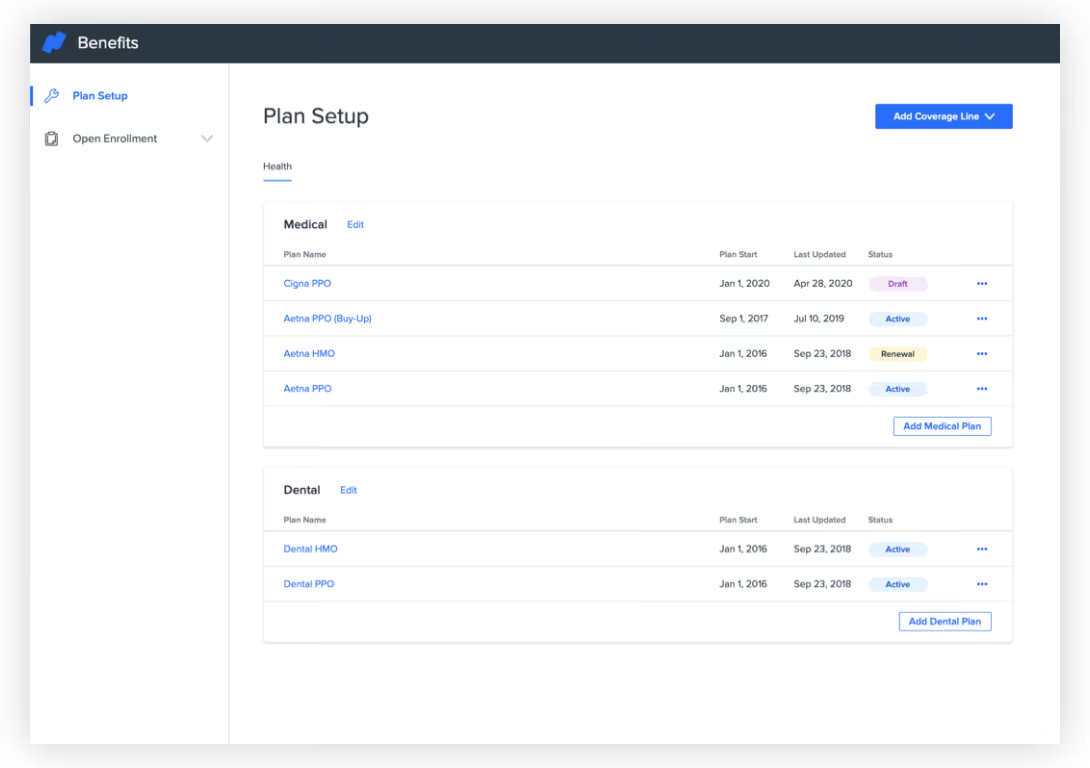
Namely’s comprehensive HR suite packs a range of features that make it an excellent choice for benefits administration. You can enroll your employees in, track, and manage various benefits programs such as health insurance, retirement plans, and flexible spending accounts. All of this is simplified through customizable online enrollment forms that provide employees with plan details. The software also allows for seamless integration with insurance carriers and third-party administrators to automate data transfers and reduce manual entry errors.
We appreciate a good reporting module, and the one Namely has can not only generate reports but also give you deep insights into benefits utilization, costs, and trends, which is a nice feature to have if you want to frequently improve your benefits plans and compete in today’s super competitive hiring landscape.
Over 1200 companies use Namely, including Greenhouse, The Channel Company, Life is Good, and OneLogin.
Namely does not disclose their pricing upfront. However, having no benchmark provides the unique opportunity to negotiate with sales to determine the right price for your company specifically.
Best For
Namely targets mid-sized companies. They specifically mention companies with 50-1000 employees.

I used Namely regularly, primarily for onboarding processes, including e-verify. It streamlined new hire documentation, eliminating the need for paper forms. Employees found it intuitive and effective for timekeeping, which made adoption smoother.
I also relied on Namely to ensure HR compliance and oversee payroll, although the payroll specialist managed the day-to-day processing.
One challenge was entering direct deposit and tax form information, which initially created extra work for the HR team. However, I believe these issues have since been resolved, as this was several years ago.
I liked how easy it made onboarding new employees.
The ability to manage and store electronic files was a significant advantage.
The reporting dashboard was clear and helpful for monitoring key metrics.
Employees found it easy to access their paystubs and tax information.
The interface, with its social media-like design, was user-friendly and relatable for many employees.
I consulted with an organization for about one year and administered Namely. They were a small but growing business in need of an HR and payroll solution to manage their expanding workforce.
Namely was chosen because it met the needs of various types of organizations and had the flexibility to grow alongside the company as their requirements evolved. I appreciated the compliance features, which helped me stay on top of regulations and deadlines.
The tool was also within the budget approved by the CFO and addressed the needs of both the HR department and employees effectively.
When I first used it, the platform was new and had some glitches.
Payroll processing was initially difficult for the payroll specialist to adapt to.
Learning which reports were essential versus optional required more guidance than was provided.
I would have appreciated more hands-on support during the implementation phase.
The search function did not perform as effectively as I would have liked at the time.
Namely has a more modern and visually appealing interface compared to some competitors.
It promotes diversity and inclusion through its design and functionality.
Its scalable features are suitable for small to mid-sized companies, though larger organizations may need to explore alternatives.
Compared to tools like ADP or UKG, Namely is a more affordable option, though it may lack some of the advanced features those platforms offer.
While Rippling is a strong competitor, I prefer Namely’s design and user-friendly interface.
It’s important to have an experienced payroll person or request training to ensure smooth adoption, as Namely may not be as intuitive as other platforms like UKG or ADP.
Fully prepare questions for your implementation specialist to maximize the benefits of the tool.
Be aware of the states where your employees work, as compliance requirements can vary significantly.
Understand your organization’s growth plans to ensure the tool can scale with your business effectively.
Namely has added new features, including AI-powered tools, to improve functionality.
The interface has become more user-friendly, addressing previous concerns about the search and self-service features.
Employees now find it easier to access essential HR and payroll information.
I think Namely is great for small to mid-size organizations, but I remember it was a tool that scaled to a limit, and if you got too big, a different solution would be better. It possibly would be at the point a larger org could use them, but not sure they are there yet.
I know one of their main competitors is Rippling, so a user or organization should research both before making a decision. I’d also find out if there is a specific person to contact or just a generic number for questions. Over the years, I have been using many tools, and I personally like a particular person or team to work with.
Namely may not suit organizations that lack clarity about their HR and payroll needs or have no plan for automation.
It is also less suitable for businesses with low-level or non-technical HR or payroll staff who may struggle with implementation.
Companies accustomed to a single tool throughout their history may find transitioning to Namely challenging.

Maxwell Health
A one-stop technology solution that merges your HR ecosystem with benefits administration system, Maxwell Health helps employees save time and make sound decisions about their benefits.
PROS
CONS
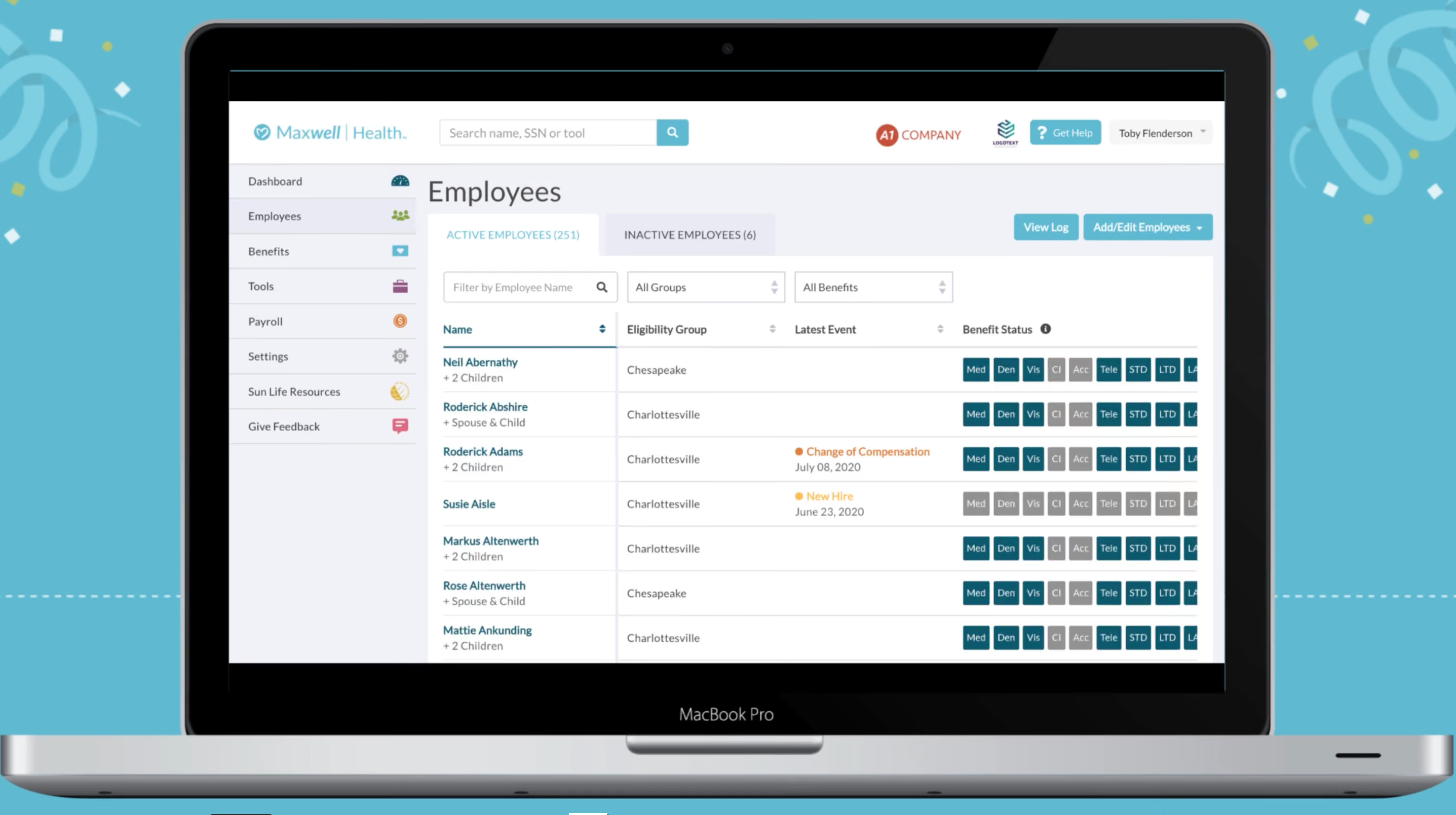
Maxwell Health, now owned by Sun Life Insurance, offers companies a modern approach to managing benefits for employees. From open enrollment to COBRA, they can help you stay compliant, and give employees a wide range of options all available through an easy to use mobile interface.
- Rose Street Advisors
- Taney County, Missouri
- Harrisburg University of Science and Technology
Maxwell does not release their pricing online. You will have to contact a sales representative.
Best For
If your company isn’t picky about what insurance company to work with, Maxwell Health’s partnership with Sun Life Insurance is ideal. You get a simplified end-to-end experience, requiring even less administrative work on your part.

We used Maxwell primarily for open enrollment. It also allowed employees to manage their benefits throughout the year. The platform was instrumental in streamlining workflows for employee benefits administration. It was utilized year-round, ensuring employees could access and update their benefits as needed.
Employees also used it to make personal changes to their benefits, such as updating dependents or coverage options.
- The platform is user-friendly for both employers and employees.
- It provides a centralized system to manage all employee benefits.
- It simplifies and streamlines the open enrollment process.
Maxwell Health was provided to my company through our insurance provider. Prior to this, my company did not have a centralized platform for managing employee benefits. Maxwell streamlined our open enrollment process and overall benefits management. It provided a single platform for employees to access and manage their benefits easily.
Additionally, it simplified benefits administration for the HR team, making the process much more efficient.
- It can be challenging to get direct support within the system.
- There were occasional issues with employee records after they updated their personal information.
- From an employer’s perspective, it was difficult to make changes during open enrollment once the official deadline had passed.
Maxwell offers a simplified and user-friendly platform that employees can easily navigate and understand.
Pricing should be a key consideration when selecting a platform. Ensure the tool is user-friendly for both employers and employees to avoid unnecessary complications. Integration with your payroll platform is highly beneficial for seamless administration.
Confirm that it is compatible with your offered benefits and your insurance broker’s platform(s) to avoid technical issues.
he platform has undergone slight modifications to improve usability, making it more user-friendly for employees.
Maxwell is well-suited for organizations that provide multiple benefits to their employees.
It may not be ideal for companies that offer only a few employee benefits, as the platform’s capabilities might be underutilized.

Rippling
Rippling is geared toward SMBs with its terrific automation and built-in integrations. Besides common features like self-service and onboarding, the benefits administration tool lets you work with your picked broker within the app and choose benefits packages from over 4,000 plans.
PROS
- Rippling can operate globally with almost any currency.
- 500+ integrations.
- Automates issuance processes.
- Provides a holistic view of company outflows—headcount costs included.
- All-in-one platform for employee management + PEO services offered, and even a suite of other IT products
- With 500 integrations, it’s very likely that they integrate with other key tools from your tech stack.
- Operates globally with any currency
- Workflow automation
- Analytics opportunities
- Provides a holistic view of company outflows—headcount costs included
CONS
- Total buy-in to Rippling is essential.
- No free trial.
- Phone support is available via the HR Help Desk service, which costs extra.
- Very SMB-oriented, so perhaps not the best option for larger companies.
- Total buy-in to Rippling is essential
- Very SMB-oriented, in case you’re a larger company.
- New features tend to be buggy in ways that tech teams are not accustomed to fixing
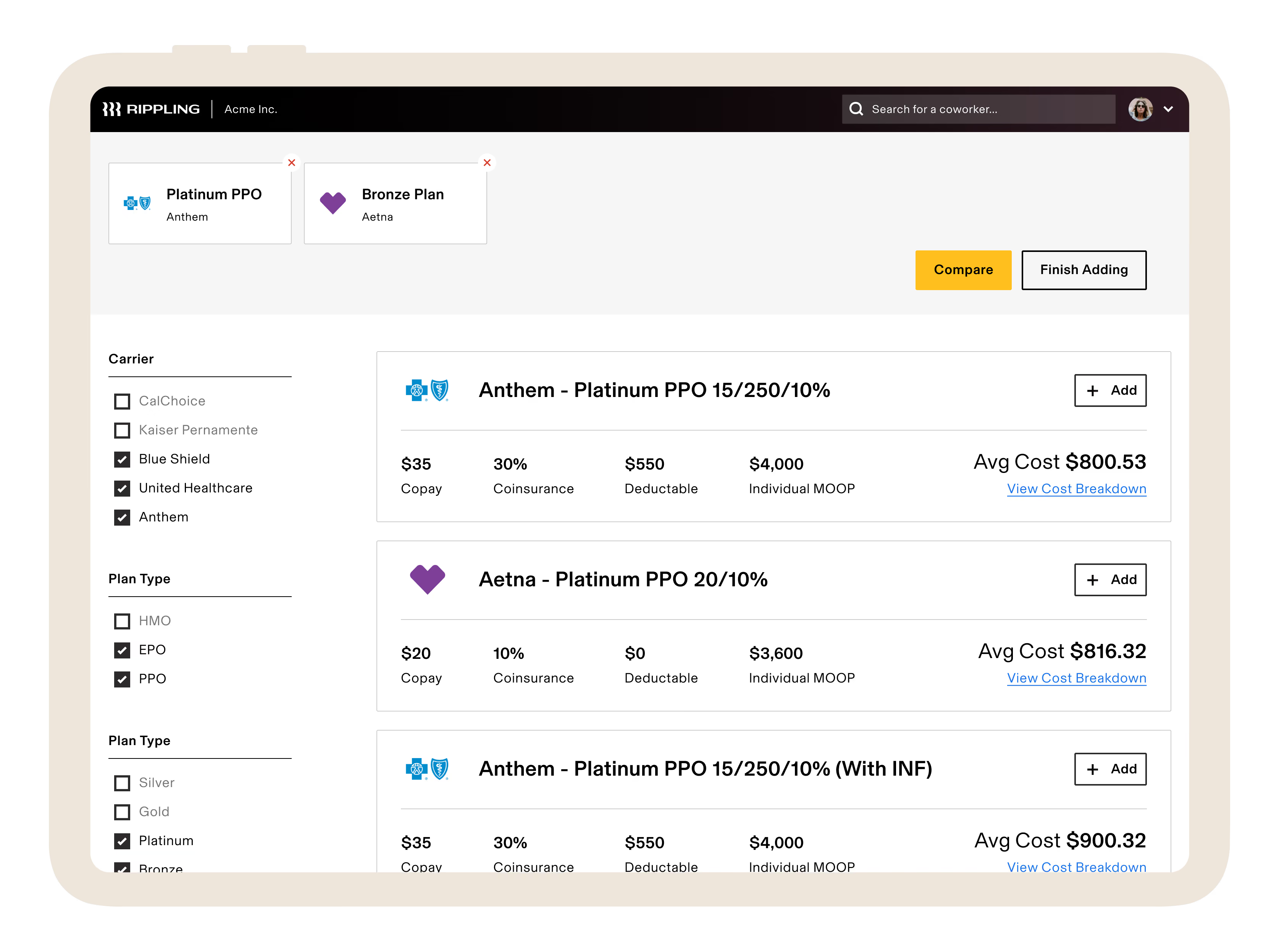
Rippling is in a class by itself compared to other benefits administration software. With a remarkable 500 app connectors, it surpasses most vendors we've tested across multiple categories. This helps the tool not only perform standard features an average benefits tracking system does, like parsing a paper receipt image captured with a phone but can also contextualize spending activity within the larger framework of employee data.
We tested Rippling's benefits management features and discovered that despite being a relatively new solution, it stands out for its strong emphasis on automation. Alongside standard functionalities like online onboarding, benefits enrollment, and employee self-service portals, Rippling offers unique capabilities.
One notable feature is the ability to add your existing broker as a user or receive recommendations if you don't have one. Additionally, Rippling excels in automation by automatically updating employee deductions when qualifying life events occur, such as location changes or marital status updates.
In the past two years, Rippling has expanded its offerings to include time and attendance, talent management, learning management, licensed PEO services, and global payroll. Remarkably, the platform has maintained its eye-catching UI despite the additions. However, there are a few aspects to keep in mind.
While you have the flexibility to select and purchase modules separately, Rippling’s core HR offering is the starter plan for all iterations.
Vox, Maximum Games, Superhuman, Compass Coffee, Highnoon.
Rippling's Core HR platform starts at $8 per employee per month. Contact Rippling regarding a custom Benefits Administration quote.
Best For
Rippling is best for small to medium-sized companies, globally or nationally distributed with multiple levels of organization.

Our teams use Rippling daily, all day. We have integrated it into our recruitment and human resources processes. What we love most is that we can save all communications and documents in a candidate's profile for audit purposes and continuity.
It is also an excellent tool to manage the productivity of our recruitment and HR teams, how much they are completing, and how quickly and with what level of accuracy.
Our technical and operational teams, who are often the hiring managers, are also responsible for using Rippling in the hiring process, in such tasks as interviews and candidate feedback.
- I like how Rippling keeps the organization organized and able to follow the progress of each and every recruit worldwide.
- Rippling allows the organization to track an employee in the system, including all of the required processes such as payroll, time off, benefits, travel, etc.
- Rippling allows us to always stay audit-ready and organized in all of our HR processes.
Our organization bought Rippling about 3 years ago and has slowly been integrating it into the organizational processes. Our organization, albeit small, needed software that would manage the entire recruitment process well and could follow the hired employee through their tenure with the organization. We needed to be organized.
We are also global, and Rippling has excellent abilities with time zones, languages, and features that have the flexibility we needed. A majority of our team is remote, and we needed a tool that could also respond to this.
- Rippling can be intuitive to use, but setting it up and editing your processes is not always intuitive.
- The online Rippling University training and assistance is a great resource. I just wish there was more immediate online support.
- One pet peeve of mine is that I would have to return to the beginning of a recruitment requisition in order to continue to manipulate the file. I could not continue to edit the file. It kept taking me back to my list of requisitions in the recruiting portion.
Rippling is fantastic. Finally, a tool that is more intuitive than the user. Rippling requires you to set up the back office and processes, but once it is done, it's simple to use, user-friendly, and excellent for candidates.
It enables an ongoing conversation that stays relevant to the process and keeps candidates informed. One of the largest complaints candidates make these days is the lack of communication and updates to the process, positive or negative.
Like any tool, you have to buy and install it, but you also have to set it up, train, and expect your team to use it. Use it as the main communication tool for the hiring process, and you will have the most auditable, clear process with no concerns.
It allows a level of transparency into the process for all involved, from the hiring manager to the recruiter to the CEO if one chooses to inquire into the process.
Rippling hasn't evolved much in its interface; however, it has certain AI tools that categorize every applicant against a series of parameters set by the user, so unqualified applicants are eliminated and receive an immediate response after applying.
Rippling U, its training platform, serves as an excellent tool for resources and to learn how to use your tool more efficiently and to its full potential.
Rippling is flexible in the size of the organization it can serve. From 10 hires a year to 100 hires a year or more, it adapts. The manner in which the tool/platform responds will be based on the manner in which you have set it up to respond to your organizational hiring processes.
It is good for all sectors, for small to large/mid-size companies, and for users who are involved in the day-to-day of the hiring process.
If you are hiring 100s of folks per year, I don't think it's the right tool for your organization. Rippling is a tool where you can look into the details. It is less of a tool where you automate everything and let it go on its own.
If you have a dedicated team that can ensure each requisition is filled and has human oversight, it works well for that. Not recommended for organizations that need to automate 100% of the hiring process and make it hands-off.
Why Use Benefits Administration Software
As an employer, you are required to offer certain benefits (like health insurance and Social Security), while others are “nice-to-haves” that can help with recruiting and retention.
The more benefits you offer, the more administrative work you have to manage — unless, of course, you use benefits administration software. If you offer any or all of the following benefits, a benefits admin platform can streamline how you manage them — and how employees sign up for them:
- Social Security: A federal benefits program that provides insurance for older workers and their spouses, those whose spouse or qualifying ex-spouse have died, and the disabled.
- Worker’s Comp: Benefits given to employees who suffer work-related injuries or illnesses. It helps cover medical care, wages from lost wok time, and more.
- Health Insurance: A type of insurance that covers medical and surgical expenses. This is arguably your biggest benefits expense.
- Unemployment Insurance: A state-provided insurance that workers are eligible for if they lose their job and meet other requirements.
- Family Medical Leave: The Family and Medical Leave Act (also known as FMLA) provides up to 12 weeks of job-protected leave per year to care for a seriously injured or ill immediate family member (i.e. spouse, child, or parent). While the leave is unpaid, FMLA requires that health benefits remain intact.
- Vacation Time & Other Paid Leave: This can include a certain number of PTO days, sick days, and parental leave for your full-time employees.
- Affordable Care Act (ACA) Coverage: The landmark health reform, also known as Obamacare. Under the ACA, employers with 50 or more full-time employees are required to offer affordable, essential coverage to their full-time employees or choose to pay a tax penalty.
- Dental Insurance: A type of insurance that covers certain dental procedures and expenses.
- Vision Insurance: A type of insurance that covers certain vision procedures and expenses.
- Pet Insurance: A type of insurance that covers certain veterinary costs when your pet gets sick or injured.
- Wellness Programs: While these differ per company, wellness programs are designed to promote long-term health for employees. Some programs include discounts on gym memberships, providing on-site fitness classes, offering preventative health screenings, hosting stress management workshops, stocking kitchens with healthy snacks, etc.
- Financial Wellness: Financial wellness programs are designed to help employees take control of their finances so they can spend smarter, reduce debt, and save more money. Such programs include retirement/401k plans, student debt repayment, and more.
- Education Benefits: Also known as tuition benefits, education programs are designed to give employees opportunities to further their education. For example, some companies offer employees a reimbursement benefit up to a certain amount that covers classes, courses, certifications, etc.
- Life Insurance: A type of insurance that provides a lump-sum payment to the insured’s beneficiaries upon the insured’s passing.
- HSA & FSA: Pre-tax dollars that can be used for health-related and other approved expenses.
If you're not sure what benefits to offer at your company (besides, of course, the bare minimum requirements), consider who your full-time employees are.
In other words, what is important to them? For example, if the bulk of your employees are fresh out of college, a financial wellness benefit that helps them pay off their student debt will be a very attractive offering. You could also survey your employees if you're on the fence about a certain benefit to see if it’s something they actually want and would use.
Considerations for Employee Benefits Admin — Plus, Common Mistakes to Avoid
The features we just listed are pretty comprehensive, but benefits admin software won't take everything benefits-related off of your plate. Not only that, benefits management in general has its share of challenges. To make sure you do benefits "right," have successful open enrollment periods, and don't blow your benefits budget, here are six considerations and common mistakes to look out for:
- Choosing benefits that fit your company's need vs everything: As you probably already know, there are seemingly endless benefits you could offer to your employees. While it might be tempting to offer everything under the sun (which can be a great recruiting tool), you might end up creating more work and spending more money than it’s worth. In other words, you could wind up offering (and paying for) benefits that your employees don’t actually use. So think about what makes sense for your company and your employees — and start there.
- Not allowing employees to pick and choose benefits: By nature, people like having choices and making informed decisions for themselves. So give them different options so they can pick and choose the benefits that are right for them.
- Compliance with mandated benefits: Under laws like the Affordable Care Act, certain benefits are required for businesses of 50 or more full-time employees. If you don’t stay compliant, you could be charged fees. Fortunately, many benefits admin solutions offer automated compliance workflows so you can get the right forms to the right regulatory bodies when you need to.
- Knowing which benefits are offered tax free: Offering tax-free benefits are a win-win for your company and your employees. For example, tax-free benefits like health savings accounts, flexible spending accounts, commuter benefits, even tuition benefits can save your employees — and your company — money. After all, the income your employees set aside pre-tax for these benefits does NOT count toward your payroll tax dues. So, you could be leaving money on the table if you don’t offer tax-free benefits — or if your employees aren’t taking advantage of them.
- Costs can get high quickly: Your benefits offering can get expensive very quickly, especially when it comes to healthcare coverage. There are a variety of ways to keep your costs in check — from cost-sharing with employees (i.e. with increased employee contributions and higher deductibles), to changing vendor partners (like moving retirees from group plans to Medicare), to managing pharmacy spend (for example, encouraging the use of generic prescriptions or adding a narrow network).
Benefits & ROI
Benefits admin software can help your company in a myriad of ways. Here is a summary of the benefits we’ve mentioned:
- Compliance: At the most basic level, you’re required by law to offer certain benefits — and benefits admin software makes it easier for you to stay compliant with these laws.
- Less Busy Work: Because benefits admin software lets you automate the paperwork-heavy busy-work associated with benefits, your team will have more time to focus on other high-priority areas.
- Employee Satisfaction: Open enrollment will no longer feel like a chore for your employees — instead, they’ll be able to make smart enrollment decisions online and, in most cases, with just a few clicks. Offering a full-suite of benefits (that are easy to elect) will help you attract top candidates to your organization — and keep them once they’re hired.
- Smarter Investments: Because benefits admin software offers reporting, you’ll be able to see what benefits are being utilized the most — and which ones aren’t worth investing in further.
To get an idea of what benefits like these can actually do for your bottom line, check out our HR Tech ROI Calculators.
Pricing: What Employee Benefits Admin Platforms Cost
Most benefits admin platforms charge on a per-employee-per month basis and offer tiered pricing depending on the amount of features and functionality you’re looking for. We’ve seen pricing start as low as $8/employee/month.
When you have your demo(s), you should get a pricing plan that is customized for your company and needs. Just make sure that each quote you get breaks down the features that are included so you can easily compare and make the most informed investment for your company.
Features: What You Can Expect from Benefits Administration Software
Benefits administration software isn’t just a way to centralize your benefits management and alleviate the burdens of paperwork and other administrative tasks. They also offer a host of integrations and features to make your job easier, keep you compliant, save you money, and promote employee engagement. Let’s take a look:
- Suite of Benefits: Depending on the vendor you choose, you can manage all of your benefits in one place. We’ll talk about this later in the guide, but remember to ask your vendor(s) of choice which benefits are included with their solution.
- Online Enrollment & Self-Service for Employees: Allow employees to opt-in to their benefits elections themselves — and say goodbye to endless paperwork. With a safe and secure benefits admin platform, your employees can easily enroll in their plans of choice online — or even through a mobile app.
- Plan Configuration: Easily set up and manage all plans and benefits in one place. This not only makes things easier for your HR/people operations team, it also makes benefits shopping easier for your employees. They can more easily compare plans and sign up online.
- Payroll Integration: Integrate your benefits and payroll data so the right deductions automatically sync to each employee’s payroll record.
- Simple Onboarding: Make onboarding easy for new employees by centralizing all necessary paperwork and enrollment opportunities in one place. What’s more, if an employee leaves your company, you can just as easily un-enroll them and initiate COBRA.
- COBRA: Easily manage COBRA eligibility and compliance with automated reporting to your COBRA administrator.
- ACA Reporting: The Affordable Care Act requires employers with 50+ full-time employees to report healthcare coverage to the IRS. With benefits administration software, you can easily generate forms 1094 and 1095 and submit your reports for you so you stay compliant (and avoid fees).
- More Compliance: In addition to ACA and COBRA compliance, benefits administration software can help you stay compliant in other areas — and get ahead of changing regulations. This includes compliance with HIPAA (i.e. protecting employees’ Personal Health Information, or PHI), ERISA, the Dept. of Labor, the IRS, and OSHA.
- Reporting: Automate reporting of your HR data — including billing insights, headcount and attrition reports, job and salary reports, and more — to make more strategic, data-driven people decisions. You could even benchmark against other companies in your space to see if there are opportunities or areas of improvement.
As you develop your full benefits package, think about the features that would benefit your employees the most AND that would help make your job easier.
Demo Questions: What to Ask About Benefits Administration Software
We always recommend demoing a couple vendors so you can see their platforms in action before you actually invest. To prepare for your demos, create a list of questions specific to your company’s benefits needs. Here are some sample questions to get you started:
- What benefits does your platform have?
- What benefits do you find are most attractive to employees like mine?
- How can employees sign up for benefits?
- Can employees access their benefits plan on their phones?
- How does HR create a benefits plan?
- How will this solution fit into the rest of my tech stack and therefore what integrations do I need?
- How will others in the organization use this solution?
- What are the key features I want to ask about?
- What are the things that would make me nervous about buying this sort of solution?
Implementation: Getting Your Employee Benefits Software Off the Ground
The first step to implementing benefits admin software is figuring out what your suite of benefits looks like. From there — and based on the information you gathered during your demo — you’ll know what is required to get your platform of choice up and running. For example, you might need to engage your IT team to help with any necessary integrations.
Then, you’ll need to encourage utilization of the platform during open enrollment periods, for new employees who are onboarding, and for employees who are leaving and need to sign up for COBRA. To get employees to make their benefits elections before your open enrollment period ends, we recommend a variety of touch-points, including:
Software Training Sessions: If you're using a new system, you're going to need to train your HR or People Ops team on setting up and managing each benefit. Then, you'll need to introduce the platform to your employees so they know how to use it. You could do this a number of ways:
- Ask your vendor if they have pre-recorded training videos that you can share with your employees
- Meet with individual teams to walk them through the platform
- Give a brief demo of the platform at an all-staff meeting
All-Staff Emails: Send a note to the entire company at the beginning of open enrollment with instructions on how to use the platform, what actions they need to take by the deadline, what happens if they don't do anything, etc. Then follow-up with "last-call" reminders as the deadline approaches.
Engage Team Leads: Ask team leads and managers to remind their direct reports to make their benefits selections before the deadline.
Benefits Administration Software FAQs
What is benefits administration software?
Benefits administration software are platforms built specifically to plan and provide benefits packages to employees, while also maintaining compliance with government regulations.
Why use benefits administration software?
Benefits administration software streamlines all benefits operations, saving your HR team much needed time. In addition, all employee benefits data is held in one portal, meaning you can analyze all benefits information and create detailed reports about what benefits are used most or least. This provides you with valuable action points for benefits administration. Finally, letting software maintain compliance for you ensures simple, fast, and accurate reports to the IRS and other government entities.
What are some features of benefits administration software?
Features of benefits administration software include reporting, ACA and COBRA compliance, onboarding tools, plan configuration, self-service portal, online enrollment, and payroll integrations.
Next Steps for Your Employee Benefits Administration
Broadly speaking, there are two ways to get benefits admin support: a platform that only focuses on benefits admin or a more comprehensive Human Capital Management (HCM) suite that offers benefits admin as one of many HR features.
So, you’ll need to figure out which one will make the most sense for your company. We recommend demoing a couple vendors that fit into these two buckets so you can see how their solutions and features align with your needs and budget.
About the Author


About Us

- Our goal at SSR is to help HR and recruiting teams to find and buy the right software for their needs.
- Our site is free to use as some vendors will pay us for web traffic.
- SSR lists all companies we feel are top vendors - not just those who pay us - in our comprehensive directories full of the advice needed to make the right purchase decision for your HR team.


