


Top Applicant Tracking System Courses
The recruiters advancing fastest aren't necessarily the most experienced — they're the ones who know how to use their applicant tracking system (ATS) better than everyone else. Faster hires, cleaner pipelines, stronger candidate experiences: ATS fluency drives all of it. Yet most recruiters never go beyond the basics.
This article covers the best ATS courses available, from platform-specific tutorials to HR technology certifications, so you can close that gap and get more out of the tools you use every day.
HRCI Professional in Human Resources (PHR) Cert Prep (LinkedIn Learning)
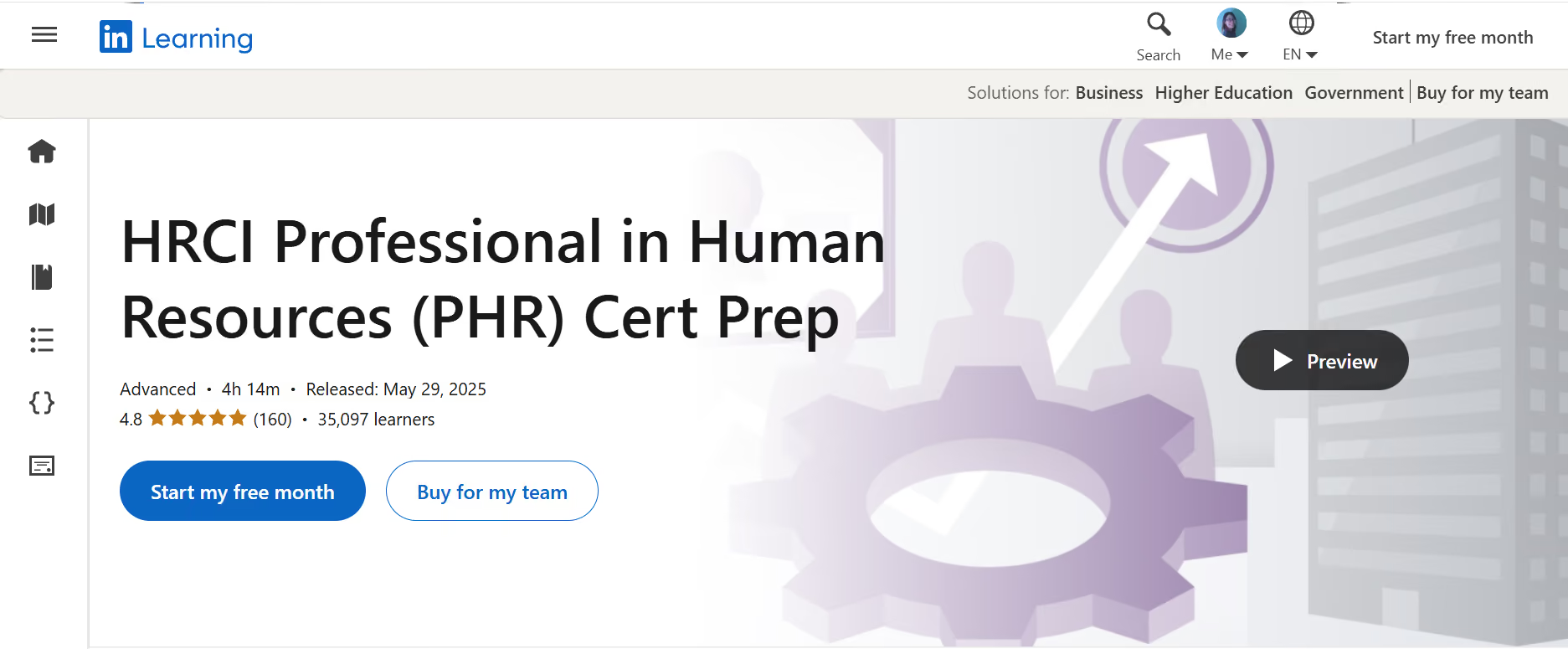
The PHR is one of the more credible entry-to-mid-level HR certifications in the US market, and that alone gives this course more legitimacy than most vendor-produced ATS content you'll find online. HRCI has been certifying HR professionals since 1976 — the curriculum isn't built around a product roadmap or a sales funnel.
That said, anyone coming here for ATS training specifically will be disappointed. ATS is covered, but briefly, and as one component within a much broader HR curriculum. What the course actually does well is show how ATS fits into the full hiring lifecycle: why it exists, what problem it solves, how it connects to compliance and workflow automation. That conceptual framing is genuinely useful for HR generalists who've been using an ATS on autopilot without really understanding it.
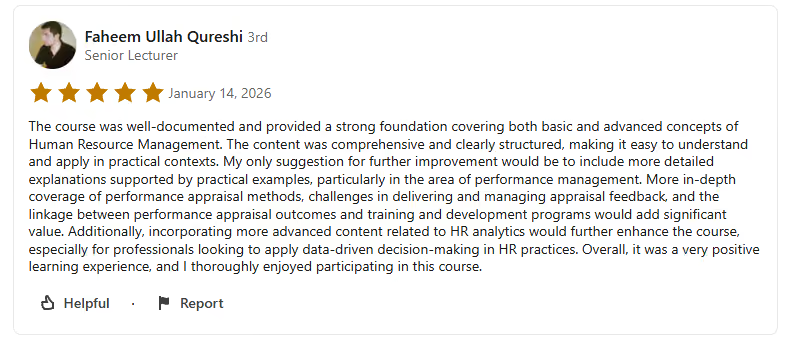
Reviewers on LinkedIn Learning reflect this split. An HR & Administrative Manager gave it 5/5 and found it directly useful for PHR exam prep. A Senior Lecturer also rated it 5/5 but pointed out real gaps — more practical examples are needed, especially around performance management and HR analytics, which feels like a fair criticism for a course at this level.
The value here is specific: if you're pursuing the PHR and want your ATS knowledge to develop alongside your broader HR credentials, this is an efficient way to do both. If ATS proficiency is the actual goal, this course is the wrong starting point.
Pros
- Backed by HRCI, one of the most established HR credentialing bodies in the US
- Teaches ATS in context — how it fits within compliance, workflow, and talent acquisition
- Efficient dual-purpose study if PHR certification is already on your roadmap
Cons
- ATS coverage is too brief to build any real proficiency
- No hands-on or platform-specific training
- Gaps in practical examples and analytics depth, per reviewer feedback
- Requires a LinkedIn Learning subscription
Best for: HR professionals already pursuing the PHR who want ATS concepts woven into their exam prep
Not for: Dedicated ATS training
Greenhouse ATS Training Series
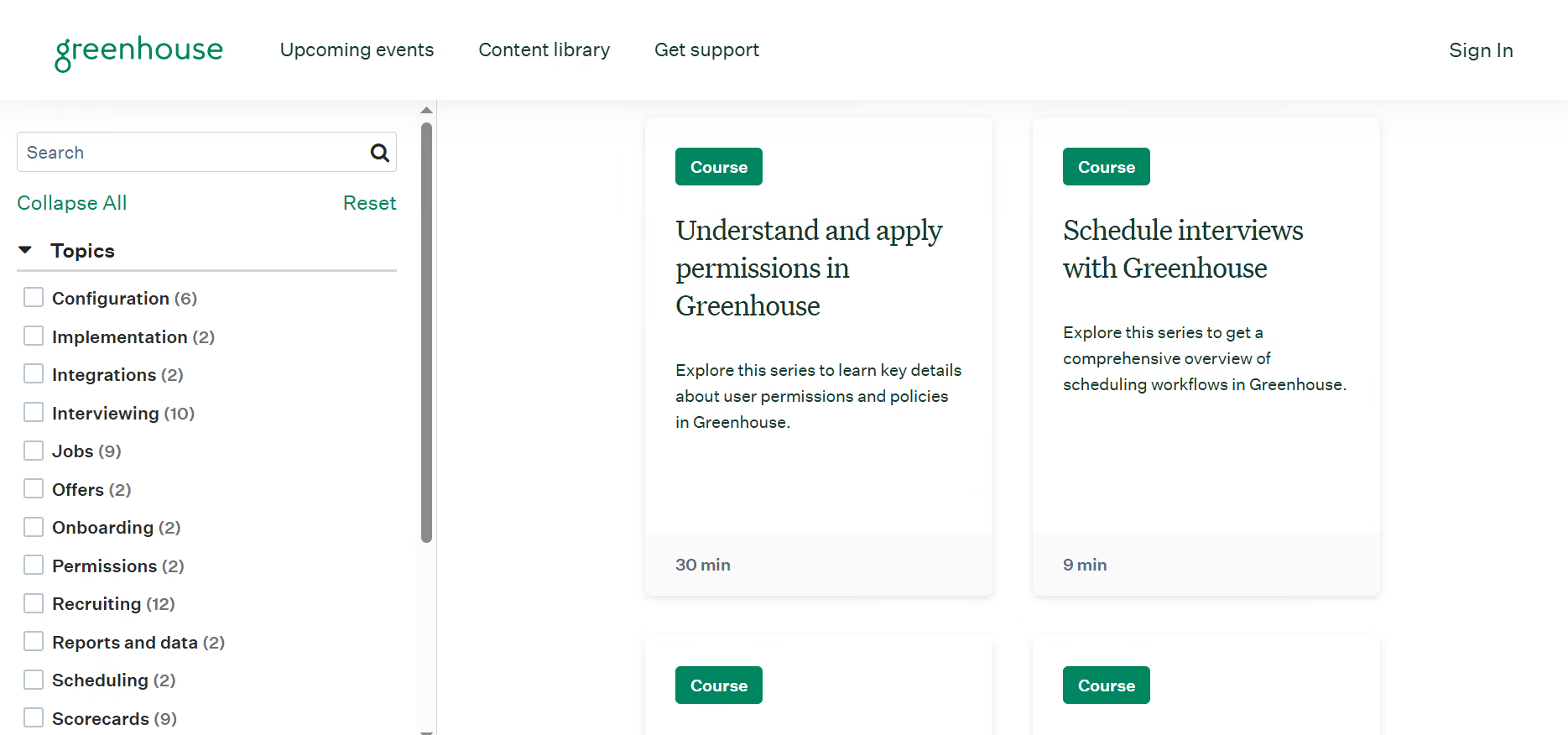
Greenhouse consistently ranks among the most widely adopted ATS platforms in mid-to-large recruiting teams, which is what makes this training series worth including — demand for Greenhouse-fluent recruiters is real.
The series covers the workflows that come up daily: job setup, candidate management, interview scheduling, and compliance, delivered in short, focused modules rather than a single long course. The modular format works well for onboarding new users quickly or revisiting specific features without sitting through content you don't need. Greenhouse has also expanded the learning hub to include AI-powered hiring tools — covering sourcing automation, workflow optimization, and compliance — and offers digital badges for completed learning paths, which adds some credential value for recruiters building a public profile.
That said, the modular structure has a ceiling. You get depth on individual features without much sense of how they connect, and there's little coverage of how Greenhouse fits into a broader HR tech stack. For recruiters who want system-level understanding, this series won't get you there.
It's also worth being clear about the source. This training comes directly from Greenhouse, which means it's thorough on product mechanics but carries an inherent bias toward their own workflows and terminology. Skills learned here don't transfer cleanly to other ATS platforms.
Pros
- Covers real daily workflows — not abstract concepts
- Modular format makes it easy to onboard new users or revisit specific features
- Includes AI hiring tools content and digital badge recognition
Cons
- Fragmented structure — feature-level depth without system-level context
- Vendor-produced content: thorough on Greenhouse, not transferable to other platforms
- No strategic or cross-platform perspective
Best for: Recruiters and HR teams actively using Greenhouse who need fast, task-level training
Not for: Those seeking a foundation for broader ATS knowledge
Zoho Recruit One-on-One Training (Zoho Spark)
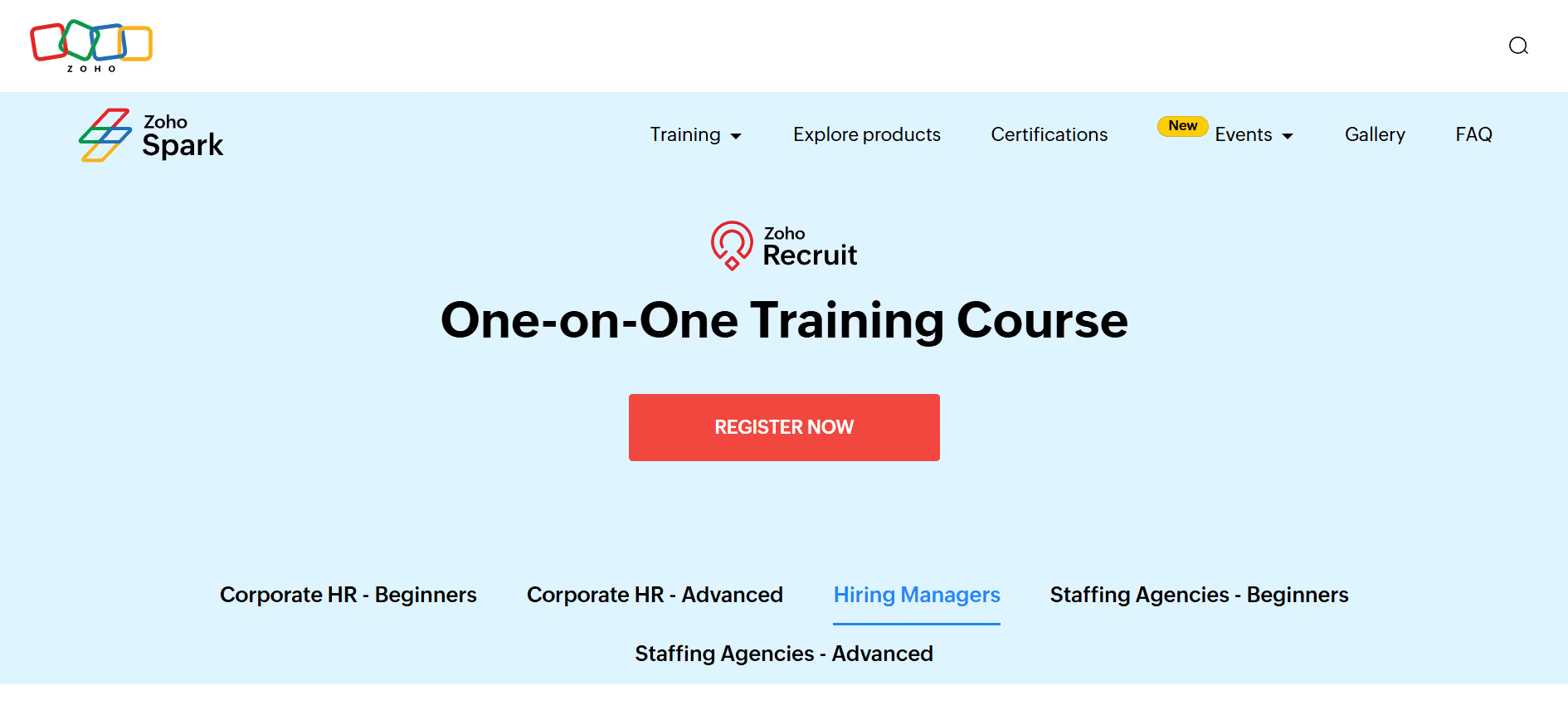
Like the Greenhouse training series, this comes directly from the vendor, so the same caveats apply: it's thorough on Zoho Recruit specifically, but won't build skills that transfer to other platforms. What sets it apart is the format.
Zoho Recruit One-on-One Training through Zoho Spark pairs you with a live instructor. Instead of working through modules built for the average user, you're covering what your role actually requires. The full recruiting workflow is on the table: job creation, job board distribution, candidate screening, interview management, workflow automation, and analytics, but the instructor shapes the session around your context, not a preset curriculum.
For teams that have just adopted Zoho Recruit, or for individuals stepping into a new role within an existing Zoho setup, the one-on-one format meaningfully compresses onboarding time. There's no lag between learning and applying.
The limitation, however, is depth. The short duration works in favor of speed but against thoroughness. And, as with any vendor-produced training, strategic context and a cross-platform perspective aren't part of the package.
Pros
- Personalized instruction tailored to your specific workflows and needs
- Covers the full recruiting cycle, from job posting to analytics
- Immediately applicable; no lag between learning and doing
Cons
- Exclusive to the Zoho Recruit platform
- Short duration limits how deep the training can go
- Little focus on strategy or skills transferable to other ATS platforms
Best for: Hiring managers and recruiting teams, particularly those at SMBs, using Zoho Recruit who need fast, practical onboarding without the noise of a generic course
Not for: Those seeking broader ATS knowledge and certification; those who most likely work in large enterprises
iCIMS Level Up ATS Courses
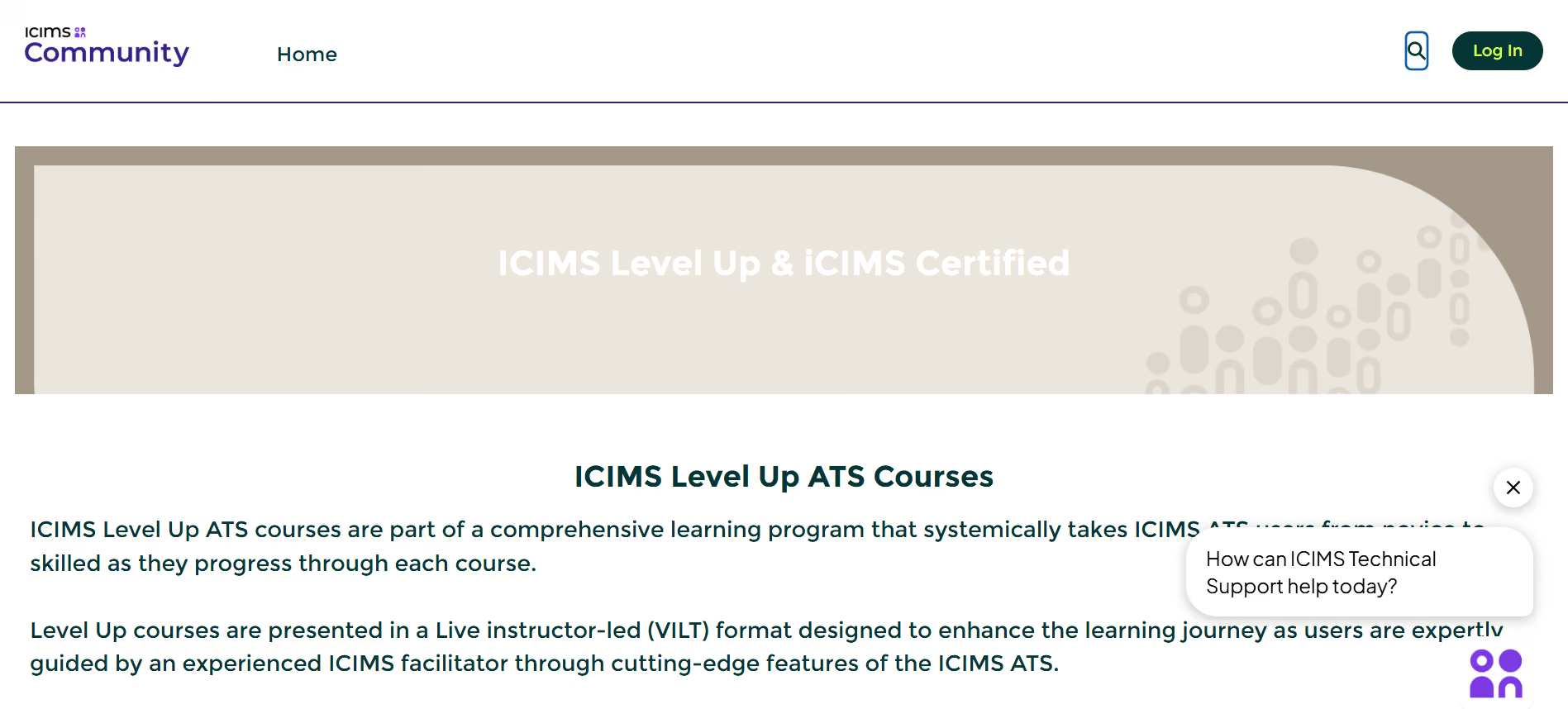
Unlike the vendor training from Greenhouse and Zoho, iCIMS takes it a step further with a formal certification pathway. The iCIMS ATS Level Up program combines self-paced eLearning, instructor-led courses, and a certification exam specific to the User Administrator role. Completing it earns you an iCIMS Certified designation, a credential that signals platform proficiency to employers in a way a completed module history simply doesn't.
The progression is deliberate. You move from foundational concepts through to advanced platform operation, with guided demos, hands-on exercises, and peer collaboration built into the structure. The exam at the end expects you to prove what you know, not just complete the content.
Regarding limitations, scheduling is less flexible than self-paced alternatives, and access is typically tied to your company's iCIMS subscription, meaning this isn't something most individuals can pursue independently. If your organization isn't already on iCIMS, this pathway isn't accessible.
It's also worth being clear about scope: iCIMS Certified is specific to the User Administrator role. It's a deep, functional credential, but it's not a broad HR certification, and it won't develop skills transferable to other ATS platforms.
Pros
- Structured progression from beginner to advanced — not just isolated modules
- Live, instructor-led format with real hands-on scenarios
- Peer collaboration adds context you won't get from solo self-paced courses
Cons
- Exclusive to the iCIMS platform
- Access is typically tied to your company's iCIMS subscription
- Less flexible scheduling than self-paced alternatives
Best for: Recruiting teams and HR administrators already using iCIMS who want structured training that ends in a recognized platform certification
Not for: Independent learners without an iCIMS subscription, recruiters seeking transferable ATS skills, or professionals pursuing broader HR credentials
Elevify HR Applicant Tracking System (ATS) Course
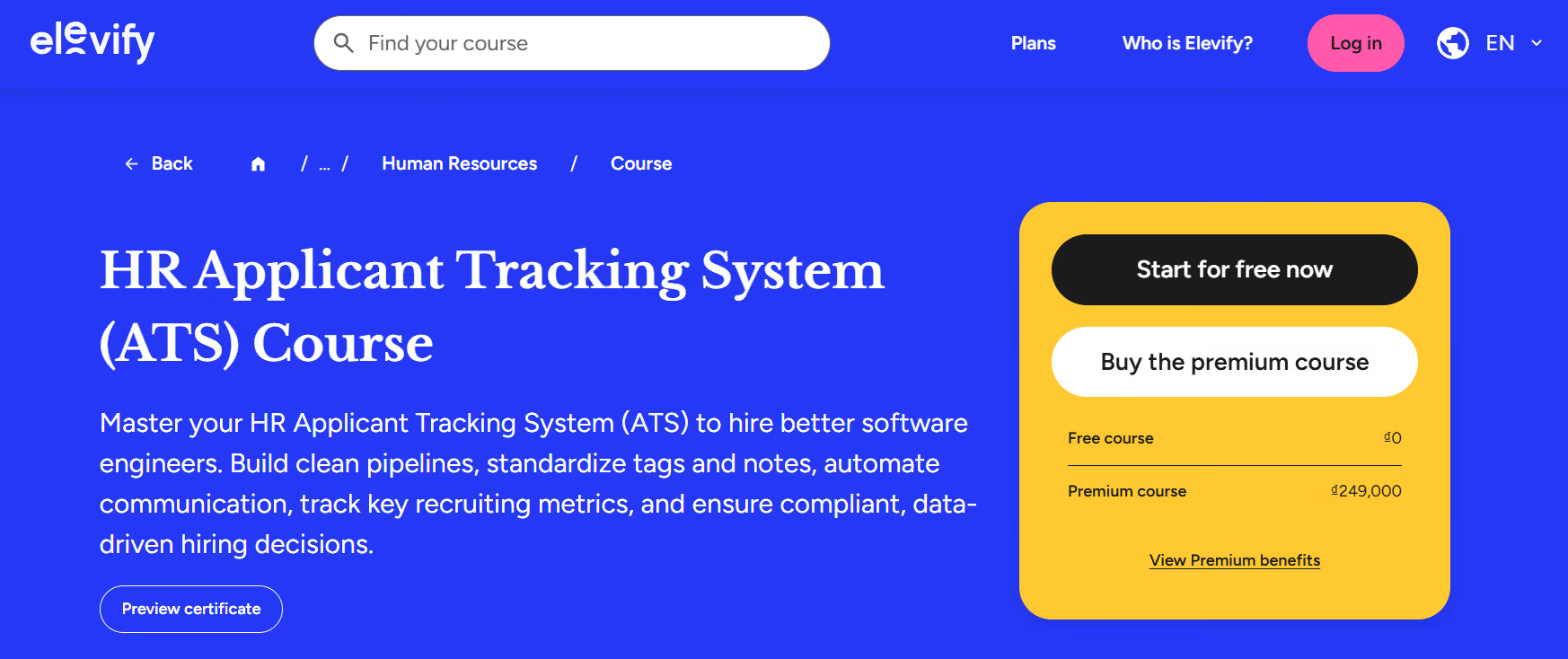
Elevify's ATS course is structured around how recruiting teams actually operate rather than how a specific platform works. The curriculum is divided into clear functional areas: pipeline design, candidate information management, automation, reporting, and governance. There's a particular emphasis on tech hiring workflows, which makes it more relevant for teams hiring software engineers or technical roles than a generic ATS overview would be.
What separates it from the vendor training covered earlier is that it's platform-agnostic. You're learning ATS logic and workflow design as transferable skills, not the mechanics of a single product. That also means it works as preparation before committing to a specific ATS, or as a way to build conceptual fluency if you're managing multiple tools.
The course is self-paced and flexible, which is useful for experienced recruiters looking to fill specific gaps, but it does assume some baseline familiarity with recruiting processes. Without that, the depth of the workflow content can feel like a lot to take in at once.
One limitation worth flagging: the available reviews come mostly from non-HR professionals on the Elevify platform — digital marketing students, photographers, prompt engineers. Their feedback covers usability and lesson format, not the ATS content specifically. For recruiting professionals evaluating this course, that's a gap in the evidence base worth knowing about.
Pros
- Platform-agnostic — teaches ATS workflow logic, not a specific product interface
- Covers the full operational scope: pipeline design, automation, reporting, and governance
- Self-paced with flexible structure — skip what you already know, focus on what you don't
- Relevant for tech hiring teams, with use cases specific to technical role recruitment
Cons
- Assumes baseline recruiting knowledge — not suited for complete beginners
- Reviews available are mostly from non-HR learners, limiting peer validation for recruiting professionals
- Less relevant if you need platform-specific training or formal HR certification
Best for: Recruiters and TA professionals who want to build or restructure ATS workflows without being tied to a specific platform, particularly those hiring in tech
Not for: Complete beginners with no recruiting background, or professionals looking for platform-specific training or certification credit
Ultimate Talent Acquisition Specialist (Udemy)
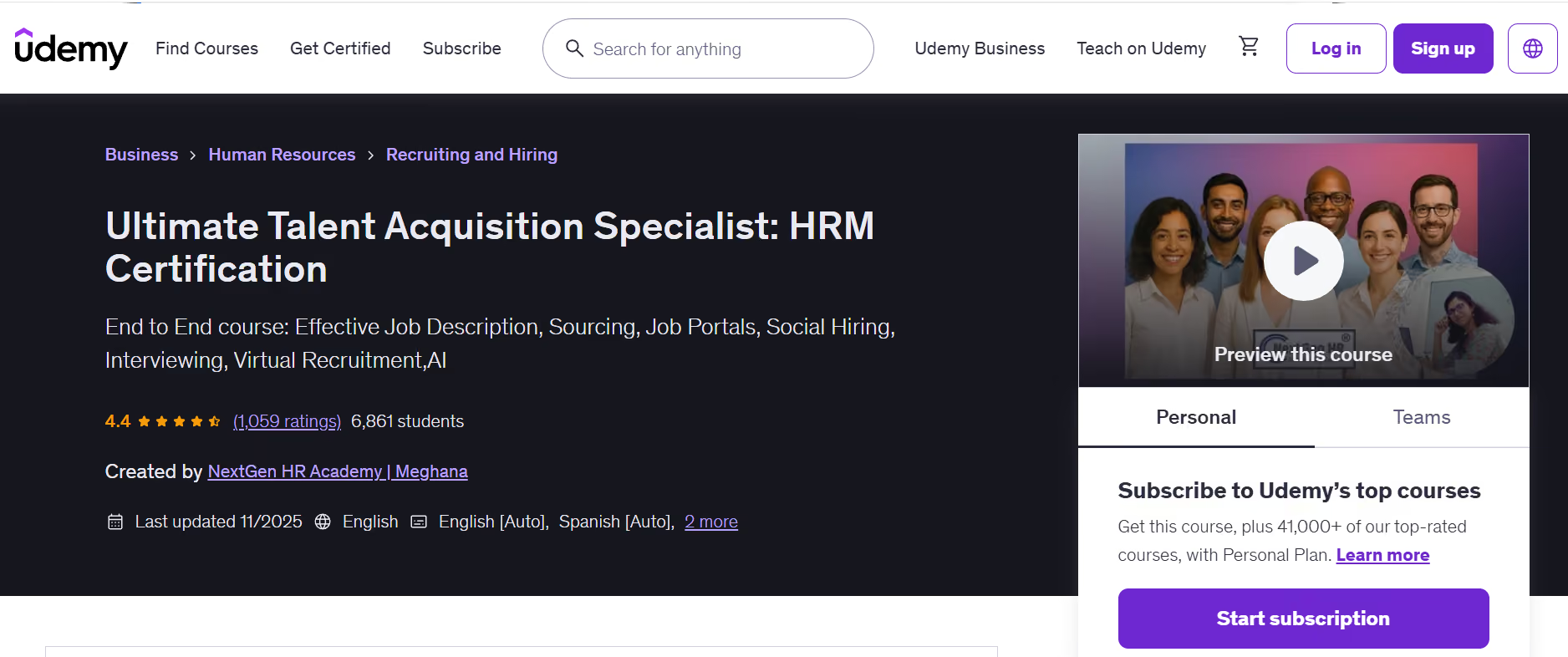
The Ultimate Talent Acquisition Specialist on Udemy covers the full hiring lifecycle: sourcing, screening, interviewing, job descriptions, and AI-assisted ATS tools. ATS is one module within that larger curriculum, not the focus. For someone building a recruiting foundation from scratch, that breadth is the point. For someone who already works in recruitment and specifically wants ATS depth, this course won't deliver it.
The course clearly targets its audience from its reviews. A career switcher moving from a technical background into HR called it sufficient grounding for entering talent acquisition. An HR professional with existing experience found it added useful new angles without being remedial, though it also explains why the depth on any individual topic, ATS included, stays at an introductory level.
Reviewer feedback is mostly positive but surfaces some consistent issues. Multiple reviewers flagged the Naukri job portal module as too India-specific to be useful for global HR professionals, which is a real limitation if you're hiring outside that market. One reviewer noted the presentation felt dated. Another found the volume of images added visual clutter without adding information. These aren't deal-breakers, but they're worth knowing before purchasing.
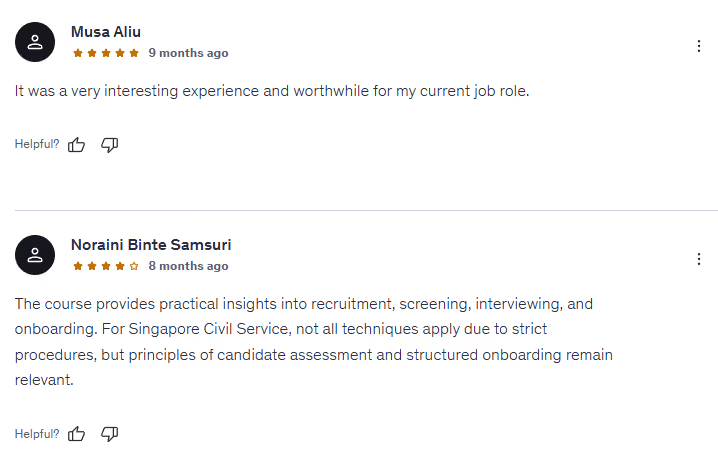
What the course does well, per reviewers, is structure. The content is logically sequenced, quizzes and assignments reinforce learning, and practical templates and case studies help ground the theory. For a Udemy course at this price point, that consistency is notable.
Pros
- Covers the full recruiting lifecycle, useful as a single foundational course
- Beginner-accessible without being shallow for practitioners filling gaps
- Includes AI and ATS tools as part of modern recruitment coverage
- Well-structured with quizzes, assignments, and practical templates per reviewers
Cons
- ATS coverage is introductory, not suited for anyone needing platform depth
- Naukri portal module is India-specific and less relevant for global hiring contexts
- Presentation quality flagged by reviewers as dated in places
- Accent and delivery noted as difficult to follow by at least one reviewer
Best for: Beginners and career switchers building a recruiting foundation, or HR professionals looking to fill specific knowledge gaps across the hiring lifecycle
Not for: Recruiters who already have a recruiting foundation and need ATS depth, or professionals hiring exclusively outside India who may find portions of the curriculum irrelevant
ADP AIRS Entry-Level Recruiter Professional Certificate (Coursera)
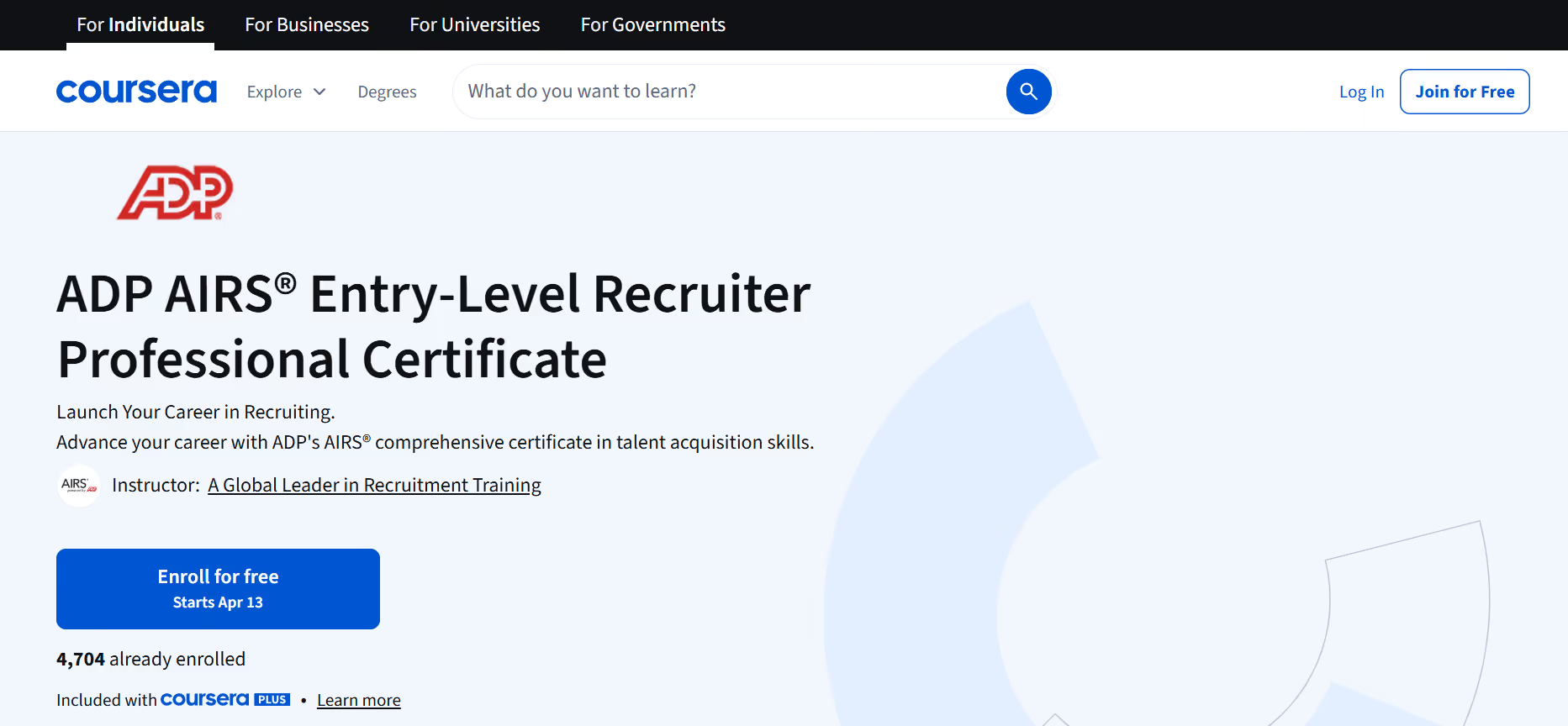
ADP's AIRS division has been training recruiters since 1997, which gives this program more background than most online recruiting courses. The curriculum covers sourcing, screening, ATS use, and reporting workflows across multiple courses, including hands-on projects and real-world scenarios. ATS runs throughout rather than appearing in a single module, which is how most recruiters actually encounter it on the job.
The program is foundational. ATS coverage is functional enough to understand how it fits into a recruiting workflow, but not enough to build platform-specific proficiency. Experienced recruiters will move through the early material quickly.
Reviewer feedback is mostly positive but thin. The majority of five-star reviews are brief and come from people new to HR, which gives useful confirmation that the course serves as an entry point, but little signal about depth or rigor. One reviewer described it as a rigorous program for those entering modern recruitment, which is the most substantive endorsement available. The Coursera delivery is self-paced and doesn't require an employer subscription.
The critical reviews are more specific and worth attention. One reviewer flagged broken links that only worked on mobile, two tasks using the same video, missing information, and an assignment on topics not yet covered in the course. These indicate gaps in the course content's maintenance.
The certification carries ADP and AIRS recognition in corporate recruiting circles, but how much weight it carries depends on the employer.
Pros
- AIRS has been training recruiters since 1997, which is more established than most online course providers
- ATS integrated throughout the curriculum rather than covered in isolation
- Includes hands-on projects and real-world scenarios
- Self-paced via Coursera; no employer subscription required
Cons
- ATS coverage is functional, not deep
- Structural issues flagged by reviewers: broken links, duplicate videos
- Positive reviews are mostly from beginners
- Involuntary enrollment reported by at least one user
Best for: Entry-level recruiters and career switchers who want a structured recruiting foundation with ATS included as part of broader workflow training
Not for: Experienced recruiters seeking ATS depth, professionals needing platform-specific training, or anyone looking for a quick standalone ATS course
Best Free ATS Learning Resources
Not every learning resource comes packaged as a course. At SSR, we publish free guides and articles on ATS topics built on expert interviews, practitioner feedback, and direct vendor research. We update them regularly as the market changes.
If you're looking to sharpen your ATS knowledge systematically, the pieces below are organized to take you from foundational understanding through to advanced application.
Start here: understanding what an ATS is and whether you need one
- An overview of what an ATS is
- ATS: How to determine if your business really needs one
- ATS vs CRM: What's the difference and which one do you actually need?
- When does an SMB need an ATS?
Exploring the market: options and pricing
- Best ATS options
- Best free ATS options
- Top ATS platforms for small businesses
- Latest ATS pricing, updated quarterly
Evaluating and buying: how to make the right call
- What to look for in an ATS (beyond features)
- Questions to ask when demoing ATS vendors
- How to write an ATS RFP
- Expert tips on buying an ATS from a startup
Getting it running: implementation and integrations
- Comprehensive ATS implementation guide to maximize ROI
- Everything you need to know about ATS integrations
- Running background checks within ATS: Best practices
Measuring and improving performance
Going deeper: AI, automation, and what's next
We also run live and on-demand webinars and offer free one-on-one advisory support for teams working through an ATS software decision.
Maximizing Your Learning from an ATS Course
The difference between completing an ATS course and actually getting better at using one comes down to three things: how you engage during the course, how quickly you apply it, and whether you keep up as the tools change.
- Practice during, not after. Research shows active engagement improves retention — work through the simulations, complete the exercises, and don't skip sections that feel familiar. ATS configuration and workflow logic only clicks when you've actually done it, not watched it.
- Apply one thing the following week. For recruiters, pick a single workflow from the course (e.g., pipeline setup, interview scheduling, or reporting) and implement it immediately. For job seekers, audit your existing application materials against what you've just learned. The longer the gap between learning and applying, the fewer the transfers.
- Update your knowledge as the tools do. ATS features shift faster than most courses update — AI screening, automation, and compliance requirements in particular. Following industry publications, attending webinars, and staying connected with peers fills the gap between formal training sessions.
Key Considerations When Selecting an ATS Course
The right ATS course depends on your role, your current platform, and what you're trying to get out of it. Curriculum depth, instructor background, hands-on practice, and whether the content reflects how AI is changing these tools are the factors that separate useful training from generic content.
It's also worth asking whether a course is the right format at all. On one hand, free trials from vendors like Greenhouse, iCIMS, or Zoho Recruit offer direct hands-on exposure that some learners find more useful than structured training. On the other hand, a course makes the most sense when you need to understand the full hiring lifecycle systematically, build skills that transfer across platforms, or earn a credential that signals proficiency to employers.
- Does it cover the full hiring cycle? A useful ATS course should follow how hiring actually works end-to-end: sourcing candidates, building and managing a pipeline, screening and tracking applicants, coordinating interviews, and closing on a hire. If a course covers only one part of that cycle, the learning won't transfer well to real recruiting situations. Knowing when your hiring process is mature enough to need an ATS in the first place shapes which parts of a curriculum are actually relevant to you.
- Is the content current, particularly on AI? AI is changing how recruitment and, consequently, ATS platforms work. A course from 18 months ago may teach you how a feature worked before it was rebuilt around a language model. That doesn't make older courses useless, as foundational workflow logic and knowledge of the hiring cycle hold up. Nevertheless, any course that doesn't address how AI is reshaping ATS functionality is already behind. Check the last updated date before enrolling.
- Is there hands-on practice, or just theory? ATS configuration, pipeline setup, and reporting logic are skills that require doing, not just watching. Courses with simulations, real platform access, or applied exercises build usable proficiency. Passive video content alone doesn't.
- Who built it and do they work in recruiting? Instructor background matters more in ATS training than in most technical subjects because the tools only make sense in context. An instructor who has run recruiting workflows — not just studied them — will teach you how features get used in practice, not just what they do on paper.
- Does the certification carry weight? Not all credentials are equal. HR certifications from established bodies like HRCI or SHRM carry market recognition. Vendor certifications like iCIMS Certified signal platform proficiency to employers already using that system. Completion certificates from general course platforms carry less weight on their own, though the skills may still be worth acquiring.
- Is the format compatible with how you actually learn? Self-paced modules, live instructor-led sessions, and one-on-one training produce different outcomes. Self-paced works for filling specific gaps; live formats tend to build more complete skill sets. Match the format to what you're trying to get out of it.
FAQs
What are the benefits of training employees to use an applicant tracking system?
Mastering ATS brings many benefits for individuals and organizations. For recruiters, this expertise leads to more efficient talent acquisition of top talent and better hiring outcomes, contributing to career growth within HR.
For organizations, a workforce proficient in ATS leads to significantly streamlined recruitment processes. According to research, ATS software helps reduce time-to-hire, lower recruitment costs, and improve applicant quality. Recruiters who effectively utilize ATS functionalities can manage larger candidate pools more efficiently, identify the top candidates more quickly, and make data-driven hiring decisions.
How much does ATS training cost?
ATS training ranges from free to several thousand dollars, depending on depth and format. Self-paced courses and vendor resources are often free or under $200. Certification programs and multi-course tracks typically cost $500 to $2,000+. Customized or instructor-led training for teams can cost more, especially when bundled with software onboarding.
What skills are needed to effectively use an applicant tracking system?
Key skills include understanding recruiting workflows, maintaining clean and structured candidate data, and using ATS features like pipelines, tags, and filters. Strong analytical skills are essential for reporting and tracking key recruitment metrics, while communication skills are essential for managing candidates and hiring teams. Basic technical comfort and attention to detail are also essential for efficient system use.
Final Thoughts
Investing in ATS training is investing in future career success and organizational efficiency. Beyond formal education, consistent application of learned principles, active engagement with the material, and a commitment to continuous learning are critical for sustaining ATS proficiency.