

11 Best Diversity Recruiting Software to Support DEI Hiring in 2026
The best diversity recruiting software for DEI hiring includes ChartHop, Untapped, True, Textio, and Fairygodboss.








Given that 6 in 10 workers actively seek out information about an organization's commitment to DEI before applying for a job, and nearly 7 in 10 cite workplace diversity as a deciding factor, investing in a top diversity recruiting software solution is a no-brainer.
The challenge is that there are hundreds of options in the marketplace, and not every one of them is cut from the same cloth.
This guide is here to save you time in finding the best diversity recruitment tool for your DEI goals. We’ve done the research, and here are the top tools and everything you need to know about building an equitable workplace and high-performing company.
To choose the best diversity recruitment software, we put ourselves in the shoes of businesses looking to foster inclusive workplaces and vetted each option based on, among other things, their diversity-focused elements, sourcing capabilities, reporting, candidate experience, and integration. Our expert evaluation process involved multiple software demos, testing sessions, and insights from experienced talent acquisition and recruiting experts. Here’s a deeper look at those key criteria:
- Diversity-focused features: A true gem of a diversity hiring tool goes beyond the ordinary and tackles the unique challenges of promoting inclusivity. Features like bias mitigation, blind resume screening, diversity analytics, and job descriptions ensure a hiring process that's fair and square, granting every candidate an equal shot.
- Sourcing capabilities: Attracting candidates from diverse backgrounds requires tapping into diverse sourcing channels, which is why we prioritized platforms that have partnerships with diverse job boards, professional networks, and diversity-focused organizations.
- Data and analytics: To become more inclusive in hiring, you need data to tell you the good, the bad, and the ugly of your hiring. When you’re equipped with robust reporting and analytics features, you will be able to have an accurate picture of your diversity initiatives and timely spot areas calling for improvement.
- Candidate experience: Let's not forget the heart and soul of the hiring process—the candidates themselves. We made it our mission to find tools that create a candidate experience that radiates inclusivity. Features like easy accessibility, unbiased job descriptions, and personalized communication will help you collectively form an environment where diverse candidates feel welcomed and appreciated.
- Integration: Streamlined operations need harmonious integrations. We ensured that the listed diversity hiring tools could smoothly integrate with top popular HR systems and ATSs. If they didn’t, we checked whether they were up for custom integration support.
If you’re keen to find out more about our journey in vetting HR software, be sure to check out this article on our methodology.


ChartHop

We chose ChartHop for DEI initiatives because it visualizes representation trends over time and powers planning with intention. Users can slice workforce data by gender, ethnicity, tenure, and other inclusion criteria, then model future scenarios grounded in actual metrics, not guesswork.
PROS
- Allows granular segmentation of workforce data by multiple DEI metrics.
- Tracks representation trends over time with historical “time travel” insights.
- Models future workforce diversity through scenario-based planning.
- Centralizes DEI data with org charts, headcount plans, and people analytics.
- Supports multiple languages for global accessibility.
- Protects sensitive demographic data with role-based access controls.
- Integrates performance reviews with live business data (e.g., Salesforce) for more objective conversations.
- AI summaries distill open-text feedback; calibration (alpha) helps normalize ratings before finalizing.
- Strong analytics with historical “time travel,” drill-downs, and customizable dashboards.
- Compensation: run salary/bonus/equity cycles with contextual org + performance data and visual comp letters.
- Headcount planning: visual scenarios, side-by-side comparisons, and AI-generated draft plans.
- Open API; HRIS/ATS/payroll integrations; role-based access for sensitive data.
- Mobile app supports completing reviews, surveys, and tasks across devices.
CONS
- Has a steep learning curve for new users.
- Onboarding and configuration can take weeks or months.
- Interface can lag with large datasets or complex visualizations.
- Assistance with custom DEI templates is limited to six builds.
- Learning curve can be steep due to frequent feature additions and configuration depth.
- Onboarding typically takes weeks to 2–3 months for multi-module rollouts.
- UI can lag with very large org charts or complex visualizations.
- Assisted help for custom templates capped at six per customer.
- Free plan discontinued; $9,000 annual minimum on paid plans.
ChartHop doesn’t include recruiting capabilities, but in our testing, its DEI analytics and planning tools proved useful for organizations that want to measure and model representation with precision. We were able to segment workforce data by gender, ethnicity, tenure, and department, and quickly see how those metrics have shifted over time. The “time travel” view made it easy to compare past and present representations, which can be helpful when assessing the impact of long-term DEI initiatives.
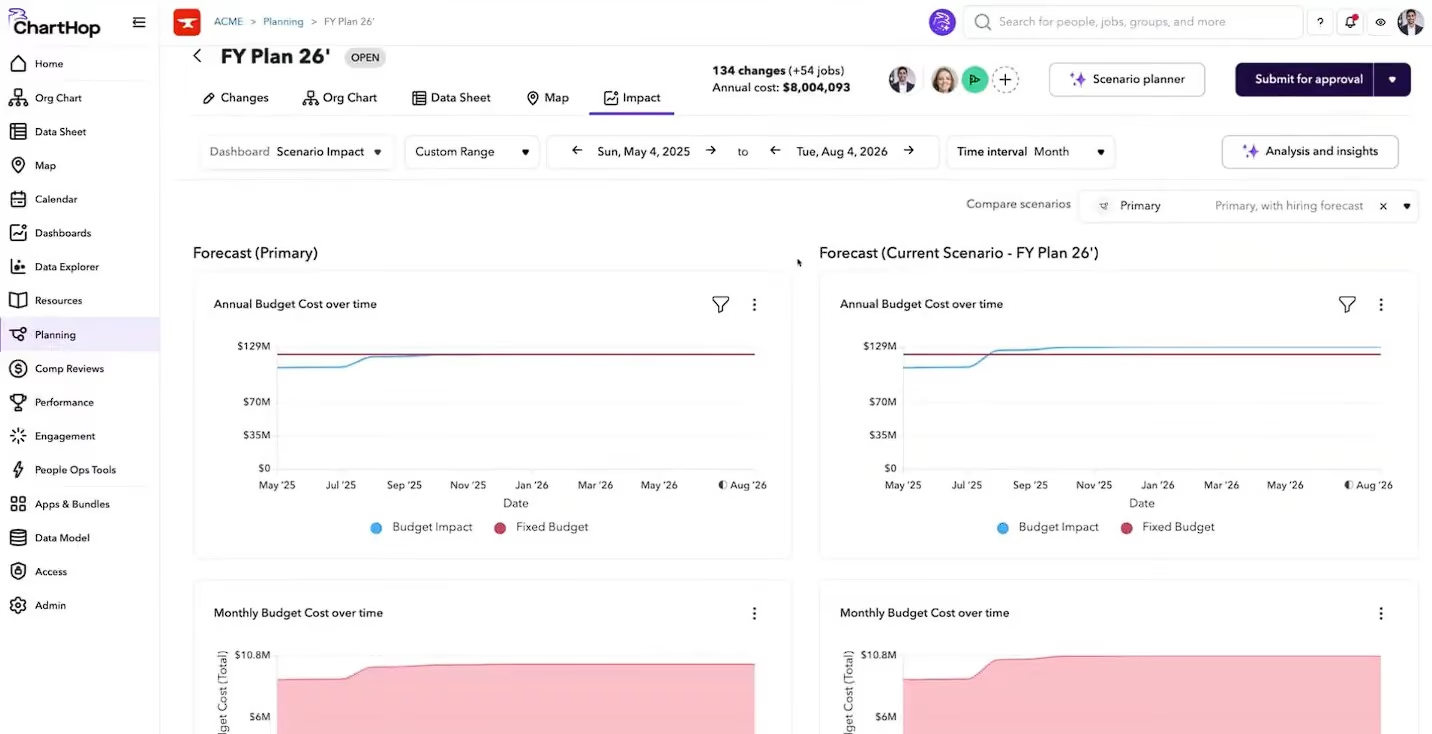
We also tested how DEI insights integrate with ChartHop’s headcount planning. For example, we modeled a scenario increasing representation in leadership roles, and the platform immediately showed the effect on both diversity metrics and budget. Having DEI data live alongside compensation, performance, and org chart information made these scenarios more grounded than using a standalone analytics tool.
Multi-language support (French, German, and Spanish) was a plus in testing for global accessibility. However, we also ran into some limitations. Creating custom DEI categories and dashboards required setup time, and onboarding for a full team could stretch into weeks or months.
Fund That Flip, Assurance IQ, and Headspace Health are some of ChartHope’s customers.
ChartHop pricing starts at $2 per month.

Best For
Organizations that want to connect DEI hiring analytics directly to workforce planning, performance management, and people data in one platform.


I used Charthop primarily to manage our org chart. All employees and contractors had access to Charthop to view the org chart that included where people were located, as well as job titles. Salary information was only available to the HR team. The system was easy to view in terms of seeing who reported to who. For the first year I worked with the platform and we were hiring weekly or bi-weekly and I used the system almost daily. We had Charthop integrated with our HRIS, Gusto, so as new employees were added they populated into Charthop's org chart.
I liked the view and UX of the company org chart. I liked that the system can integrate with multiple HRIS tools. The platform was also affordable as you paid by the user, minimum of 80. We were able to utilize single sign-on which made logging into the system convenient and easy to use since employees had access to over 10 different types of platforms, depending on their work.
The organization purchased Charthop for the org chart feature. We also tried using it to manage Director and Manager requests for hiring. I know there were other features of the system that we did not utilize. Prior to me leadership and HR tried to use the platform to run a performance review however it was not successful. I used the platform for a little under 2 years.
As I looked into the platform regarding the performance management function I found it very confusing. There were several steps to building and creating an annual review. I had a hard time following along as an account manager walked me through how to use it. Charthop did not integrate with our international HRIS, therefore HR had to manually add all international employees and contractors which led to the org chart needing manual updating weekly.
I have not used another org chart platform. In regards to their performance management capabilities I thought it was harder and more cumbersome than competitors I have used.
What are your main use cases for purchasing a platform like Charthop? Does your HRIS tool integrate with Charthop? Does this system have something that another system does? Are there discounts per user if your company reaches a certain employee count?
I did not see significant or beneficial changes with the platform throughout the last 2 years while using it.
Highly matrixed companies with around 100 employees or more.
Companies smaller than 80 people.

Untapped
Untapped allows recruiting teams to supercharge their diversity efforts with an analytics and talent sourcing platform that integrates with your ATS.
PROS
CONS

Untapped helps you discover and track diverse applicants, all from your applicant tracking system. Your recruiters follow their already established workflow for job postings. As you start to get resumes, job applicants are asked to fill out a supplemental questionnaire defined by your hiring team, which can capture up to 75 different insights into an applicant's skills and demographics.
From that data (which is all self reported), you’ll be able to filter your talent pool based on skills, work experience, demographic data, and more. This can help you understand where under-represented candidates may be falling off, in addition to focusing your efforts on the right candidates to meet diversity hiring goals.
Lastly, there is a shared talent network you can source from, in addition to features like virtual events, candidate profiles, and employer branding capabilities that are icing on the cake.
Uptapped customers include Lyft, Adobe, Dropbox, Twitch, and Stripe.
Untapped pricing is done on a per seat basis. You should reach out to them to better understand what it'll cost for your organization.
Best For
Mid-sized to large corporations looking to boost diversity hiring.

We used the searchable candidate pool to find talented, diverse candidates. We also used the automated outreach option to make communication as easy and centralized as possible.
We integrated our Workday system with Untapped so our ATS was updated with the Untapped candidates at all times. We relied heavily on the DEI analytics and stats that we received within Untapped. All features were heavily used.
- I am very impressed by the customer support with Untapped.
- It's a valid source for recent graduates and interns, better than college job boards.
- It makes our DEI efforts and goals much easier to obtain.
My company was looking for more sources for talent while in our early stages of growth. We needed more than Indeed offered, and that was the only candidate pool we were working with prior to Untapped.
Our company is owned by a Latina woman, and diversity is a major tenet of our company values. Untapped was a great option for us to try to bring more diverse talent to our team. We used it to find interns and recent graduates looking for entry level positions.
- The integration with our ATS could sometimes be buggy and problematic.
- Our region lacks big universities, which causes some issues finding candidates at times.
- Candidate profiles are often completed and then not updated for many years.
Untapped allows me to filter for specific talent, skill set, region, etc. Also, the metrics and analytics are helpful and unique to Untapped.
Think about your ATS and confirm compatibility with that third party prior to buying Untapped. Also, confirm with your leadership and stakeholders what your DEI and workforce goals are prior to starting Untapped to be sure of alignment.
I believe it was previously called "Jumpstart" and it rebranded as Untapped. It also has ATS integration options, something that wasn't available 5 years ago.
Companies with a strong DEI mission and goals. Untapped is great for engineering and business industries.
Small, non-DEI-focused businesses would not need Untapped and the features it offers. A company that would not benefit from young talent also wouldn't be a good fit.
True
True (formerly Jopwell) is a holistic platform that helps companies with their DEI initiatives. They do this in three steps: connect with under-represented candidates, access their resources to learn more about diversity hiring, and apply this knowledge to attract top talent.
PROS
CONS
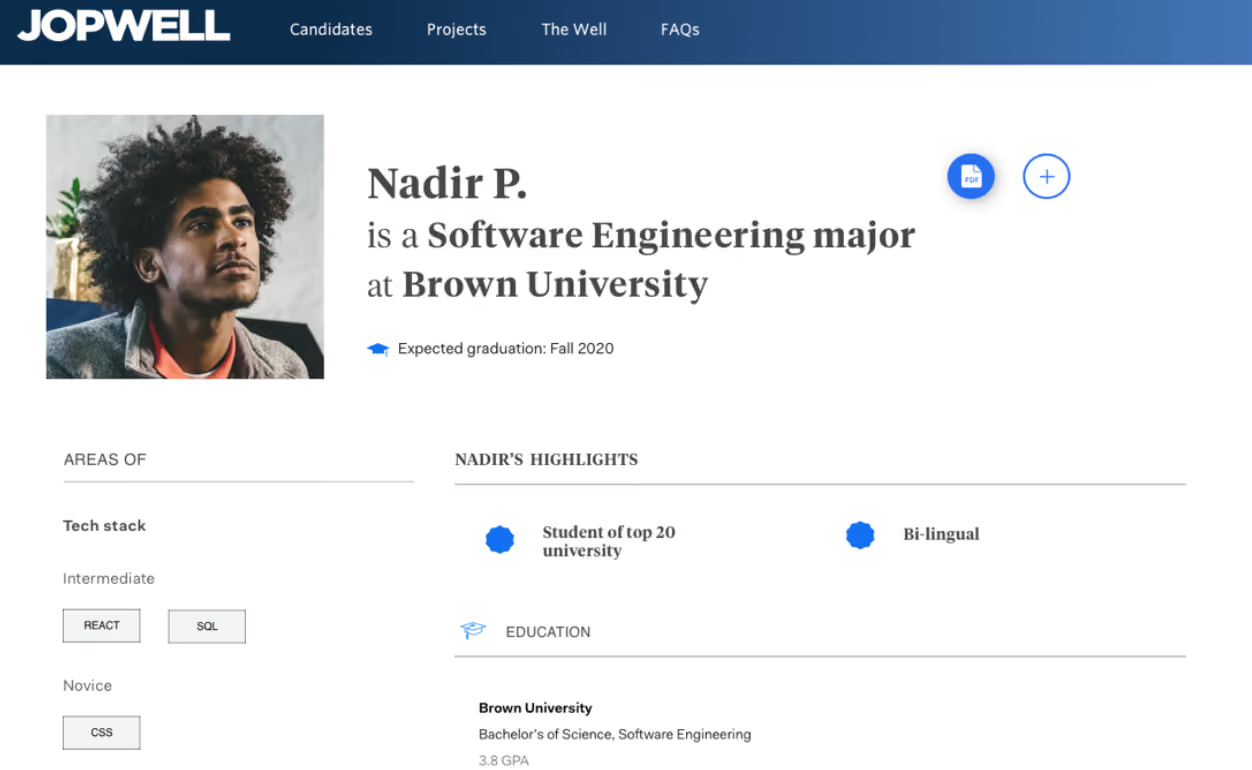
True’s mission is to advance the careers of Black, LatinX and Native American professionals which they accomplish through their community The Well. For employers, it's a great place to build your employer brand with these populations, and also source high quality applicants.
79 customers Bloomberg, Goldman Sachs, and KPMG.
True has custom pricing.
Best For
Companies looking to source diverse talent to bolster their DEI initiatives and build out their employer branding.

Fairygodboss
Fairygodboss scores incredibly high when it comes to promoting diversity and gender equality in the modern workforce. Not only can employers seek female talent from it, but women can find advice, reviews, and companies that practice diversity hiring.
PROS
- Fairygodboss is a dedicated online space for women in tech to pursue their careers.
- Women who join their community can access career advice, research studies, company reviews and be able start meaningful conversations with other members.
- Job seekers can sign up to attend dozens of virtual career fairs, webinars and other special events from Fairygodboss’ website.
CONS
- Their basic job posting service is locked behind a paywall.
- The pricing of Fairygodboss’ plans isn’t disclosed upfront and free trials aren’t available at this time.
- Fairygodboss doesn’t have a dedicated mobile app, but they make up for it by having a mobile-optimized website, accessible on most browsers on mobile devices.
- Their basic job posting service is locked behind a paywall.
- The pricing of Fairygodboss’ plans isn’t disclosed upfront and free trials aren’t available at this time.
- Fairygodboss doesn’t have a dedicated mobile app, but they make up for it by having a mobile-optimized website, accessible on most browsers on mobile devices.
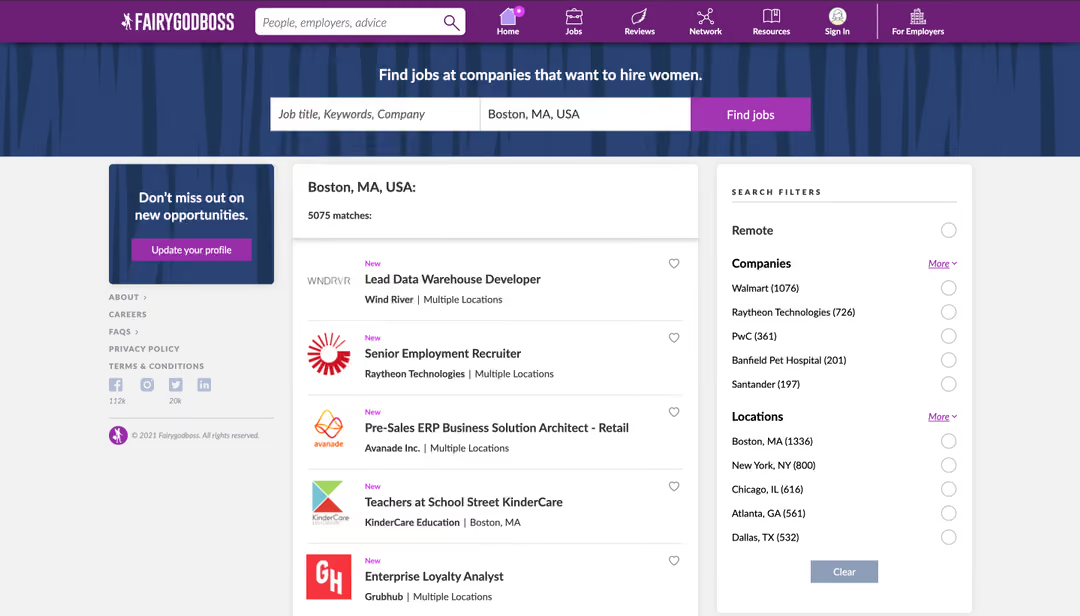
Fairygodboss provides access to various hiring tools, all of which have themes of women empowerment, diversity, and inclusion. These tools include job posting services, employer branding, and personalized email alerts.
Unlike other sites, Fairygodboss has cultivated a strong and dedicated community around diversity and women in the workforce. This provides a designated platform for all female job seekers to pursue their career goals, while letting employers – specifically those in the IT industry – find top talent that can’t be found on other online job boards.
Some of Fairygodboss’ customers include Apple, HP, Dick’s Sporting Goods, and Deloitte.
Fairygodboss is free for job seekers. For employers, there are three plans to choose from. Exact pricing isn’t provided on their site, so you’ll need to contact the Fairygodboss support team to receive a quote.
- Silver: Their entry-level plan Includes unlimited job posts, employer profiles, email features, social media promotion, and access to the customer support team.
- Gold: This tier includes all of the features in the Silver plan with the addition of virtual career fairs, a dedicated email address, job board advertising, and a webinar or Instagram takeover.
- Platinum: This tier includes all of the features in the Silver and Gold plans with the addition of job board takeovers and podcast speaking opportunities.
Best For
Companies looking to empower female workers and build a more diverse, equitable, and inclusive workplace.

Textio
Textio is a writing tool that uses big data and machine learning to help recruiters optimize language to ensure diverse representation in hiring.
PROS
- Textio Flow tool is helpful in helping users create content that is on-brand and inclusive
- The free brand report enables users to identify culturally insensitive blind spots in their external communications
- Provides web browser extensions for ease of use
- Easy to implement and navigate.
- Textio Flow tool creates content based on your language stack, letting you write a job ad from scratch in minutes and create custom templates.
- Offers a free brand report on the website, so you can see what the tool can do for your hiring team's writing.
- Has web browser extensions.
- Straightforward to get up and running.
- Provides industry reports, free guidebooks, help center, phone, email, and live chat.
CONS
- No available info about pricing and plans.
- There isn’t a free trial.
- The platform is available in English only.
- Can integrate with a few ATSs and HR tools. Doesn’t support API integration.
- Hyper-focuses on content optimization and has no offerings for other aspects of hiring.
- Lacks transparent pricing. No free trial.
- Supports English only.
- No mobile app.
- Limited integration capabilities. No API support.
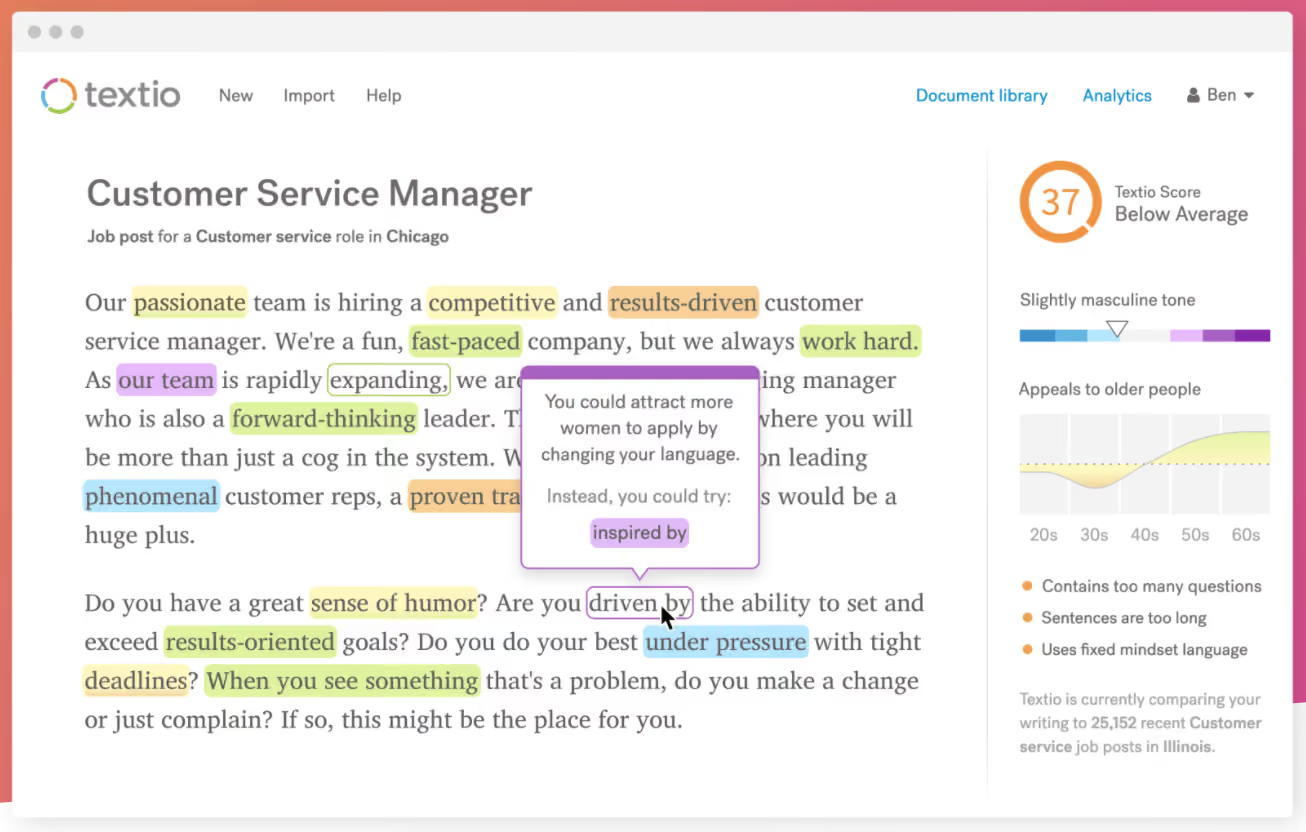
Textio's laser focus on employer brand content optimization sets it apart in recruitment. When this technology is applied to creating content for recruiting, users can communicate with potential hires with language inclusive enough to ensure a diverse pipeline.
Setting up Textio and its browser extension was simple and didn't require much time. Textio proved effective and easy to use, and our editorial team agreed it was similar in feel to Grammarly and Hemingway Editor.
Our evaluation included testing the tool on a sample job posting. Within seconds, Textio provided a score, suggestions, and reports. Color coding of the text is matched with a key on the sidebar and explanations of the suggestions, score, tone, and how the copy appeared to demographics.
The shared document library, a valuable resource for repurposing existing content, is another standout feature we uncovered in our testing. Categorization options make searching a breeze, especially for large firms with extensive document repositories.
In addition to all it does well, we’d like to see more pre-built connectors or API access for seamless integration with existing HR software. Additionally, Textio is English-only, which limits its usefulness for multinational teams communicating in country-specific languages for their employer brand content.
McDonald’s, Johnson & Johnson, eBay, Slack, P&G.
Textio does not provide pricing details. You must get in contact with a sales representative.
Best For
Teams trying to remove bias from their hiring process and boost their recruitment marketing efforts.

We mainly use Textio to support managers to provide effective feedback to their teams, particularly Textio's interactive coaching modules and best practice guidelines which are tailored to various feedback scenarios. These resources empower managers to navigate sensitive conversations, address performance gaps, and foster a culture of continuous improvement within their teams.
We find Textio's capability to offer personalised support to each of our managers truly invaluable. Textio's platform is designed to cater to the individual needs and preferences of managers, providing tailored guidance and assistance to enhance their feedback delivery skills.
One aspect of Textio's personalised support is its adaptive coaching approach. The platform analyses each manager's communication style, strengths, and areas for improvement, allowing it to offer targeted recommendations and coaching tips that align with their unique communication preferences and objectives.
We were seeking a solution to empower managers in delivering constructive and effective feedback to their teams with ease, and we liked Textio's highly innovative approach to addressing this challenge. Textio's platform offers a unique and intuitive system designed to enhance the feedback process, providing managers with the tools and guidance needed to communicate with clarity and impact.
One of Textio's standout features is its advanced language analysis technology, which leverages data-driven insights to optimise the tone, language, and effectiveness of feedback messages. By analysing the language patterns and sentiment of written communications, Textio helps managers craft feedback that is not only appropriate and relevant but also resonates with recipients on a deeper level.
At times, Textio's approach may appear somewhat overly Americanized, which may not always align with the cultural nuances and preferences of all users or specific scenarios. This could potentially lead to a disconnect or lack of resonance in communication efforts, especially in contexts where a more globally inclusive or region-specific approach is required. However, one significant advantage of Textio's AI-driven platform is its continuous learning and improvement capabilities.
Having had experience with both Textio and Grammarly, I can attest to their similarities in some aspects, particularly in their ability to enhance written communication. Grammarly, known primarily for its grammar correction features, functions similarly to Textio in terms of improving tone and sentiment in written content. However, while Grammarly excels in grammar improvement and correction, Textio takes this concept a step further by extending its capabilities beyond basic grammatical corrections.
I strongly believe that a tool like this is indispensable, irrespective of the size of your business. However, the foremost consideration should understandably be whether your budget accommodates such an investment, as it may be perceived as a luxury. Nevertheless, the benefits it offers are significant, as it has the potential to alleviate managerial burdens and unlock efficiencies that can translate into tangible time savings. While the initial cost of implementing such a tool may seem daunting, it's essential to recognise the long-term value it brings. By streamlining feedback processes and enhancing communication effectiveness, this tool can yield substantial returns on investment by fostering a more productive and engaged workforce.
I have only been using Textio for a short time, so I'm not sure. However, as it is AI-led, it is continuously improving the more users interact with it.
Any and all. This product is incredibly versatile and beneficial for organisations across industries and of all sizes. Its utility extends far beyond specific sectors or business models, making it a valuable asset for any company looking to optimise learning and development initiatives and prioritise investment in its people. The value proposition of this product lies in its ability to save valuable time and resources while simultaneously enhancing learning and development efforts. By streamlining feedback processes, facilitating communication, and offering personalised coaching support, this product empowers organisations to cultivate a culture of continuous improvement and professional growth.
Textio is generally a good tool for most businesses and industries, however, I would say that it wouldn't be the best fit for a company with highly specialised or technical writing needs or businesses that work within strict compliance. Whilst it provides fantastic support for the majority of managers, I would hesitate to advise this for managers with little to no experience, as complete reliance on this product may not result in the most effective feedback. This product should be used in collaboration with real-time, human feedback.
Other Diversity Recruiting Software Worth Considering
- Lever: Leading SMB recruiting platform with strong DEI reporting and analytics
- Pinpoint: Promotes fairness via blind recruitment and structured interview scorecards
- Teamtailor: Offers anonymous screening, diversity metrics, and D&I checks
- SeekOut: AI-powered sourcing from underrepresented talent pools
- hireEZ: Bias-mitigated AI sourcing, diverse talent CRM, and DEI analytics
- VetJobs: Dedicated platform for recruiting military veterans and active service members
Diversity Recruitment Tool Benefits
Equipped with the best diversity recruiting software helps your organization widen your diverse talent pools, fill hard-to-fill positions, as well as enhance employer brand.
- Increase number of diverse applicants: With direct sourcing tools, you can conduct outreach to more diverse candidates and attract more diverse applicants. For example, companies that use Fairygodboss see up to a 50% increase in applications from women.
- Fill hard-to-fill positions: Since the tools mentioned below include job sites where you can post your openings, you can get more applicants for open roles, including hard-to-fill positions like technology and enterprise sales.
- Improve employer branding: Show off your company as a diverse and inclusive workforce. There are numerous employer branding opportunities you can take when using a all-in-one recruiting diversity platform, from having branded career pages to hosting diversity recruiting events.
With that said, diversity hiring tools come with their share of challenges and considerations, and here are a few things to keep in mind:
Diversity Recruiting Software Limitations
The gist: diversity hiring tools only go so far. You can make your hiring process “blind” and source candidates from job sites that specialize in diversity. Still, the recruitment outcomes still depend on human decision making, how interviews are run, and whether the workplace actually supports inclusion after the hire.
- It improves sourcing, not the full funnel: You can source more diverse candidates or run blind screens, but bias can still show up in interviews, selection decisions, and onboarding. Plus, inherited from its trained data, diversity recruiting software’s algorithms carry bias too.
- It does not replace inclusion and interviewer training: Without structured interviewing and ongoing diversity and inclusion training for recruiters, hiring managers, and interviewers, the tool’s impact is capped.
- It may increase cost per hire for underrepresented talent: In many cases, reaching and converting underrepresented candidates can cost more, similar to hiring for hard to fill roles.
- It does not solve retention or culture: These tools do not address retention, growth, or belonging. If the workplace experience is not inclusive, naturally the hires are more likely to churn.
Diversity Recruitment Software ROI
To get a sense of your ROI, look at the number of hires you get from using these tools and the value you assign each hire. Beyond the numbers, there is a moral imperative to build a diverse workforce to reverse the impacts of institutionalized racism, sexism, and ageism. Each organization doing its part creates a better tomorrow for these groups, as well as society as a whole through a more friendly and productive business environment.
Diversity Recruitment Software Pricing
Diversity recruiting software can be free for small teams, but most vendors price based on headcount, feature depth, and how many users need access. In practice, you will see everything from free plans for startups to custom enterprise contracts that scale into the tens of thousands per year.
Common pricing models you will run into are:
- Free tier for small teams: ChartHop offers a free plan for up to 150 employees
- Per seat pricing: Untapped charges per seat, so cost scales with recruiter access
- Custom pricing: Most, if not all platforms offer this subscription as their highest tier. Based on user’s needs, the quote will be shared
- Tiered packages: Fairygodboss offers Silver, Gold, and Platinum tiers, with higher tiers adding options like job board takeovers, career fairs, and employer branding features
Here’s a general cost breakdown:
- Small businesses and startups: free to 100 to 500 per month
- Mid sized companies: 5000 to 20000 per year
- Enterprise: 20000 or more per year, especially for AI and branding heavy solutions
Diversity Recruitment Software Features
Diversity recruitment software typically combines three core capabilities: tools to help you source underrepresented talent through niche job boards and targeted search, features that strengthen employer branding through company pages and sponsored content, and functionality that supports more inclusive hiring through job description optimization, bias reducing screening workflows, and diversity analytics for tracking progress.
- Niche job boards for diverse talent: These platforms focus on underrepresented groups to help companies expand their talent pipeline. For example, True connects employers with Black, LatinX, and Native American professionals, while Fairygodboss is a job board specifically designed for women in the workforce.
- Employer branding and dedicated company pages: A company profile page allows employers to showcase their workplace culture, diversity statistics, employee testimonials, and benefits. Fairygodboss, for example, offers employer branding pages where companies can highlight DEI initiatives and share employee stories.
- Diversity recruiting events and career fairs: Many diversity recruiting platforms offer participation in specialized hiring events to help companies connect with diverse talent. True hosts career fairs designed for underrepresented professionals, while Fairygodboss provides virtual career fairs specifically for women job seekers.
- AI-powered inclusive hiring assistance: AI-powered tools help recruiters write more inclusive job descriptions and match candidates to roles in a fair and unbiased manner. Textio is a prime example, as it analyzes job descriptions and suggests changes to eliminate biased language.
- Advanced search for diversity sourcing: Boolean search functionality enables recruiters to efficiently find underrepresented talent using targeted keywords and filters. For instance, Entelo offers diversity sourcing features that allow recruiters to search for candidates by gender, ethnicity, and veteran status compliantly.
- Sponsored content for DEI branding: Companies can create targeted articles, videos, or other content to highlight diversity initiatives and attract diverse candidates. Fairygodboss is one of the platforms that provides employers with the option to create custom content about their workplace culture and DEI efforts.
- Blind screening support: To reduce unconscious bias in hiring, some diversity recruitment software offers blind screening by removing identifying details such as names, gender, and ethnicity from resumes. Textio is a top brand when it comes to helping employers rewrite job descriptions to avoid language that may discourage diverse candidates from applying.
- Diversity analytics and compliance reporting: Data-driven hiring decisions are essential for tracking progress in diversity recruiting. Solutions like ChartHop provide diversity and inclusion analytics that help HR teams measure hiring diversity metrics such as gender, ethnicity, veteran status, and location.
- Community, networking, and mentorship features: Some platforms function as talent communities that connect candidates through networking, mentorship, and events. VetJobs is an example of a professional network focused on veterian talent and employer connections.
Questions and Tips for Vendor Demos
Before investing in one or all of these tools, make sure to schedule a demo so you can get a feel for the platform and actually see how things work. Ask as many questions as necessary to help you really understand what the tool can do for you and how you can use it most efficiently. Here are some demo questions samples to consider:
- Can you demonstrate how the tool helps source candidates from diverse backgrounds?
- What sourcing channels and databases does the tool access to ensure a diverse pool of candidates?
- Does the tool support multilingual job postings and career sites?
- How does the tool help streamline candidate pre-screening and reduce potential bias in the recruitment process?
- What are the AI-powered algorithms /automation available for helping shortlist qualified candidates? How do they avoid reinforcing biases?
- Can you show how the tool helps create inclusive job advertisements of open positions that attract diverse candidates?
- Does the tool provide suggestions or guidelines for using inclusive language in job descriptions?
- Does the tool support anonymized candidates’ personal details on resumes/LinkedIn to remove identifiable information that may lead to bias?
- Can the tool hide candidate names, photos, or other identifying details during the screening process?
- How does the tool track and report on diversity-related metrics, such as the percentage of diverse candidates in the pipeline in real-time?
- Are there analytics features that help identify potential diversity gaps in the hiring process?
- Can you demonstrate the candidate experience when applying for a job through the tool?
- Does the tool provide accessibility features to accommodate candidates with disabilities?
Knowing how to make a productive demo is equally important. We offer the following pointers:
- Ask for user feedback: Request feedback from current users of the tool to understand their experiences and challenges. Many of the tools we've picked for this guide have case studies available, but you can go a step further by asking the vendor to connect you with their customers for firsthand insights.
- Check user-friendliness: Pay close attention to the user interface and ease of navigation. Ask the vendor to walk you through the features your team will use frequently to see how they work. Don't assume all tools work the same way, even if you've used similar ones before.
- Inquire about support and training: Learn about customer support and training options for a smooth implementation process. Make sure you clarify which support services are included with your subscription and which might require an additional fee.
- Request a free trial: You can and should ask for access to a trial or sandbox environment to explore the tool further on your own. Some vendors may not advertise a free trial, but they might be open to providing one if you request it.
Diversity Hiring Software Implementation Tips
Many of these tools are easy to get started with and probably familiar (especially job boards which we've all used before). But a key piece of the implementation puzzle here is on your overall DEI strategy — i.e. not just diversity hiring, but how you’re building a fair and inclusive workplace that attracts AND retains top talent.
- Partner with internal stakeholders: Work directly with VPs, SVPs, and other team leads to learn more about their strategy (including both their business strategy and their people strategy). You want to be a team’s key partner for all HR-related needs, especially as it relates to driving business. Understanding who they want to hire as well as what they need to make existing employees happy is key.
- Conduct an internal audit: Find out exactly where you need to focus your diversity and inclusion efforts — i.e. is it on hiring, unconscious bias training, employee benefits, etc? There are some ways to do this. You can conduct anonymous employee surveys, look at your company ratings on Glassdoor or Comparably (the latter of which shows a rating for how inclusive your company/culture is), or engage an outside firm to handle the research and analysis.
- Update employer branding: There are ways to subtly and overtly show your diversity and inclusion efforts in your employer branding — from showcasing diversity in leadership positions (for example, with headshots on your About page), highlighting diversity investments and data on your job site and individual job postings, or adding language like “... and allies” to your messaging, for example.
- Appoint or hire a DEI manager: As you probably know by now, creating a DEI-friendly workplace is not as simple as uploading job postings on diversity hiring websites. There’s the entire hiring funnel to think about, and an inclusive culture to build - it can be a long and hard journey. As your team grows, consider appointing or hiring someone whose sole focus is on developing and executing, and continuously improving your diversity recruiting strategy.
FAQs on Diversity Recruiting Software
What is diversity and inclusion?
Diversity is a person’s unique qualities, while inclusion is the creation of a welcoming environment. Together, they are initiatives to make people from all different backgrounds and experiences feel comfortable in the workplace.
What is diversity recruitment software?
Diversity recruiting software is a tool specifically designed to promote inclusivity in the hiring process by mitigating hiring bias, facilitating connections between diverse talent and hiring managers, and fostering a more equitable recruitment environment.
By addressing unconscious biases and structural inequalities that can perpetuate discrimination, this software plays a crucial role in helping organizations build diverse and inclusive workforces, which in turn can enhance innovation, improve decision-making, and boost overall organizational performance.
What are the benefits of using diversity and inclusion hiring tools?
The benefits of using diversity and inclusion hiring tools include an increased number of diverse applicants, filled hard-to-fill positions, improved employer branding, improved skills-based hiring, and improved job descriptions.
What are some key features of a diversity recruiting tool?
Top diversity recruitment tools typically offer features such as niche job boards, company branding pages, recruiting events, company reviews, and custom content to appeal to diverse candidates. Some also offer features that promote diversity hiring strategies, such as augmented writing, blind hiring, and video interviews with diverse interviewers.
What are some key considerations when using a diversity recruitment tool?
When implementing diversity recruiting tools, it's crucial to consider the following:
- Inclusive hiring process: Evaluate how the tool integrates with your overall hiring strategy and where it can add value.
- Unconscious bias training: Diversity recruiting tools can help mitigate bias, but ongoing unconscious bias training for all staff involved in hiring is essential for long-term success.
- Employee lifecycle: Remember that diversity and inclusion are prominent throughout the entire employee lifecycle, from hiring to onboarding, development, and retention.
Creating an Inclusive Culture for a Diverse Workforce
As Sarah Castle of Toast wisely stated, "Think of your company culture as a garden. It’s going to grow whether or not you have a gardener and weeds will grow. Those weeds are your toxicity.” This means that simply hiring diverse candidates is not enough; you must be intentional about cultivating an inclusive culture. When you create an environment where people feel welcomed and can do their best work, you help that diversity flourish. A thriving team will organically attract top talent, even when using simple tools like a free ATS for job postings and candidate management, and basic screening tools such as Microsoft Teams and Zoom.
There is a lot of nuance to inclusion and what makes a person leave because of organizational toxicity. For example, things like fairness and a sense of belonging are perceived differently by women vs. men vs. LGBTQIA vs. different races and ethnicities. There are just a lot of layers to it.
To try to better understand these layers within your organization and accurately identify areas of toxicity that need fixing, keep open lines of communication with your employees (even if just through anonymized surveys), turn to outside consulting firms that specialize in inclusion (like The Collective, A DEI Lab), or other organizations dedicated to inclusion and accountability (like Project Include).
About the Author


About Us
- Our goal at SSR is to help HR and recruiting teams to find and buy the right software for their needs.
- Our site is free to use as some vendors will pay us for web traffic.
- SSR lists all companies we feel are top vendors - not just those who pay us - in our comprehensive directories full of the advice needed to make the right purchase decision for your HR team.


