


Key takeaways:
- More U.S. businesses are going international, making global team management essential for maintaining productivity, fostering collaboration, and driving innovation across distributed workforces.
- Global employees work different hours, speak different languages, and follow unique cultural norms, like the right to disconnect, requiring clear documented expectations, flexible scheduling, and multichannel communication strategies.
- Intercultural training on cultural competency and the SPLIT framework equip staff to recognize, empathize with, and address the challenges their global teammates face.
- Modern technology, like EOR platforms for compliance, project management tools (Asana, monday.com) for collaboration, and async messaging apps (Slack, Loom) for communication, enable teams to work effectively across time zones.
More companies are hiring globally than ever before. The COVID-19 pandemic proved that remote collaboration works, and now businesses can tap talent worldwide and operate around the clock — something an astounding 73% of businesses are already considering, per recent recruitment statistics.
But managing global teams comes with challenges: navigating time zones, cultural differences, communication styles, and labor laws. Here are five strategies to make it work, with real-world examples.
1. Set Expectations Early
Start by clarifying your work expectations. What's standard practice locally doesn't always translate globally, and mismatched expectations hurt productivity and engagement.
This goes beyond workflow preferences. Different cultures have distinct business norms that may clash with your headquarters' practices.
For example, contacting a team leader after hours for urgent client work might be reasonable in the U.S., but not in Australia, where workers have the right to disconnect. Similarly, scheduling standup meetings between 1-3 pm works for UK teams but is inconvenient in countries like Spain and Greece, where midday breaks are more common.
Clear role expectations from day one, starting at recruitment, align cross-cultural teams with your mission and boost collaboration.
Keep expectations transparent with the following:
- Document everything: Publish detailed job descriptions, response time policies, attendance guidelines, approval workflows, and decision-making authorities.
- Train effectively: Provide onboarding that covers role responsibilities and cultural competency so everyone can navigate diverse work and communication styles.
- Gather feedback: Use employee engagement software to learn what's working and what needs adjustment.
2. Leverage Technology
Technology is what makes global workforce management possible. Modern software lets distributed teams communicate and collaborate instantly, regardless of location.
Employer of record (EOR) services are particularly valuable. They handle global onboarding, payroll, and compliance without requiring you to establish international entities, making it easier to compete for top talent worldwide, even as a startup.
Most best-in-class EOR services also provide accompanying software to manage your international workforce. Deel, for example, lets employees schedule and manage meetings through its Slack integration, allowing teams to align more easily on work responsibilities, track goal progress, or monitor career development.
Beyond EOR platforms, other essential software platforms include:
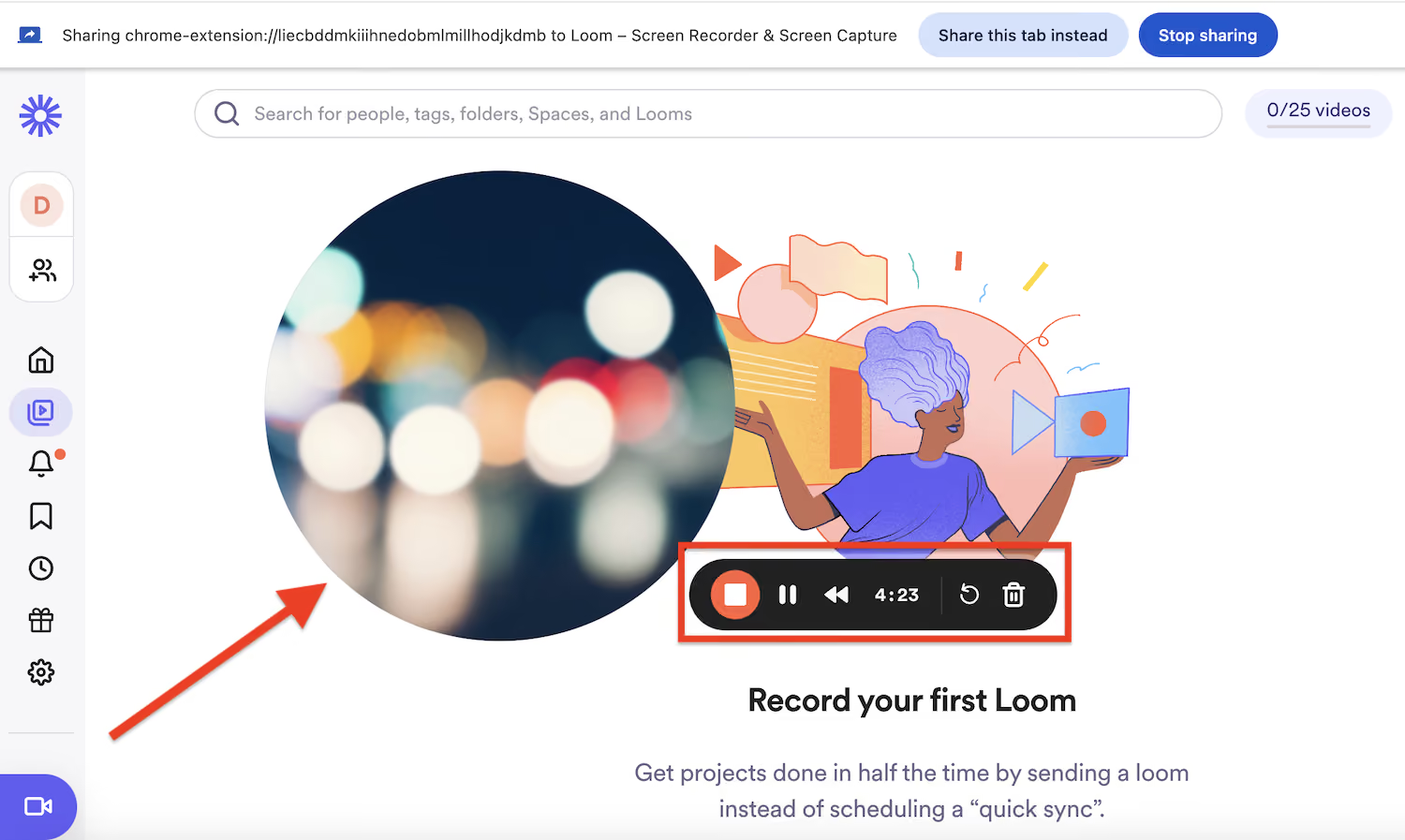
- Communication tools: Support synchronous and asynchronous communication through email, instant messaging, media sharing, and video conferencing applications. Examples: Slack, Teams, Loom, Zoom.
- Project management (PM) and collaboration platforms: Enable teams to collaborate, organize, and assign tasks to team stakeholders in real time. Examples: monday.com, Asana, Notion, ClickUp.
- HR systems: Provide a centralized hub for accessing company policies, organizational charts, team working hours, time-off requests, and performance reviews. Examples: BambooHR, ADP, Gusto.
3. Schedule Sympathetically
Once you have the right tools, use them thoughtfully. When managing multicultural teams, one person's workday end can be another's beginning. While this enables 24/7 operations, it requires empathy when scheduling meetings and deadlines.
For instance, some cultures may accept occasional odd-hour meetings, while others view work availability as a firm boundary. Violating these boundaries tanks morale and can increase turnover risk. In fact, employees who feel pressured to work after hours report 20% lower productivity and twice the burnout.
The reality is that you can’t satisfy everyone's schedule, but you can be fair. Consider some of the following strategies:
- Define core hours: Schedule critical meetings when work hours overlap.
- Offer meeting options: Provide multiple time slots for important all-hands meetings, especially when you have global workers on opposite schedules.
- Respect cultural observances: Plan around local holidays or cultural or religious events.
- Rotate meeting times: Share the inconvenience of early or late meetings across regions.
- Record everything: Record meetings and provide detailed notes for employees who cannot attend live.
- Schedule communication sends: Use tools to send messages to colleagues during their working hours.
- Protect deep work: Implement "no-meeting Fridays" or block notifications for focused work times across regions.
4. Communicate Effectively
Effective communication drives global team alignment and engagement. According to Axios HQ’s 2025 Communications Report, poor communication costs employees earning $50k-$100k more than 35 working days or more than $10,000 in lost salary annually.
But diverse, distributed teams make communication complex. Beyond time zones, you must consider language, message frequency, and preferred channels. One emergency email about a service outage fails if a sales rep demoing the product doesn’t see it.
The best practice is overcommunication across multiple channels and formats, even if it feels repetitive to you. This means:
- Sending messages via email, instant messaging, texts, and HR platform announcements.
- Having leaders share critical news in meetings and one-on-ones.
- Setting transparent standards for response times, channel purposes, and escalation paths.
- Creating opportunities for staff to ask questions and critique communication methods.
Remember: no global communication strategy is perfect, but active listening and acting on feedback are key to continuous improvement.
5. Establish Clear Deliverables
Define clear project deliverables for your international teams to prevent miscommunication and wasted effort. To do this, start with a project kick-off meeting with key stakeholders and ask:
- What is the goal of this task/project?
- How does this connect to the company's broader objectives?
- Who is responsible for what?
- When are the deadlines?
- How will we measure success?
Use these answers to develop objectives and key results (OKRs) or SMART (specific, measurable, achievable, realistic, and time-bound) goals that focus efforts. You can then enter goals into performance management software, link them to broader company objectives, and keep progress visible for cross-team alignment.
For example, Colgate-Palmolive, implemented clear OKRs, including regular goal check-ins and retrospectives, to achieve consistent quarter-over-quarter improvements in innovation and product launches.
Don’t forget to celebrate individual or team wins with public or private shout-outs. This matters especially for international teams where it's harder to see work impact. Most employee recognition software lets you praise team members within the flow of work, building a culture of feedback that boosts engagement.
Managing Global Teams: Final Words
Managing diverse teams requires transparent expectations, cultural awareness, flexible communication, and technology that supports remote work. More importantly, it demands intentionality — clear structures, well-defined processes, and empathetic leaders ready to embrace new ways of working.
Global workforce management is challenging, but the payoff is worth it, with access to top talent worldwide, 24-hour productivity, and unique insights that spark innovation.
You don’t have to navigate the international space alone. EOR partners handle talent hiring and payroll compliance, and even consult on the best people practices for your global business goals. If you’re not sure where to start, check out our best EOR services roundup for a list of top vendors to explore.