




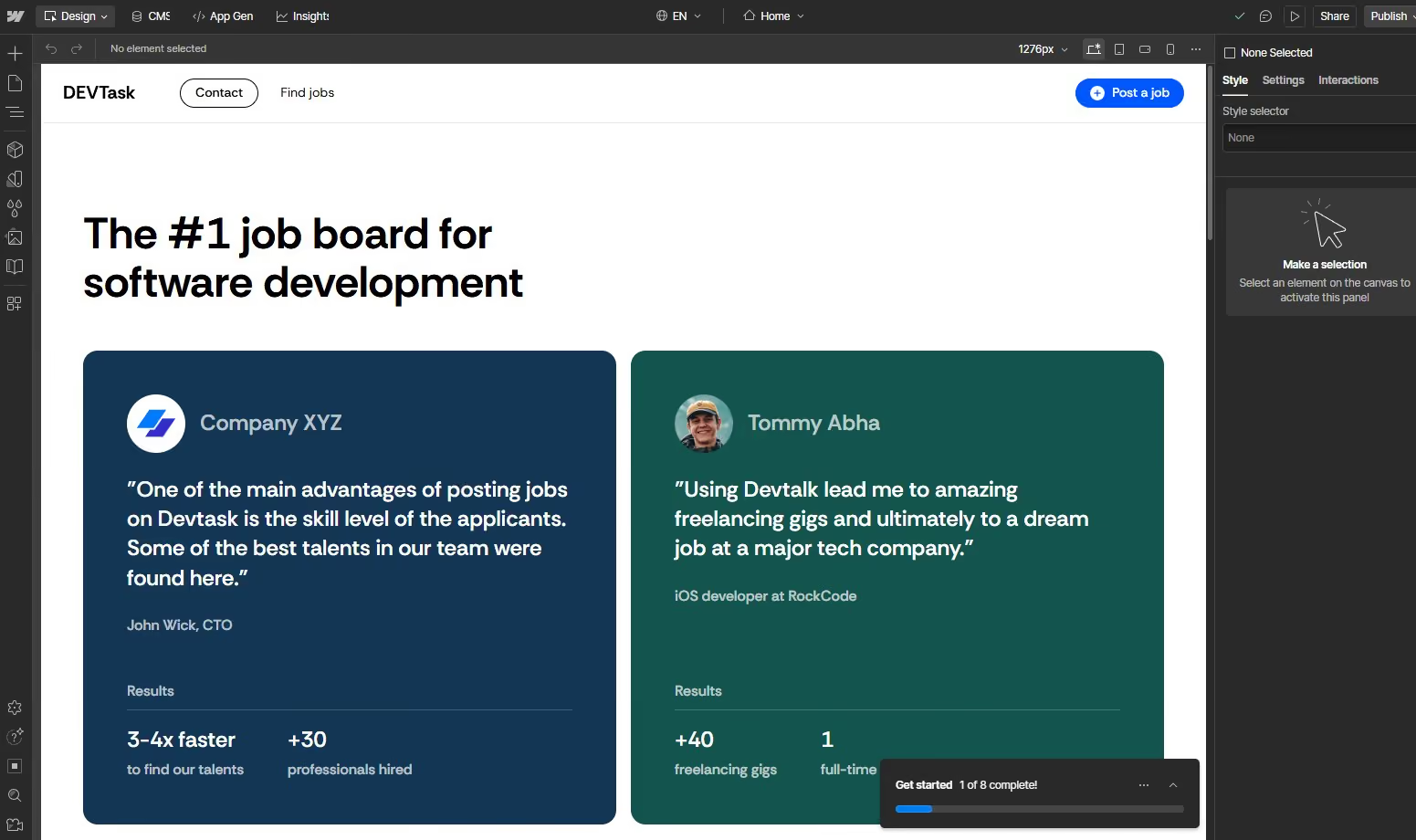
Webflow sits between visual website builders and fully custom development, making it a strong choice for recruiters who want precise control over design and structure without maintaining a traditional codebase. It is especially well suited for recruitment teams that treat their website as a core hiring and branding asset rather than a simple publishing tool.
Ratings
Ease of Use
Best For
Key Differentiator
Price
Free Trial
PROS
- High level of design control without writing code
- Robust CMS for managing job listings, hiring content, and career resources
- Clean code output that supports long term maintainability
- Strong built in SEO capabilities
- Fast and reliable site performance
- Large library of tutorials and an active professional community
CONS
- Steeper learning curve for recruiters without design experience
- Higher cost compared to basic website builders
- Many integrations require third party tools or custom setup
- Not ideal for teams that want a quick template based solution

Need Help? Talk to an HR Software Advisor!
Tell us more about your company & an HR Software Advisor will help you find the right software





In recruiting workflows, Webflow is most often used to build fully customized careers sites and agency websites that reflect a specific hiring brand. Recruiters and designers use it to control layout, typography, and interactions at a granular level, ensuring the candidate experience aligns closely with employer branding and messaging.
Webflow’s CMS is a major advantage for recruiting teams managing multiple roles or ongoing hiring content. Job listings can be structured as CMS items and dynamically displayed across the site by role type, location, or team. This allows recruiters to update openings quickly without rebuilding pages, while maintaining consistent formatting and design standards.
Webflow is frequently used as the front end layer for ATS driven hiring. Recruiters present roles in a branded, SEO friendly format and then link candidates out to application flows hosted in tools like Greenhouse, Lever, or Ashby. This approach avoids the design limitations of ATS hosted career pages while preserving operational hiring workflows behind the scenes.
For inbound recruiting, Webflow supports long term talent attraction through content. Recruiting teams often publish hiring guides, role explainers, and location specific pages that attract candidates through search. Clean code and built in SEO controls give recruiters confidence that their hiring content can perform well organically over time.
Where Webflow requires more investment is setup and maintenance. Recruiters typically need design support to fully leverage the platform, and integrations often require tools like Zapier or custom configuration. Teams that are comfortable with this tradeoff tend to benefit from the level of control Webflow provides.
Overall, Webflow is best suited for recruiters who want custom design and structured content without fully custom development. It rewards teams that value precision, performance, and long term scalability in their recruiting websites.
Wix

Wix
Durable
Durable

Carrd
Carrd
WooCommerce
WooCommerce

WordPress.com
WordPress.com
Webflow offers a free Starter plan, with paid plans starting at $14 per month when billed yearly.
Recruitment agencies and in house talent teams that want a highly customized careers site, CMS driven job management, and strong SEO performance, and are comfortable working within a designer centric website workflow.
Company HQ
Number of Employees
Year Founded
Amount Raised
FAQ
About SSR

We spend hundreds of hours researching the best HR and recruiting software so you don’t have to. We never take money from vendors during our research phase and rely heavily on practitioners and experts to help us recommend the right software. However we may earn a small fee if you click on vendor links on this page.

