




HubSpot CMS Hub is designed for recruitment teams that view their website as part of a larger growth system rather than a standalone asset. It combines website building with CRM, marketing automation, and analytics, making it especially relevant for agencies that manage long candidate and client journeys.
Ratings
Ease of Use
Best For
Key Differentiator
Price
Free Trial
PROS
- Native integration with HubSpot CRM for candidates and clients
- Strong marketing automation for email, workflows, and nurturing
- Personalization tools based on CRM data and visitor behavior
- Built in SEO tools and detailed analytics
- Secure, managed hosting with enterprise grade reliability
- Scales well as recruiting teams and databases grow
CONS
- Higher cost compared to standalone website builders
- Broad feature set creates a steeper onboarding curve
- Deep platform dependency can make future migrations difficult
- Less design flexibility than design first builders like Webflow

Need Help? Talk to an HR Software Advisor!
Tell us more about your company & an HR Software Advisor will help you find the right software





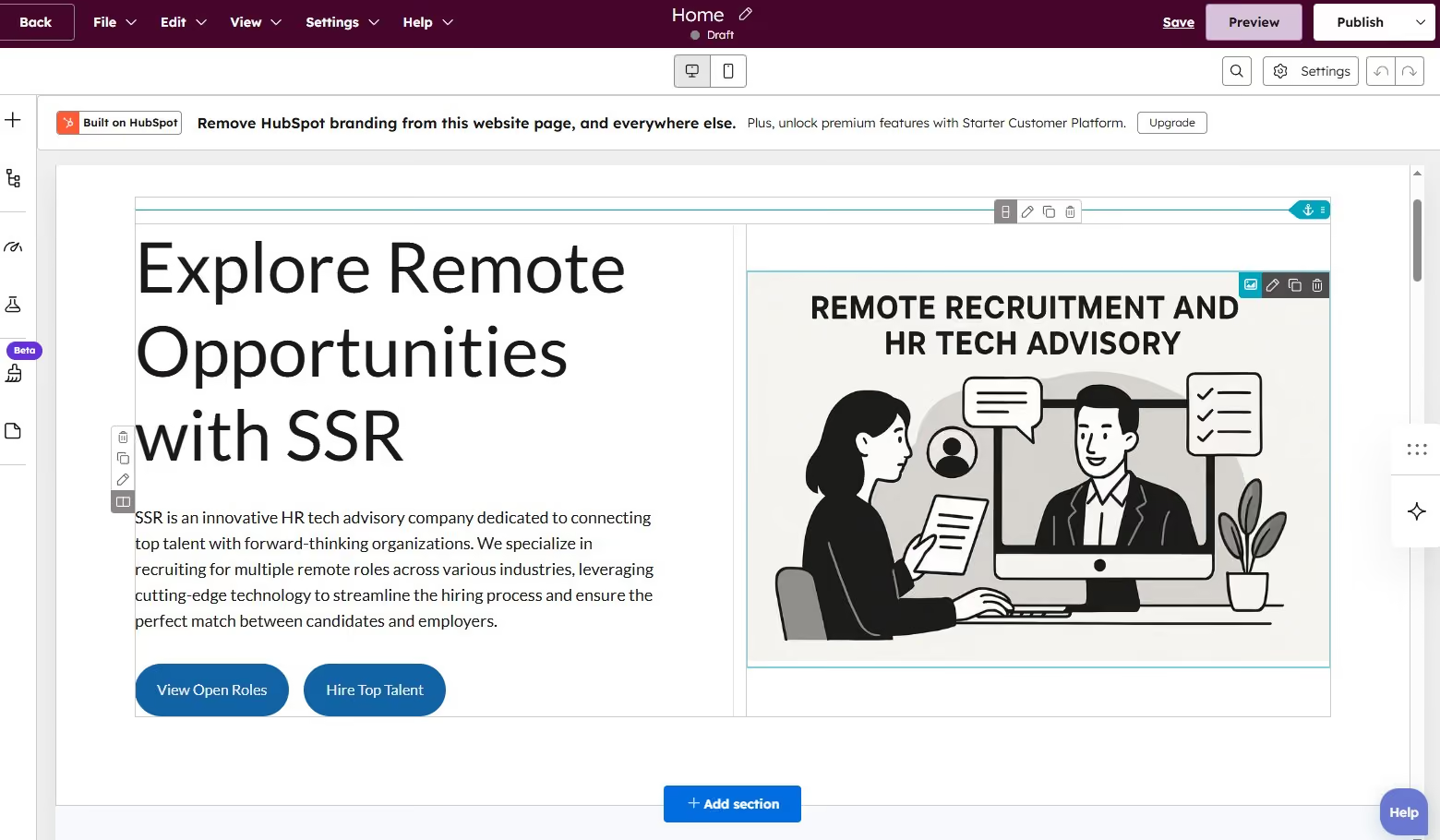
In recruiting workflows, HubSpot CMS is most often used by agencies that want tight alignment between their website, CRM, and outreach efforts. Recruiters use the CMS to publish job pages, service pages, and employer content while automatically capturing candidate and client activity inside the CRM.
One of the biggest advantages for recruiters is visibility. When candidates submit interest forms, download content, or revisit job pages, those actions are logged directly in HubSpot. This allows recruiting and business development teams to see intent signals and follow up with more context than a simple form submission provides.
HubSpot CMS is also widely used for inbound recruiting and employer lead generation. Recruiters can build landing pages for hiring campaigns, talent communities, or employer services and connect them to automated email workflows. Passive candidates can be nurtured over time with role updates or content, while employers can be guided through service offerings without manual follow up.
Personalization is another area where HubSpot stands out. Recruitment agencies can tailor website content based on whether a visitor is a candidate, an employer, or a returning contact. This helps agencies serve multiple audiences from a single site without creating confusion or duplicating pages.
From an operational standpoint, HubSpot CMS reduces tool sprawl. Website management, email marketing, analytics, and CRM all live in one system. For recruiting teams that already rely on HubSpot for sales or marketing, this creates a smoother workflow and fewer handoffs between tools.
The tradeoff is cost and complexity. HubSpot CMS is not built for quick experimentation or lightweight recruiting sites. Teams need to commit to learning the platform and structuring their processes around it to fully benefit from its capabilities.
Overall, HubSpot CMS works best when recruiting websites are treated as revenue and pipeline drivers. It excels at connecting hiring content to long term relationship management rather than just publishing job listings.

Wix

Wix

Durable
Durable

Carrd
Carrd

WooCommerce
WooCommerce

WordPress.com
WordPress.com
HubSpot CMS Hub plans start at $9 per user per month, with higher tiers for scale.
Medium to large recruitment agencies and staffing firms that want a unified platform for their website, CRM, marketing automation, and analytics, and are willing to invest in an integrated recruiting and growth stack.
Company HQ
Number of Employees
Year Founded
Amount Raised
FAQ
About SSR

We spend hundreds of hours researching the best HR and recruiting software so you don’t have to. We never take money from vendors during our research phase and rely heavily on practitioners and experts to help us recommend the right software. However we may earn a small fee if you click on vendor links on this page.

