



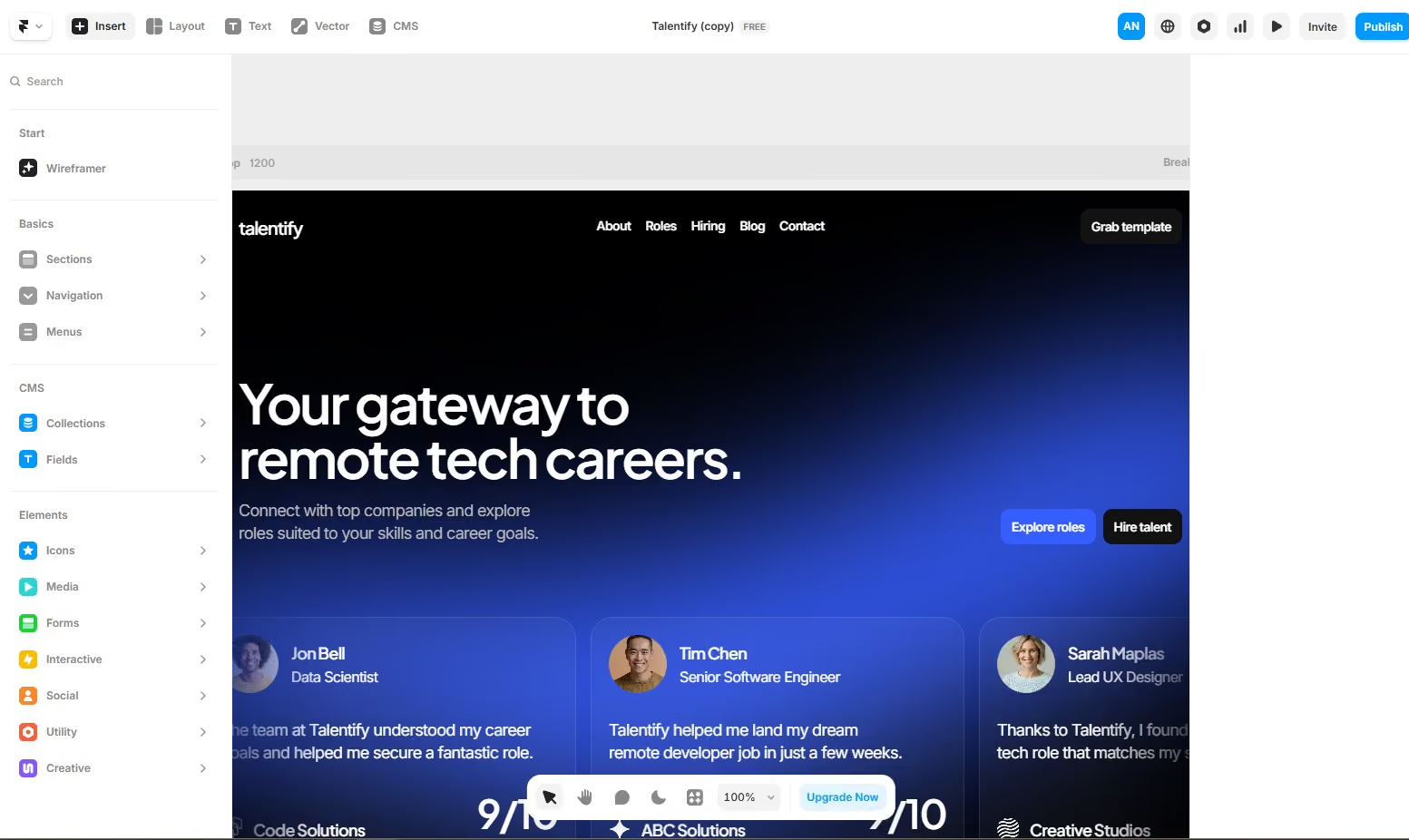
Framer is a high end website builder that appeals to recruitment teams who treat their website as a brand experience rather than just a functional careers page. It is especially well suited for teams that want full visual control, smooth interactions, and a polished candidate experience that stands out in competitive talent markets.
Ratings
Ease of Use
Best For
Key Differentiator
Price
Free Trial
PROS
- Precise design control with advanced animations and interactions
- Strong performance with fast load times and responsive layouts
- Built in CMS suitable for managing job listings and hiring content
- Real time collaboration features for teams working together on design
- Clean code output that supports long term site performance
CONS
- Steeper learning curve for non designers and non technical recruiters
- Higher pricing compared to general purpose website builders
- Smaller ecosystem of third party integrations
- Less suited for quick setup or templated recruiting sites

Need Help? Talk to an HR Software Advisor!
Tell us more about your company & an HR Software Advisor will help you find the right software





In recruiting use cases, Framer is most often chosen when employer branding is a top priority. Recruitment teams use it to craft visually rich careers pages that communicate culture, mission, and role impact through motion, layout, and interaction rather than static content. This is especially valuable for startups, tech companies, and creative organizations competing for top talent.
Framer’s CMS allows recruiters to manage job listings and hiring content without sacrificing design quality. Roles can be structured as CMS entries and rendered dynamically across the site, making it possible to update openings without rebuilding pages. While this does not replace an ATS, it works well as a front end layer that presents jobs in a visually compelling way and then routes candidates to application flows elsewhere.
Recruiters also use Framer to create immersive storytelling experiences around hiring. Instead of listing responsibilities and requirements in a standard format, teams can guide candidates through what the role looks like in practice, how teams collaborate, and what growth paths exist. Subtle animations and transitions help keep candidates engaged while reinforcing brand identity.
For teams with in house designers, Framer fits naturally into existing workflows. Designers can prototype, iterate, and publish directly without handing work off to developers. This shortens feedback loops between recruiting, design, and leadership while keeping the hiring site aligned with brand standards.
Where Framer is less effective is operational recruiting at scale. Teams that rely heavily on ATS integrations, complex application logic, or large job boards may find the ecosystem limiting. Framer rewards teams that value presentation and experience over automation and breadth of integrations.
Overall, Framer is best viewed as a branding and experience platform for recruiting. When visual differentiation is a competitive advantage in hiring, it gives recruiters a way to stand out without compromising performance.
Wix

Wix

Durable
Durable

Carrd
Carrd
WooCommerce
WooCommerce

WordPress.com
WordPress.com
Framer offers a free design plan, with paid plans starting at $10 per month.
Recruitment teams and agencies with strong design capabilities that want to create visually distinctive careers pages, brand led hiring experiences, and interactive recruitment websites that go beyond standard templates.
Company HQ
Number of Employees
Year Founded
Amount Raised
FAQ
About SSR

We spend hundreds of hours researching the best HR and recruiting software so you don’t have to. We never take money from vendors during our research phase and rely heavily on practitioners and experts to help us recommend the right software. However we may earn a small fee if you click on vendor links on this page.

