



Ginger is an on-demand mental healthcare platform that provides employees access to 24/7 text-based behavioral health coaching, psychiatry sessions, and self-guided care resources through a stand-alone application on their smartphones.Their accessibility is their greatest advantage.
Ratings
Ease of Use
Best For
Key Differentiator
Price
Free Trial
PROS
- Members can connect with a behavioral coach in under 60 seconds at any time of the day
- Ginger offers a wide variety of self-help resources at no additional cost to the user
CONS
- Ginger is not a web-based platform. Users can access the tool only via their smartphone
- Members outside the USA do not have access to video therapy and psychiatry sessions.

Need Help? Talk to an HR Software Advisor!
Tell us more about your company & an HR Software Advisor will help you find the right software





Built using smartphone-based technology, data science, and augmented intelligence, Ginger is an on-demand mental healthcare platform that helps employees deal with any challenge they're facing, at any time of the day.
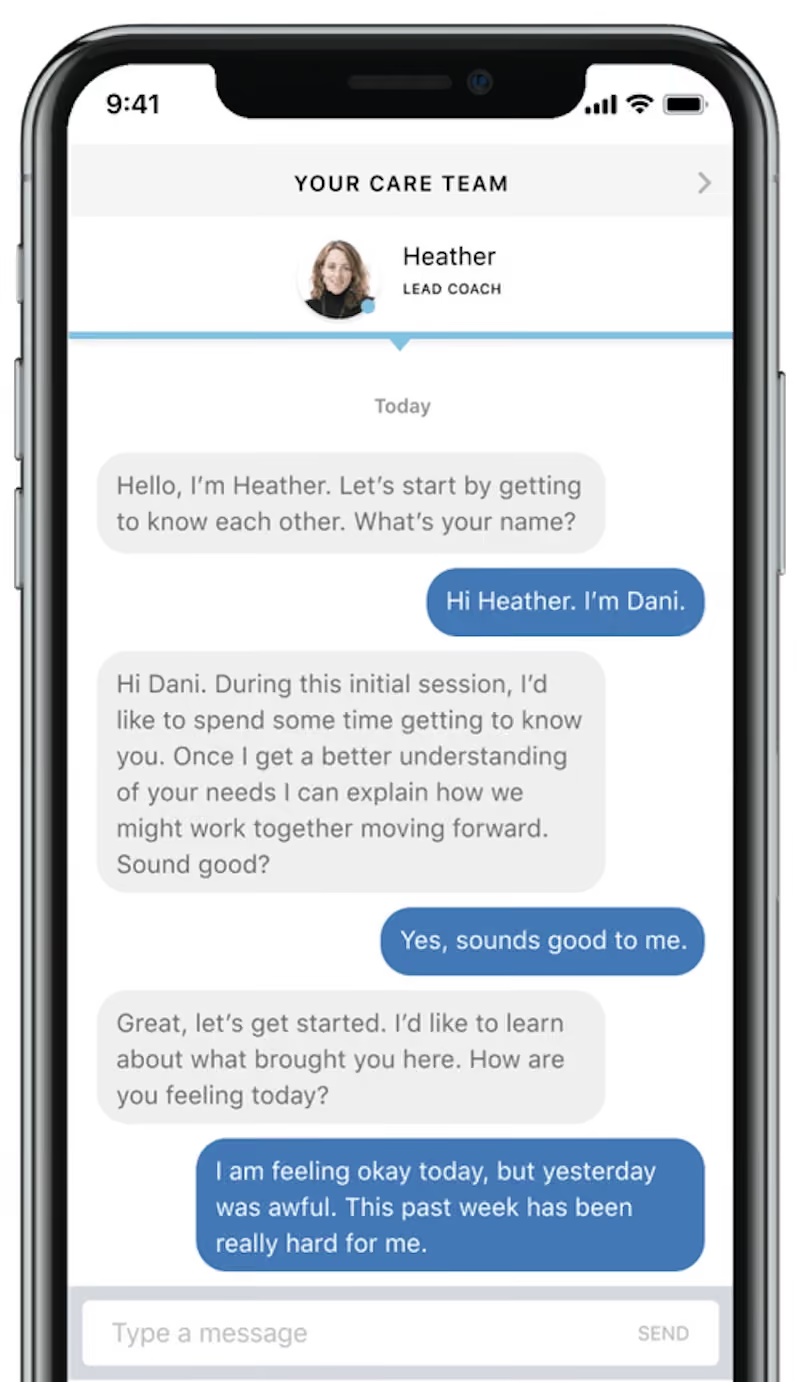
With a wait time of under 60 seconds, employees can easily chat with behavioral health coaches through the Ginger app. You can also book therapy and psychiatry sessions with licensed practitioners when needed. Any medication prescribed by your psychiatrist can be delivered to your house via Capsule in select cities.
What we like about Ginger is that health coaches, therapists, and psychiatrists collaborate and work together as a team to ensure that every individual receives the right level of care.
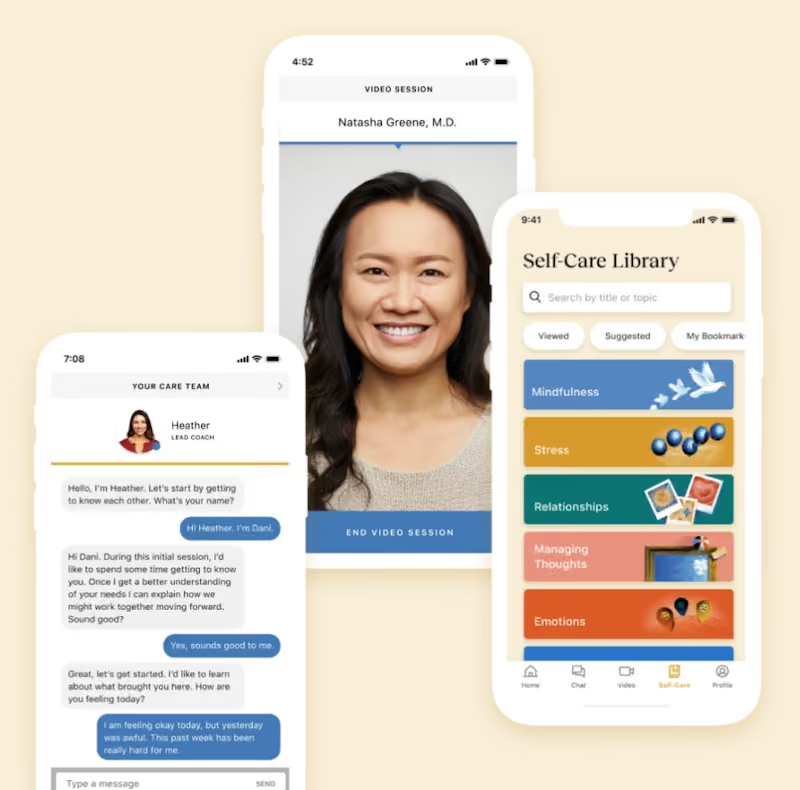
Ginger offers a massive library of self-guided care resources, ranging from webinars, podcasts, mental health tips, videos, and 200+ activities. All members can access these resources at any given point in time. Your behavioral coach will either assign resources and exercises as a part of your care, or the app will suggest them based on your needs and previous activity. From dealing with anxiety and stress to building healthy personal and professional relationships, there's something for everyone. We especially like their Ginger Chats - a resource of inspirational mental health stories.
Over 1.3 billion data points support Ginger's virtual platform - the world's largest data set on mental health. Equipped with these data insights, Ginger's coaches and healthcare practitioners can better help members and provide more effective care.



Both personally and professionally, I have used Headspace as a user and as an administrator for Headspace Core.
As an administrator, I worked with the vendor to set up the employer account post-open enrollment. I set up employee accounts and provided communication strategies to the leadership for the program launch. I pulled monthly reports on usage to help the client do a launch cost-benefit analysis.
I was engaged with the client for 8 months, and at the handoff, I provided the leadership with reporting metrics and administrative guidance to help through the transition.
Headspace Core offers a solution to combat burnout and fatigue, and to boost mental health for employees. Mental health is at the forefront in social media, conferences, and society in general. It is a fairly inexpensive solution to boost a benefit package for a small business.
The administrative dashboard is intuitive and doesn't need a lot of training (especially when you work as a consultant and eventually need to hand off the work to the client). Managing your plan doesn't need a whole IT department. Plus, it was nice to have a smooth implementation at launch.
Mental wellness has been at the forefront of employers' benefits for some time. Work-life balance and positive work environments are questioned in every engagement survey nowadays.
In summer 2025, I worked with a client (35+ FTE, retail, MO and ID) as a consultant to review benefit options for their upcoming open enrollment period. This was one of the vendors presented by their benefit broker as an ancillary product to supplement their package.
Their owner wanted to explore it as a way to boost morale, engagement, and their overall wellness.
I can't think of too many hard-hitting dislikes. For Headspace Core, there are limitations in the customization and branding, though that is not a deal breaker. The analytics worked for a small business, but I could see how, as my client grew, they might have outgrown that plan.
For all companies, measuring ROI on an added benefit is crucial as the budget only goes so far. After implementation, there were some employees who experienced challenges with the app, but I am not sure if that was user error or the app itself.
I have never used any tool like Headspace before. Typically, the meditation or breathing exercises are embedded into health plans, but this is a standalone product. It is unique in my time in HR.
What do your employees want? Are mental health, burnout, fatigue, and work-life balance important to you and your workforce? If so, exploring the plans they have to offer may be worthwhile.
Of course, for all employers, budget is top of mind, but for the Headspace Core plan it was around $50.00 per year per employee, which isn't a huge monthly cost, but again, a cost.
It hasn't been long enough to see how they have changed over time.
Headspace is great for organizations that want to offer an ancillary benefit, specifically for mental health and wellness overall. It is important to their workforce, and they are looking for a way to boost their benefit package.
If you are debating due to budget, you might consider looking at your healthcare carrier for alternatives which may already be embedded in your plan. It isn't a huge cost for the Headspace Core plan, but when you are a small business just starting out, are you okay with not having solid metrics on ROI?
Headspace was offered as one of the activities employees could complete to earn a point in our wellness program.
During our wellness fair, we talked about the benefits, helped employees download the app, and answered any questions they had. Employees used it for guided meditation, stress reduction, and sleep support.
There was nothing to administer beyond answering employee questions and tracking their wellness points. It was a great self-service wellness resource that employees could use whenever they wanted.
- Headspace was easy to download and use right away.
- The content is well done and appeals to a wide range of employees.
- It supported our wellness initiatives without creating extra work.
At the bank, we offered Headspace as part of our employee wellness program. Employees were able to earn points toward their wellness incentives by downloading and using the Headspace app.
The goal was to provide an easy, optional benefit that employees could use on their own time. We rolled it out at our wellness fair, promoted the program, and I downloaded the app to use myself.
I have used it on and off for several years. It was a nice addition to our broader wellness initiatives and was easy to explain to employees. Participation was completely voluntary, and overall feedback was very positive.
- Because it’s voluntary, usage depends entirely on employee interest.
- Since we did not pay for the platform, there was no visibility into actual usage beyond employee self-reporting.
- Headspace works best as a supplement to your wellness program.
Headspace is simple, approachable, and easy to build into your daily routine. It covers a variety of wellness topics, including stress, meditation, and sleep, without requiring a large time commitment. Employees said it was easy to use and stick with.
When evaluating a wellness tool like Headspace, ease of use is important since employees are more likely to use it if it feels simple and engaging.
Employee usage is another key factor, especially when the tool is offered as an optional benefit, and interest can vary widely. It’s also helpful to consider how the tool fits into your overall wellness strategy.
Headspace has expanded beyond basic meditation to include more content around sleep, stress management, and focus. It is easier to navigate, with clear categories and shorter sessions available.
It feels more user-friendly now than when it was first introduced, which encourages regular use by employees.
Headspace is a great fit for companies that want to offer an easy-to-use wellness benefit. It works well in environments that already promote wellness programs and value mental health awareness.
Headspace might not be suitable for companies that are not yet comfortable addressing mental health beyond traditional EAP programs. It may also not be ideal for organizations seeking a highly structured platform. Headspace works best as an optional benefit.
We use Headspace as a mental wellness app during breaks, at the start of team meetings, 1:1s, or even at home. Employees can listen to guided meditations, sleep sounds, or breathing exercises.
Some people use it to fall asleep more easily or feel less anxious. Others use it to focus better before starting work. The app has different topics like stress, productivity, and mindfulness.
Our HR team encourages everyone to use it at least a few times a week. It’s also part of our employee wellness resources on our internal portal.
- Headspace is easy to use, has a wide variety of content, and helps with stress and sleep.
- It works on both phones and desktop.
- It can be shared with employees' family members too.
- The voice guides are calming.
- Many people say they feel better after just one session.
Our organization bought Headspace to support the mental health and well-being of our employees. We wanted to give our employees a tool to help manage stress, anxiety, and improve focus.
After evaluating other wellness apps, it seemed like a good fit for our wellness program. We have been using Headspace for about two and a half years. Since then, more employees have started using it regularly.
Many people have said it helps them feel calmer and more focused at work. We also liked that it’s easy to use and fits into a busy schedule. Overall, it was part of our goal to create a more productive, healthier, and happier workplace.
- Not everyone likes meditation, and some people find the voice too slow or repetitive.
- The free content is limited without a subscription.
- Some people forget to use it regularly, and some find the bright colors distracting.
- It doesn't help with serious mental health issues and is not a substitute for professional help or mental health crisis support.
Headspace stands out because of its simple design and easy-to-follow programs. It’s great for beginners who are new to meditation and mindfulness. The guided sessions are short and friendly, which makes them less intimidating.
Compared to apps like Calm or Insight Timer, Headspace feels more organized and structured. It also offers animations and videos that explain mental health topics clearly. It has special programs for sleep, focus, and even exercise.
When choosing a tool like Headspace, people should consider how easy it is to use. It’s helpful to check whether it has content that fits different needs, such as sleep, anxiety, or focus.
Cost is another major factor, especially for smaller companies. They should verify whether it works well on different devices and includes sufficient support. Some tools cater more to beginners, while others are better suited for experienced users.
It also helps if the app can track progress or offer reminders. Companies should ask their employees what kind of wellness tools they would actually use. Choosing the right one can improve mental health at work.
Headspace has added many new features over the years to meet users' needs. They now offer more content for sleep, like bedtime stories and calming sounds.
They’ve also added short “mini-meditations” for busy people and created special content to help with anxiety and burnout. They even offer programs for kids and families now.
Headspace is a great fit for companies that care about employee wellness and want to support mental health. It works well for people with busy schedules who need short, helpful sessions. It’s also suitable for beginners who want to try meditation but don’t know where to start.
Headspace might not work well for very small companies that cannot afford it. It also may not help people who have serious mental health issues and need professional therapy.

Modern Health

Modern Health

Spring Health
Spring Health

LifeWorks
LifeWorks

Ulliance
Ulliance

Talkspace
Talkspace
You cannot use Ginger’s service unless your employer has signed up for it.
Buzzfeed, Sephora, TaskRabbit, SurveyMonkey, and Chegg
- 24/7 on-demand live chat
- Behavioral health coaching
- Therapy and psychiatry sessions
- Self-guided care resources
Ginger is a stand-alone application and doesn’t integrate with other applications/software.
Ginger's pricing is not disclosed on their website. You can get in touch with their team for a custom quote depending on how much access to coaches and therapists your company requires. Employees and their dependents don't have to pay any fees.
Any sized company will find Ginger valuable for keeping employees happy and healthy.
Ginger is a mobile app, so implementation is as simple as downloading it.
Ginger's licensed professionals are available 24/7, so you can reach out to them at any point during the day. If you have any queries or concerns, you can chat with their Member Support Team using the app, and someone will get back to you within two minutes. You can also email them and expect a response within 12 hours.
When Ginger's co-founder and COO, Karan Singh, was a child, his mother would brew him ginger tea whenever he felt like he was about to be sick - a preventative remedy used at the first sign of illness. Years later, after learning of a loved one's suicide attempt, Karan decided to establish a system that takes a preventative approach to mental health, addressing problems before they become worse. Thus, in 2011, with the help of a team of entrepreneurs and data scientists at the MIT Media Lab, Ginger was born.
Company HQ
San Francisco, California
Number of Employees
230+
Year Founded
2010
Amount Raised
Ginger has raised $220.7 million in funding over 11 rounds. Their latest was a Series E round in March 2021.
FAQ
About SSR

We spend hundreds of hours researching the best HR and recruiting software so you don’t have to. We never take money from vendors during our research phase and rely heavily on practitioners and experts to help us recommend the right software. However we may earn a small fee if you click on vendor links on this page.

