


We picked 1Way Interview for its commitment to small businesses, especially those with limited budgets or hiring bandwidth. The product combines a generous free plan, easy-to-use interface, and simple yet useful AI screening tools that validate text, video, and form responses.
Ratings
Ease of Use
Best For
Key Differentiator
Price
Free Trial
PROS
- AI evaluates candidate responses across text, video, and form inputs.
- Onboarding is fully automated with step-by-step videos and tutorials.
- Candidate funnel analytics show where applicants drop off during assessments.
- The platform integrates with ATS tools or can be used as a standalone system.
CONS
- Lack of live video interview capabilities.
- There are no automated reminders for candidates who abandon interviews.
- Timestamp navigation is not available for video responses.
- Optimized for small businesses, the tool is not suitable for enterprise users.

Need Help? Talk to an HR Software Advisor!
Tell us more about your company & an HR Software Advisor will help you find the right software





We had a chance to demo the product a few months ago and were impressed with its usability and forward-thinking roadmap. Even better, many of the suggestions shared during our initial test have since been implemented.
What consistently stood out across our tests was how intentionally 1WayInterview supports small businesses to better their talent screening workflows. You can start with basic knockout forms to prequalify candidates (shared via job boards or even Facebook ads), then automatically invite qualified applicants to complete a longer video or skill-based test. Our favorite feature is the AI response checker, which evaluates inputs across resumes, form responses, and asynchronous videos. This kind of automation is tough to find, especially at the price point this vendor offers.
Another major improvement we noticed since our last evaluation is the conversion analytics. The video interview platform now tracks where applicants abandon the process and offers recommendations to improve completion rates, which we trust is a must-have for many companies experimenting with video-first hiring. In one case, their own data showed that improved instructions and layout boosted test-start rates from 40% to over 70%.
We equally appreciated how the product enables workflow automation for qualification-based follow-ups and expands ATS integration options. The onboarding process is fully self-serve but now includes guided videos, email support, and a well-organized help center. Although reminder emails for unattended interviews are not live yet, we were told this feature is on the roadmap. Given how quickly the platform has shipped updates since our last test, we have reason to believe this is more than just a promise.
Of course, this option may not meet the needs of users looking for enterprise-grade and live video interview solutions, as it is clearly focused on smaller businesses and asynchronous interviews. 1Way Interview is also a relatively new player compared to more established brands like Hireflix and Willo. As such, it’s best suited for teams that can tolerate a lighter feature set and shorter market track record in exchange for affordability and speed of iteration.
Unlike some competitors, such as Jobma, 1Way Interview has yet to support timestamped video navigation for recruiters reviewing responses. To be fair, though, it’s a tradeoff many small teams are willing to accept at this price point.
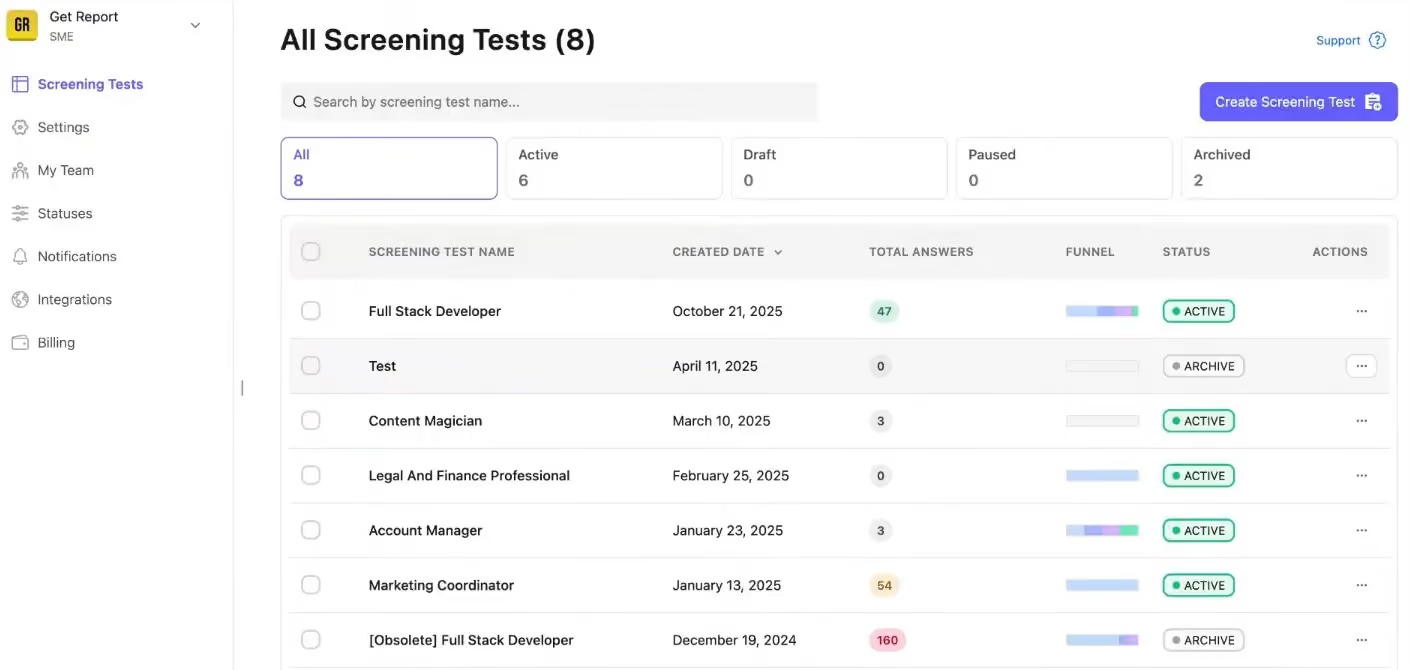



1Way Interview was used to streamline the candidate screening process by allowing potential talent to complete recorded interview responses to pre-screening questions on their own time.
The main workflow began by creating the interview, adding the necessary pre-screening questions, adding any role-specific questions if needed, and setting the expectations for completion. Chosen candidates are then sent an invitation to submit their responses via email, which is then reviewed by the hiring team.
After review (candidate feedback, ratings, or notes), everything can then be used to compare applicants and decide who should move forward in the hiring process.
Key workflows include interview setup, candidate invitation, response review, evaluation, and next-step coordination.
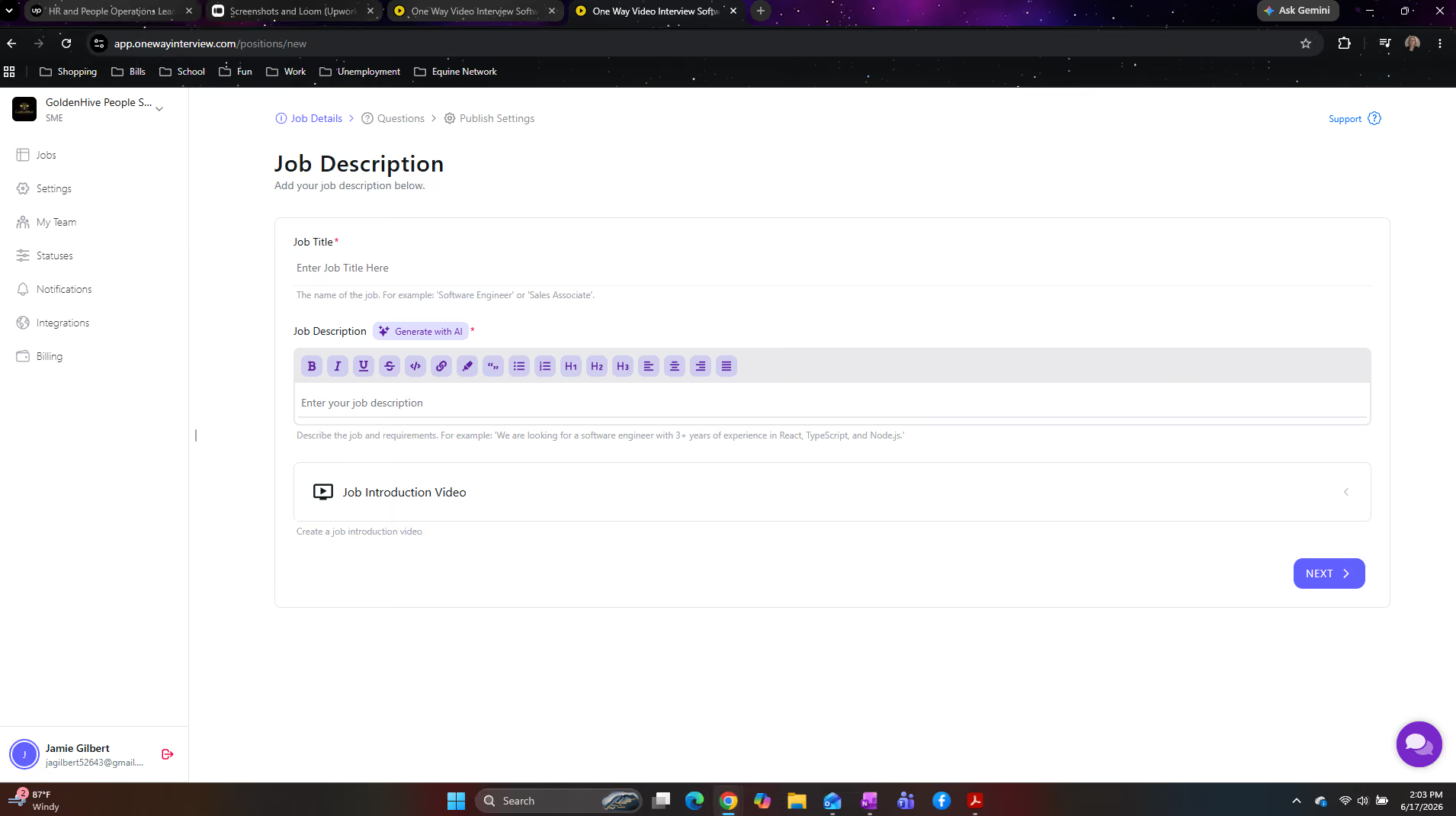
I liked how candidates had the opportunity to answer the questions on their own time.
I liked that being able to use the recorded answers gave the hiring team more time to truly evaluate the answers.
I liked how streamlined it made the hiring process, since we were not having to schedule phone screenings.
1Way Interview was utilized as a pre-screening tool. This took the place of phone screenings. It was to further automate the screening process and to cut down on fill times for open reqs. I used it the last year I was with my previous company. It was extremely helpful as we could have better opportunities to take detailed notes of prospective talent.
Some strong candidates may not perform well for this type of interview, as they may feel anxious recording themselves, or might have technology/accessibility barriers that can affect the quality of their responses.
Some candidates may feel that these types of interviews can feel less conversational/welcoming, rather than when in a live interview.
Due to the interview being recorded and not live, the hiring team does not get the opportunity to ask any follow-up, or clarifying, questions.
1Way is different from their competitors in the way it seems focused on making first-round candidate screening simpler and more consistent through the recorded interviews.
Rather than relying on scheduling phone interviews, our team could create structured questions, send out invites to the candidates, review the responses when convenient, and compare candidates using the same interview format.
Compared to larger, more complex platforms, the value for my team was the ease of use, consistency, and time savings.
A major consideration would be whether the tool improves the candidate experience, not just internal efficiency. The ease of use, pricing, ATS integration, data/security protections, and accessibility are more considerations that need to be taken. Before buying, teams should ask whether the one-way interviews fit their hiring process and whether candidates in their industry/role type would be comfortable using it.
I believe 1Way Interview has evolved by focusing on the main needs users have with the hiring process, leaning more towards automation: easier interview setup, faster candidate screening, more consistent review, and better collaboration between recruiters and hiring managers.
One-way interview tools generally support workflows that automate the pre-screening process. Over time, tools in this space have also had to respond to user concerns around the candidate experience, accessibility, privacy, and making the process feel less robotic/impersonal.
1Way Interview's value appears to be adapting the screening process to save hiring teams time while still giving them a repeatable, organized way to fairly evaluate candidates.
1Way Interview would be useful for organizations that need to screen a high volume of candidates quickly and consistently. It is best for teams that want to reduce scheduling delays, standardize interview questions, and narrow down applicants before live interviews are scheduled.
1Way Interview would not be a good fit for roles where relationship-building, real-time conversation, or nuanced follow-up questions are critical early on in the hiring process.

I use 1Way Interview whenever we need to hire new employees, especially for driver roles where there is usually high turnover. We typically need to hire new drivers every 3 to 5 months. It is used for first-round interviews to collect video responses, review candidates, shortlist them, and decide who moves to the next stage.
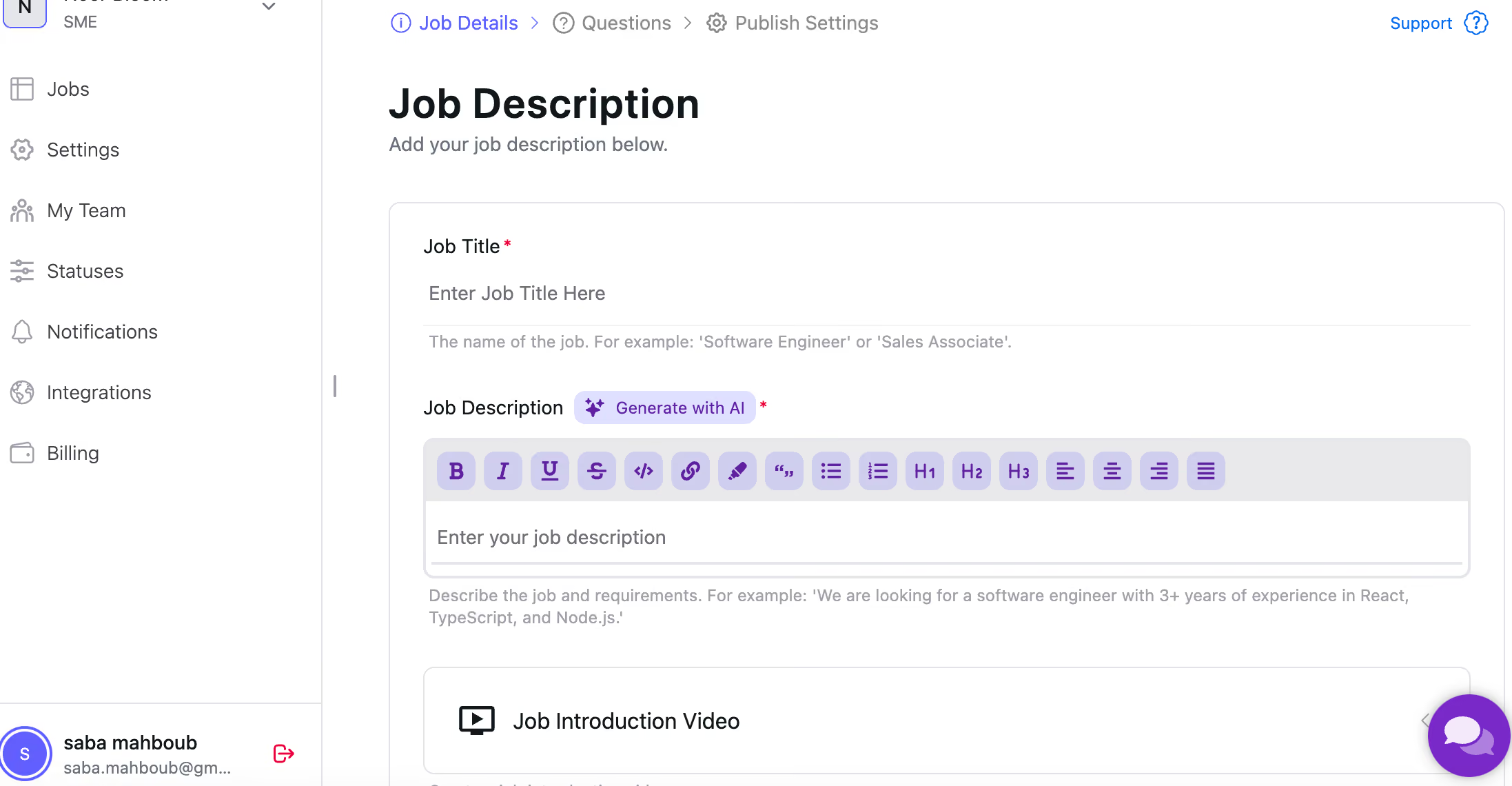
Every candidate can do the interview at their preferred time, so there is no scheduling limitation. Candidates have 3 tries to answer each question and can pick their best response, which reduces stress. It saves time and energy, especially when screening a high volume of candidates.
My experience with 1Way Interview was short-term while testing and exploring whether it's a good option for a startup's initial interviews. I also used it as a candidate during a few of my own job applications, so I can share insights from both employer and candidate perspectives.
One of the main challenges in hiring is the time-consuming nature of initial phone screenings, along with the back-and-forth emails to schedule them. 1Way Interview allows teams to collect video responses and review them on their own time, which helps save time and energy. It also brings flexibility for both sides and allows that effort to be focused on selecting higher-quality candidates.
Speaking to a camera feels unnatural, almost like talking to a robot. Some candidates may not be able to present themselves comfortably in this format.
I haven't used other similar tools, so I don't have deep experience comparing them. From what I've seen, the main differences are usually in features and cost. Some competitors offer candidates 2 or 3 chances to answer each question, and some charge more based on the features offered.
Company size, cost, flexibility, security, and ease of use for candidates are all worth considering before buying.
This is a relatively new method, using AI-based systems over the past 2 or 3 years, so I can't say much about its evolution. As more companies adopt it, these tools continue to develop to better meet user needs.
Recruiting companies, large organizations, or roles with high volumes of applicants. It is especially useful for online companies with remote teams across different cities or countries.
Small businesses with low hiring volume, those who prefer face-to-face interaction, and companies that outsource hiring to recruitment agencies.

VidCruiter

VidCruiter

Hireflix
Hireflix
Spark Hire
Spark Hire
Criteria
Criteria

BarRaiser
BarRaiser
1,000+ companies, including MAID360, GoPrime Mortgage, Headroom Collective, Excellence Appliance Repair, and Cullen Jewelry.
1Way Interview offers a 14-day free trial. For annual plans, the Starter plan costs $13.99/month, the SME plan costs $34.99/month, the Business plan costs $62.99/month, and the Unlimited plan costs $209.99/month.
1Way Interview is best for sub 50 people recruiting agencies, retail, ecommerce, home service businesses, and those seeking to screen a lot of customer-facing candidates with minimal time investment.
Company HQ
Number of Employees
Year Founded
Amount Raised
FAQ
About SSR

We spend hundreds of hours researching the best HR and recruiting software so you don’t have to. We never take money from vendors during our research phase and rely heavily on practitioners and experts to help us recommend the right software. However we may earn a small fee if you click on vendor links on this page.

