

9 Best SEO Tools for Small Businesses in 2026
Grow organic traffic without breaking the bank using tools built for lean teams.










We run a niche content site that relies heavily on organic traffic, so SEO isn’t just something we write about. It’s how we grow. Over the years, we’ve tested dozens of SEO tools, built content that ranks, dealt with Google updates, and learned what actually works when you're not sitting on a giant budget or in-house SEO team.
The tools in this guide are the ones we’d recommend to any small business that wants to rank higher, bring in qualified leads, and avoid getting buried on page 5. Most are geared toward SMBs from the start (which is rare in the world of marketing tech), and we’ll break down who each one’s best for, what it does well, and where it falls short.
Search remains one of the highest-ROI channels, and unlike many marketing software solutions that are bloated, expensive, or built for enterprise-level ops teams, SEO tools have historically catered to leaner teams. Even tools used by bigger companies, like Ahrefs and Semrush, offer plans and UX that make sense for SMBs. Why? Because search is one of the few marketing functions that’s just as critical for a local business as it is for a Fortune 500 company. Everyone’s trying to get discovered.
That said, the search landscape is shifting. Generative search, AI answers, and chatbots are changing how people access information. But these changes don’t make SEO obsolete, they just raise the bar. The best tools now help you go beyond keywords and start optimizing for search intent, content quality, technical performance, and even how AI systems read your site.
We’ve been running SEO for years, for our own content-driven site and in partnership with other software companies. That experience has given us a front-row seat to what actually works for small teams growing through organic traffic.
To make this list, each tool had to meet the following criteria:
- SMB-friendly pricing and onboarding: Tools had to offer plans and workflows that make sense for lean teams, and let you sign up and try them out in minutes; no need for a demo or to talk to a salesperson. Special priority was given to tools with good free trials that let you test them yourself before committing.
- Core SEO capabilities: At a minimum, we looked for keyword research, site audits, rank tracking, or content optimization. This is what we consider the foundational stuff most small businesses need.
- Usability without a full-time SEO hire: We prioritized tools that are easy to navigate without a dedicated strategist or technical lead.
- Modern SEO adaptability: Tools needed to account for evolving trends like AI overviews, content scoring, and SERP volatility; not just legacy ranking tactics.
- Clear value for cost: No bloated platforms with overlapping features. Every tool has to justify its price based on what it actually helps you accomplish.
We tested many of these ourselves and dug into user feedback to understand where they shine and where they fall short for small business use.



Surfer

Surfer makes content optimization a lot clearer. It turns things that usually feel like guesswork into data‑backed decisions by showing you how top ranking pages perform for any keyword and what your own content needs to improve.
PROS
- Strong content editor with real‑time SEO guidance
- Compares your page with top ranking results
- Includes keyword and SERP analysis
- Integrates with WordPress and writing workflows
- Strong content editor with real‑time SEO guidance
- Compares your page with top ranking results
- Includes keyword and SERP analysis
- Integrates with WordPress and writing workflows
CONS
- Not a full SEO suite like Semrush or Ahrefs
- Pricing can feel steep for small or infrequent users
- Content audit limits vary by plan
- Not a full SEO suite like Semrush or Ahrefs
- Pricing can feel steep for small or infrequent users
- Content audit limits vary by plan
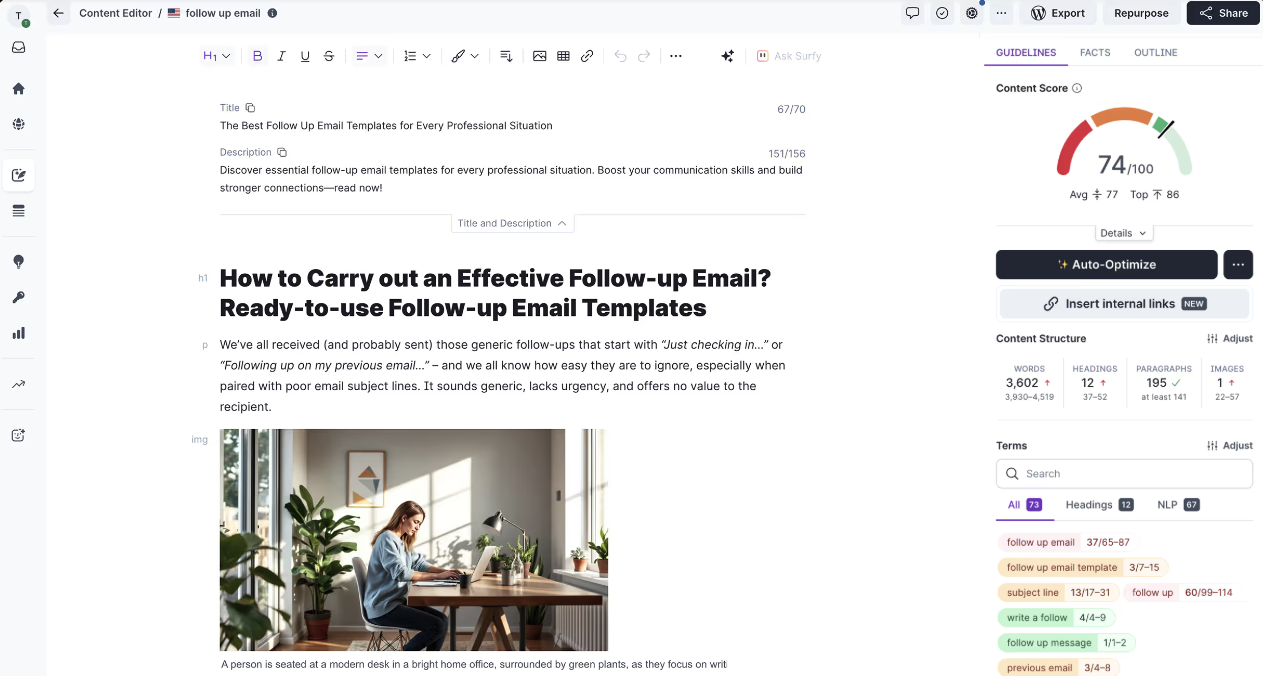
Surfer is a specialized SEO platform built around content optimization and on‑page analysis. Instead of giving you a general set of SEO tools, it helps you understand why certain pages rank well for a keyword and then quantifies what your own content needs to do to compete.
At its core is the Content Editor, which looks at data from the current top ranking pages for a given search term and suggests what should go into your own page — such as recommended word count, related terms, headings, and structure. It’s like having a real‑time SEO co‑pilot while you write or update content.
Beyond that, Surfer includes tools like SERP analysis, keyword research, topical maps for planning content strategy, and audits that point out on‑page issues. It also integrates with other tools like Google Search Console, WordPress, and even AI writing platforms to streamline workflows.
People tend to pick Surfer when their focus is content performance rather than broad technical SEO or backlinks. It doesn’t replace a full SEO toolkit, but it makes your content more competitive and aligned with what search engines reward. For teams that produce content regularly, this clarity is a big win.
Surfer is used by over 16,000 customers globally, spanning content teams, digital agencies, bloggers, and businesses focused on improving organic visibility.
Surfer’s plans start at around $79/month when billed annually for the Essential tier, which includes core writing and optimization features. Higher tiers increase usage limits and add features such as more monthly content credits and advanced analysis.
There is no formal free trial, though some plans offer a money‑back guarantee window.

Best For
Surfer is best for small and mid‑sized teams who create SEO content regularly and want actionable, data‑backed recommendations on how to improve on‑page performance.

Mangools
Mangools gives you a full set of SEO tools without the complexity or steep pricing of enterprise platforms. It’s straightforward, beginner‑friendly, and covers the essentials marketers need every day.
PROS
- Covers keyword research, rank tracking, and backlink checks
- Affordable pricing for core features
- Good customer support and UX for lean teams
- Includes AI Search Watcher for monitoring brand visibility in AI search environments
- Covers keyword research, rank tracking, and backlink checks
- Affordable pricing for core features
- Good customer support and UX for lean teams
- Includes AI Search Watcher for monitoring brand visibility in AI search environments
CONS
- Not as deep or advanced as enterprise tools like Ahrefs
- Usage limits on lower plans can feel restrictive
- Site audits and technical SEO features are basic
- Not as deep or advanced as enterprise tools like Ahrefs
- Usage limits on lower plans can feel restrictive
- Site audits and technical SEO features are basic
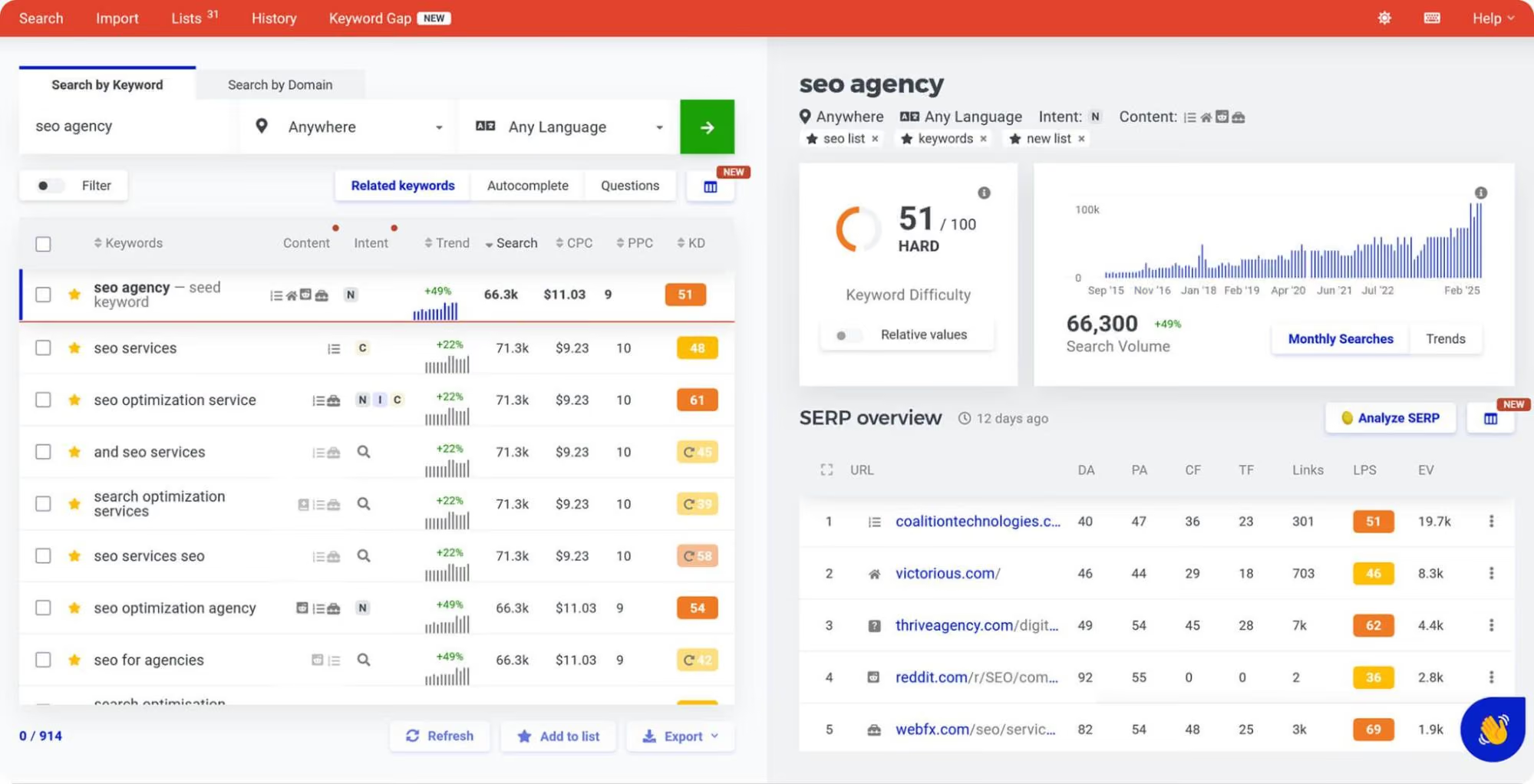
Mangools is a budget‑friendly SEO software suite built around ease of use without sacrificing core functionality. Unlike big platforms that can overwhelm new users, Mangools brings together five specialized tools (like KWFinder for keyword research and SERPWatcher for rank tracking) into one clean, approachable interface.
For many small businesses, freelancers, and founders, Mangools hits the right balance between power and simplicity. It lets you find long‑tail keywords that are easier to rank for, monitor how your rankings change over time, and quickly check backlink profiles without dodging unnecessary complexity.
Users consistently highlight its intuitive dashboard and straightforward workflows, which make everyday SEO tasks quicker and less intimidating. Many reviewers note that it doesn’t try to do every SEO task under the sun. Instead, it focuses on the things small teams actually use most.
That doesn’t mean Mangools is perfect. Compared with bigger suites like Ahrefs or Semrush, it lacks some advanced reporting and deep technical audits. But at roughly $29 per month for entry plans, it delivers solid core capabilities; especially for teams that don’t need heavy data crunching or enterprise extras.
Lastly, in addition to the classic suite, Mangools now offers AI Search Watcher, a lightweight way to monitor how your brand shows up in AI‑generated search experiences like ChatGPT and Gemini. It’s not a full AI ranking tool, but it’s a forward‑looking addition that helps small teams stay aware of generative SEO signals as part of broader visibility work.
Mangools is used by thousands of marketers, agencies, and small businesses worldwide who want essential SEO insights without the enterprise price tag.
Mangools plans start at around $29 per month (annual billing) for core SEO features like keyword research and rank tracking. Higher tiers increase usage limits and add more monthly lookups, rank checks, and backlink rows. A limited free trial or money‑back guarantee is often available depending on promotions.
Best For
Mangools is best for small businesses, independent marketers, and lean teams that need an affordable, easy‑to‑use SEO toolkit covering keyword research, ranking, and backlink basics.
Semrush
Among SEO tools, Semrush stands out for having one of the broadest sets of features. It gives you keyword research, site audits, competitive analysis, content tools, local SEO, and AI search visibility all in one place. For small business teams that want to centralize insights, it really does save time and reduce tool sprawl.
PROS
- Deep keyword research and SERP insights
- Competitive analysis and market intelligence
- Includes audits, rank tracking, content tools, and PPC data
- 7‑day free trial across core toolkits
- Strong integrations and reporting features
- Deep keyword research and SERP insights
- Competitive analysis and market intelligence
- Includes audits, rank tracking, content tools, and PPC data
- 7‑day free trial across core toolkits
- Strong integrations and reporting features
CONS
- Pricier than many SMB‑focused tools
- Can feel overwhelming at first
- Some features require higher plans
- Steeper learning curve for beginners
- Pricier than many SMB‑focused tools
- Can feel overwhelming at first
- Some features require higher plans
- Steeper learning curve for beginners
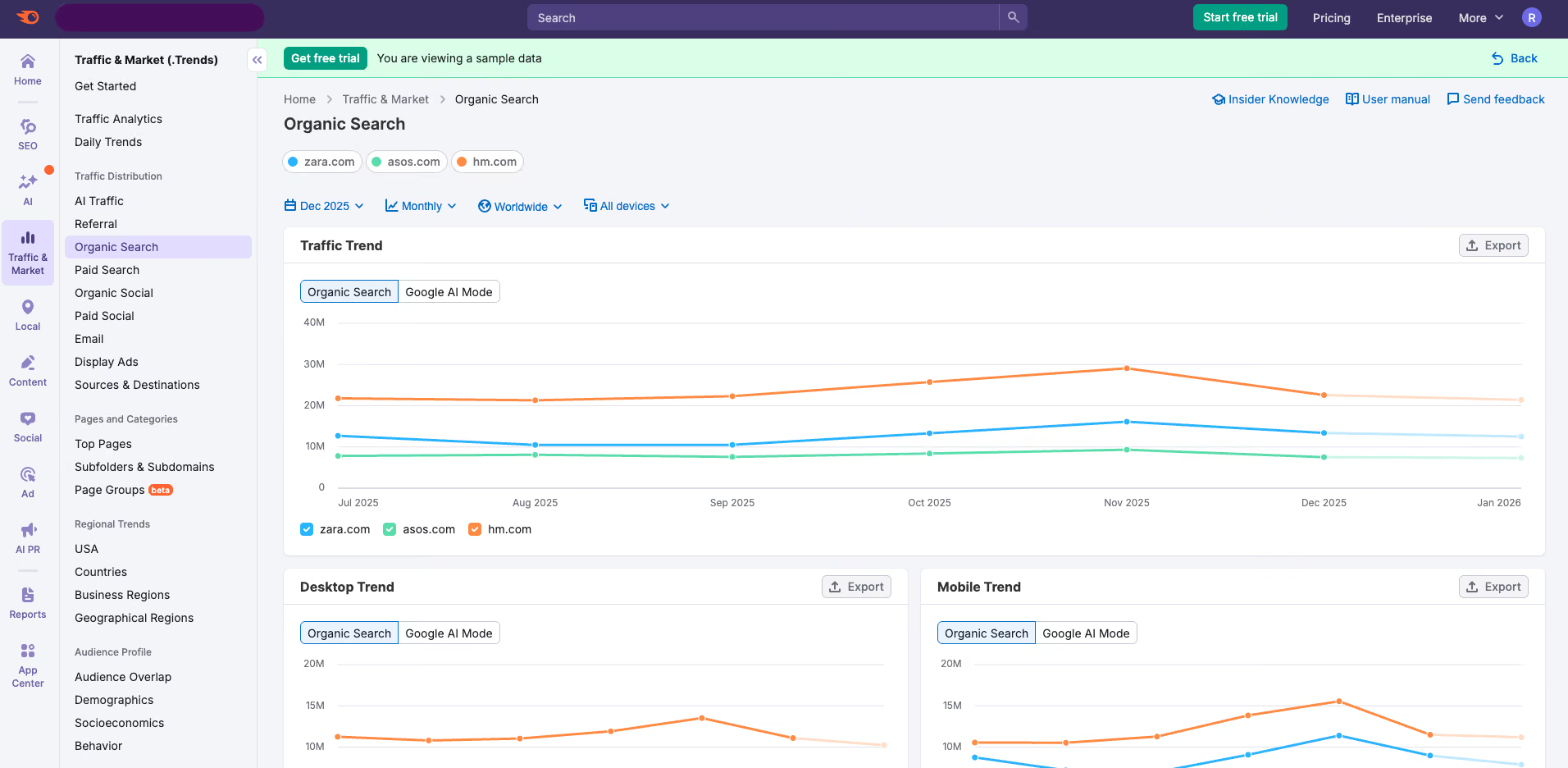
Semrush is one of the most comprehensive all‑in‑one SEO and digital marketing platforms available today. It blends traditional SEO tooling, like keyword research, site audits, rank tracking, and backlink analysis, with broader competitive intelligence and visibility features that help you understand why your site performs the way it does and where you can improve.
Where Semrush really stands out is how many capabilities live under one roof. You don’t need separate tools for keyword research, competitive analysis, local SEO, content strategy, or even PPC insights. Everything lives in one dashboard with deep reports and actionable recommendations that help you plan and execute your SEO strategy.
Users often highlight its robust keyword research and domain overview tools as core strengths. The competitive analysis features let you compare your site with peers, uncover gaps, and spot opportunities to win more organic traffic.
That breadth can be a double‑edged sword for small teams with limited budgets. Semrush isn’t cheap, and the sheer number of tools and reports can feel overwhelming at first, especially if you’re new to SEO. But if you plan to use it as your central marketing toolkit and are ready to invest time learning it, most users find the value justifies the price.
One of the biggest additions in recent years is the focus on AI and visibility beyond traditional search. With products like Semrush One and the AI Visibility Toolkit, the platform is positioning itself to help teams understand how their brand shows up in AI‑generated results and emerging generative search experiences.
Because of that, even while the Adobe acquisition is pending and expected to close in 2026, Semrush remains a powerful choice for SMBs that want a future‑ready SEO toolkit. Whether the deeper Adobe integration ultimately pushes pricing or enterprise focus is still uncertain, but as of now the core product continues serving small teams effectively and evolves alongside shifts in search behavior.
Semrush has millions of users worldwide, ranging from solo marketers and SMBs to agencies and large brands. Its broad adoption reflects its depth of features and role as a central SEO and marketing hub.
Plans typically start around $165/month for Semrush One’s Starter tier when billed annually, including access to multiple toolkits (SEO, Content, Local, and more). Higher tiers increase limits, data depth, and add advanced features such as AI visibility tracking and market analytics. A 7‑day free trial is available for most core toolkits.
Best For
Semrush is best for small businesses and marketing teams that want a single, comprehensive platform for organic search, competitive intelligence, content strategy, and visibility insights.

SE Ranking
SE Ranking packs a complete set of SEO tools into a single platform at a price most small teams can afford. It makes rank tracking, analytics, and site auditing easy, even if you are just getting started. SE Ranking helps you understand performance and opportunities without overwhelming complexity.
PROS
- The easy-to-navigate interface makes it accessible to beginners and small teams.
- Strong rank tracking with daily updates across multiple locations and devices.
- Combines essential SEO tools like keyword research, audits, and backlink checks in one platform.
- Offers solid value for the price compared with more expensive alternatives.
- Includes customizable reports and responsive customer support.
- The easy-to-navigate interface makes it accessible to beginners and small teams.
- Strong rank tracking with daily updates across multiple locations and devices.
- Combines essential SEO tools like keyword research, audits, and backlink checks in one platform.
- Offers solid value for the price compared with more expensive alternatives.
- Includes customizable reports and responsive customer support.
CONS
- Rank tracking data may update more slowly than in some competing platforms.
- Some features are buried in layered menus, which can slow down first-time users.
- Content and AI tools feel basic compared with those in tools like Surfer or Clearscope.
- Keyword databases are less complete in niche markets or smaller countries.
- Dashboards aren’t optimized for mobile and can feel cramped on smaller screens.
- Rank tracking data may update more slowly than in some competing platforms.
- Some features are buried in layered menus, which can slow down first-time users.
- Content and AI tools feel basic compared with those in tools like Surfer or Clearscope.
- Keyword databases are less complete in niche markets or smaller countries.
- Dashboards aren’t optimized for mobile and can feel cramped on smaller screens.
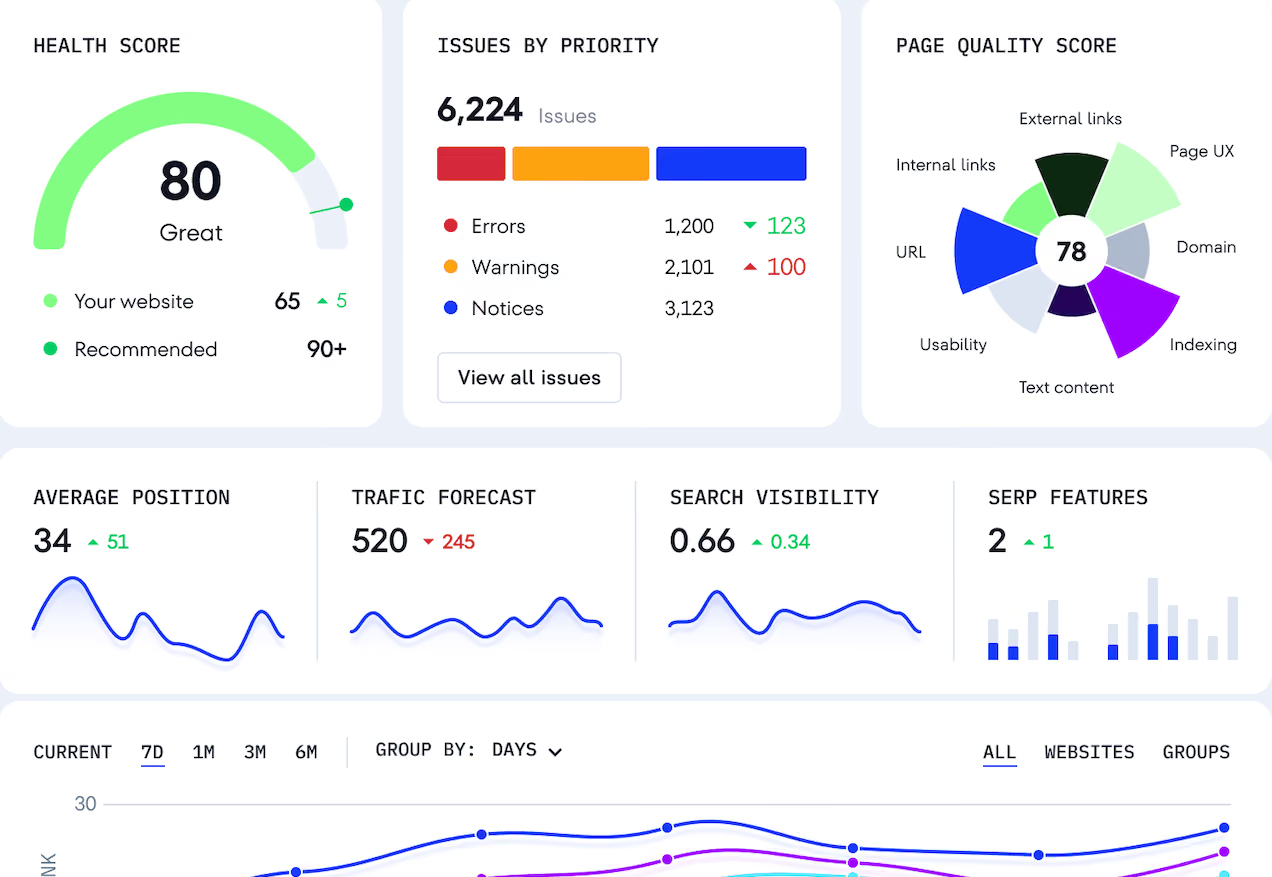
SE Ranking is an all-in-one SEO platform that gives small and mid-sized businesses a comprehensive set of tools at a reasonable price. It combines rank tracking, site audits, keyword research, backlink monitoring, and competitor analysis into a single dashboard that’s far easier to use than most enterprise-focused platforms.
One of its biggest draws for SMBs is rank tracking with rich historical data. You can see how your keywords perform over time, track by geography and device, and quickly identify what’s working. That kind of insight is valuable when you need to report on progress or justify SEO efforts internally.
SE Ranking’s site audit identifies technical issues and content gaps with clear, actionable reports. The backlink and competitor tools help fill in the strategic picture—so you’re not flying blind in your niche.
The platform strikes a good balance between simplicity and power. There’s enough depth for experienced marketers, but most tools are intuitive enough for first-timers. Users consistently mention its solid value, fast setup, and strong support. It does have some limitations: the UI can feel a bit dated, and the keyword database isn’t as extensive as those of Ahrefs or Semrush. But for many SMBs, that’s a reasonable trade-off given the pricing.
In 2025, SE Ranking expanded its offering by acquiring Planable, a social media management platform used by thousands of marketing teams. While Planable remains a standalone product, the acquisition signals SE Ranking’s ambition to help users manage visibility across both SEO and social—especially as search and social content increasingly overlap in AI-generated results.
Overall, SE Ranking offers a versatile, budget-friendly platform for small teams that need to track rankings, audit content, and stay competitive—without juggling five different tools. It’s also one of the few SEO platforms actively thinking about how social and search intersect in the post-AI search era.
SE Ranking is used by over 600,000 marketers and businesses worldwide, including small companies, agencies, and content teams focused on SEO performance.
Plans start at around $55 per month when billed annually and include core features such as rank tracking, site audit, keyword research, and backlink monitoring. Higher tiers increase usage limits and add features such as historical data and white-label reporting. SE Ranking also offers a 14‑day free trial so you can test the platform before buying.
Best For
SE Ranking is best for small businesses, startups, and solo marketers who want a complete SEO toolkit with powerful rank tracking, auditing, and reporting at a price they can justify.
Moz
Moz Pro brings approachable, comprehensive SEO tools to people who are learning SEO and to teams that want easy access to key insights. Its interface, resources and community support make it welcoming for beginners.
PROS
- The interface is intuitive and easy to navigate, so beginners and SMB teams can get started quickly with core SEO workflows.
- Keyword research tools and difficulty scoring help users prioritize terms and plan content more strategically.
- Moz’s backlink metrics and Domain Authority provide helpful competitive context for link building and site strength.
- Site auditing highlights technical issues with clear explanations, making optimization steps actionable.
- Educational resources and Moz Academy make it easier to learn SEO fundamentals while using the tool.
- The interface is intuitive and easy to navigate, so beginners and SMB teams can get started quickly with core SEO workflows.
- Keyword research tools and difficulty scoring help users prioritize terms and plan content more strategically.
- Moz’s backlink metrics and Domain Authority provide helpful competitive context for link building and site strength.
- Site auditing highlights technical issues with clear explanations, making optimization steps actionable.
- Educational resources and Moz Academy make it easier to learn SEO fundamentals while using the tool.
CONS
- The keyword database and SERP data are smaller and updated less often than in tools like Ahrefs or Semrush, limiting research depth.
- Some users find the competitive analysis features less comprehensive for advanced research needs.
- Rank tracking refreshes can lag behind real‑time updates found in premium platforms.
- Occasional inconsistencies in reported metrics, particularly in keyword and ranking estimates, frustrate some users.
- A portion of broader brand reviews highlight mixed experiences with customer support and account handling.
- The keyword database and SERP data are smaller and updated less often than in tools like Ahrefs or Semrush, limiting research depth.
- Some users find the competitive analysis features less comprehensive for advanced research needs.
- Rank tracking refreshes can lag behind real‑time updates found in premium platforms.
- Occasional inconsistencies in reported metrics, particularly in keyword and ranking estimates, frustrate some users.
- A portion of broader brand reviews highlight mixed experiences with customer support and account handling.
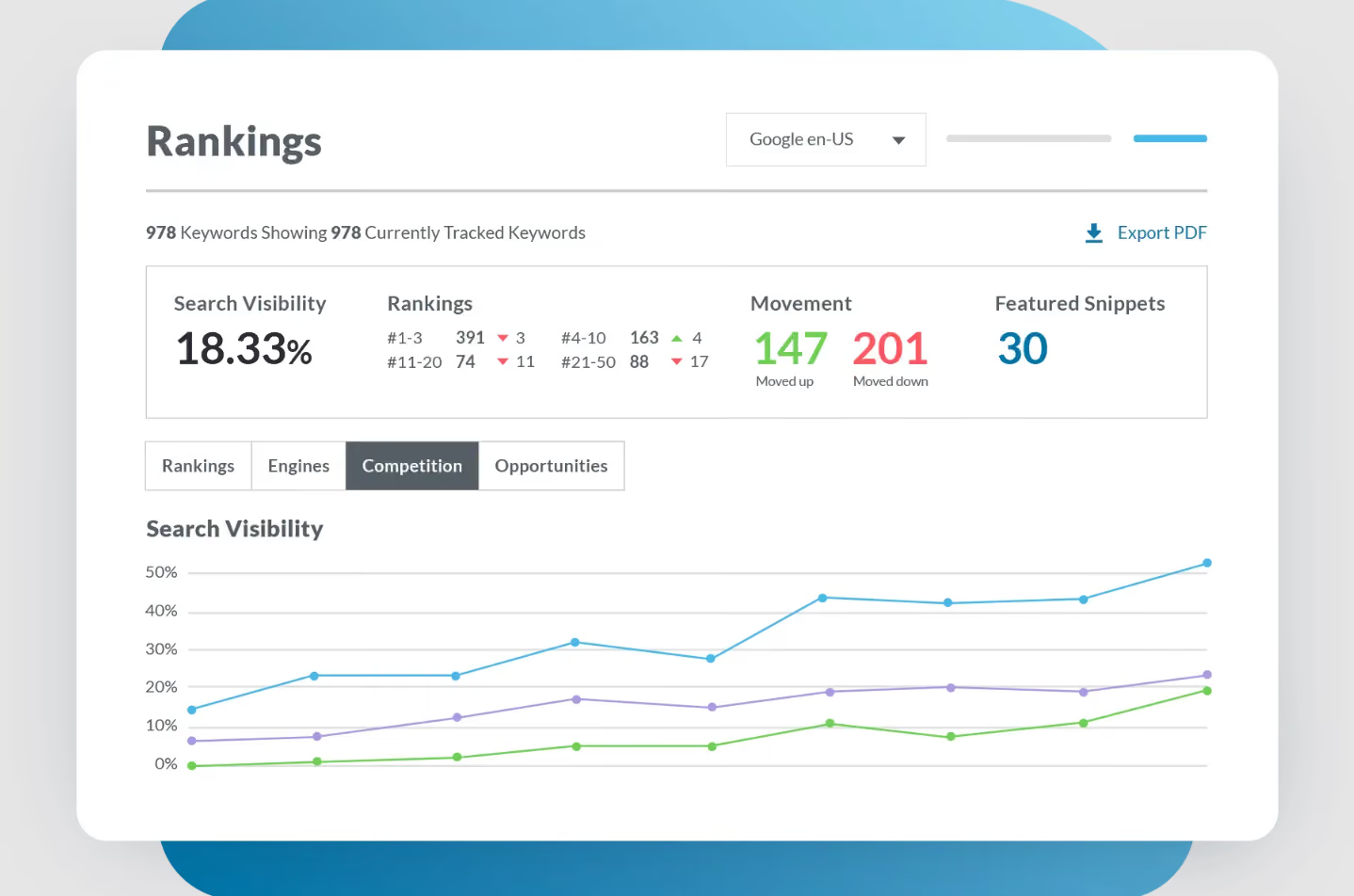
Moz Pro is a well‑established all‑in‑one SEO platform that combines keyword research, rank tracking, backlink analysis and site audit tools into a unified experience. Users frequently describe the interface as intuitive and beginner friendly, which makes getting started with SEO less intimidating than it can be with more complex suites.
One of the consistent positive themes across user feedback is Moz’s keyword research functionality and associated difficulty scores, which help users identify solid opportunities without guesswork. The backlink metrics and Domain Authority scores have also woven themselves into SEO workflows across the industry, offering a recognizable signal of site strength.
Users also highlight Moz’s educational offerings. Moz Academy courses, blogs, and guides help contextualize the data you see in the tool, which is valuable for teams ramping up their SEO knowledge while doing real work.
However, there are trade‑offs to its approach. Many reviewers note that keyword data coverage and SERP depth lag behind premium competitors, which can limit research in competitive or niche industries. Likewise, its competitive intelligence tools are descriptive but not as granular as those in platforms like Semrush or Ahrefs.
Third‑party feedback from places like Reddit shows a split in sentiment among SEO professionals. Some long‑time practitioners still use Moz for specific use cases or legacy workflows, while others point out that it’s been eclipsed by more data‑rich platforms for advanced SEO work.
Finally, broader review patterns on consumer review sites show mixed experiences around customer support and billing transparency, with some users praising responsive help and others reporting frustrations around trial cancellation and charges.
For many small businesses and beginner SEO users, Moz Pro occupies a useful middle ground: enough functionality to teach the fundamentals and yield tangible insights without overwhelming complexity, while leaving room to graduate to deeper tools as needs grow.
Moz Pro is used by over 500,000 marketers and businesses worldwide, ranging from solo entrepreneurs to small agencies and corporate SEO teams. Its long history and brand recognition have helped it maintain a large user base.
Moz Pro plans typically start around $49 per month for the Starter tier with limited keyword tracking and site audits, with higher tiers increasing limits on keywords, sites and data volume. Moz often offers full feature trials so users can test the platform before subscribing.
Best For
Moz Pro is best for small and mid‑sized teams, beginner and intermediate SEO users, and businesses that value a friendly interface with solid foundational SEO tools.

Nightwatch
Nightwatch gives you highly accurate rank tracking across global and local search, strong reporting, and powerful monitoring without the bloat found in some large SEO suites. Users consistently praise its performance and detail, which help track real movement in search rankings.
PROS
- Rank tracking is consistently accurate across locations, devices, and search engines, giving you real performance data.
- Local rank tracking to zip‑code and neighborhood level helps small and multi‑location businesses understand their visibility.
- Customizable reporting and white‑label outputs make it easier to communicate results to clients or internal teams.
- The interface is generally intuitive and user‑friendly for experienced and newer users alike.
- Customer support gets frequent mentions for responsiveness and helpfulness.
- Rank tracking is consistently accurate across locations, devices, and search engines, giving you real performance data.
- Local rank tracking to zip‑code and neighborhood level helps small and multi‑location businesses understand their visibility.
- Customizable reporting and white‑label outputs make it easier to communicate results to clients or internal teams.
- The interface is generally intuitive and user‑friendly for experienced and newer users alike.
- Customer support gets frequent mentions for responsiveness and helpfulness.
CONS
- Feature depth can overwhelm beginners because there is a learning curve to master everything.
- Some parts of the UX, like condition value inputs or advanced views, lack convenience features such as autosuggestions.
- Reporting integrations could be broader to match the flexibility of standalone reporting tools.
- Core SEO tasks like deep keyword research and content guidance are not as strong as in full platforms like Semrush or Ahrefs.
- The mobile experience can feel limited as the interface is optimized for desktop use.
- Feature depth can overwhelm beginners because there is a learning curve to master everything.
- Some parts of the UX, like condition value inputs or advanced views, lack convenience features such as autosuggestions.
- Reporting integrations could be broader to match the flexibility of standalone reporting tools.
- Core SEO tasks like deep keyword research and content guidance are not as strong as in full platforms like Semrush or Ahrefs.
- The mobile experience can feel limited as the interface is optimized for desktop use.
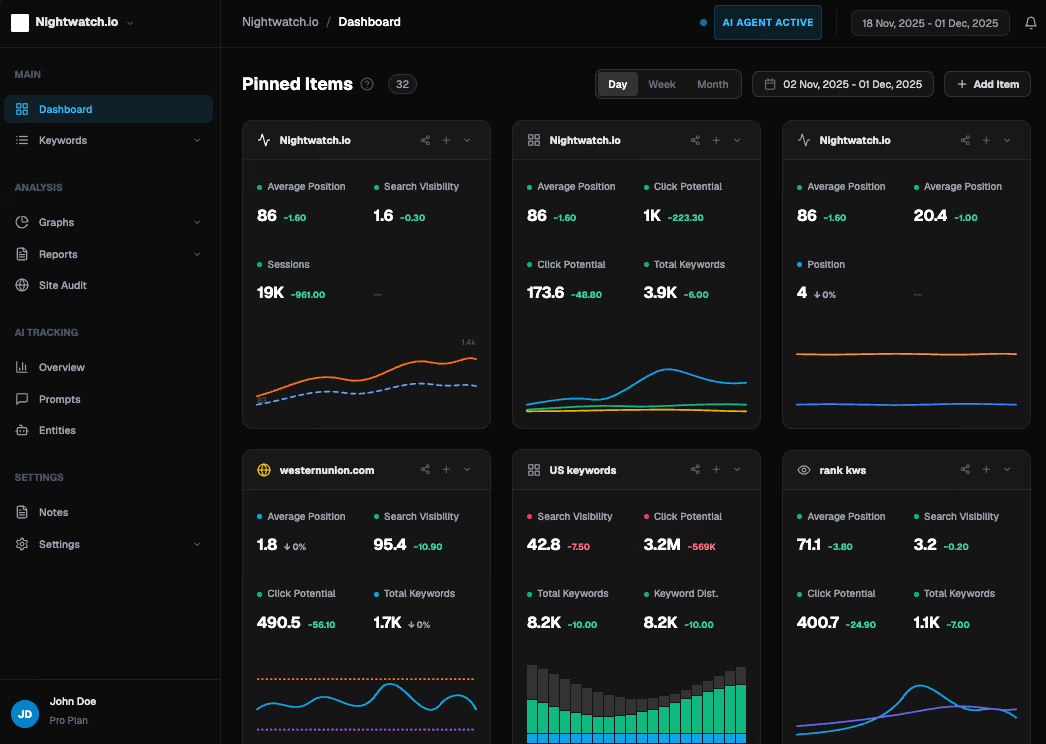
Nightwatch is a rank tracking and SEO performance monitoring tool built for users who want precise, reliable data on how their search presence is evolving. It excels at tracking your rankings across multiple search engines including Google, Bing, DuckDuckGo and YouTube, and also gives you the flexibility to monitor results globally or at a very localized level like city or zip code, which many SMBs and local businesses find useful.
One of the reasons users appreciate Nightwatch is data accuracy. Its approach to rank tracking, with frequent updates, large location coverage and filtering by segments, means you get a clear sense of real progress, not just snapshots. Users routinely highlight that the rank data feels trustworthy and detailed enough to inform strategy decisions.
Reporting and visualization are strengths as well. Nightwatch supports drag‑and‑drop dashboards, automated white‑label reports, and easy exports, which makes it appealing for consultants, agencies, and businesses that need to share performance data with stakeholders without manual work.
It isn’t a complete SEO suite in the sense of detailed competitor research, backlinks data, or content advice; instead, it focuses on tracking performance and monitoring changes. While it does offer audits and backlink overviews, those features are generally less extensive than what you’d find in Semrush or Ahrefs.
Because of that, some users say the platform has an initial learning curve, especially when configuring advanced views or custom dashboards, and that reporting integrations could be more flexible. The mobile experience also lags behind the desktop UI. Nonetheless, many reviewers point out that once you get the hang of the interface, Nightwatch feels powerful without feeling overly complex.
Overall, Nightwatch positions itself as a performance‑focused SEO monitoring tool that satisfies teams and agencies who value accurate rank tracking, flexible reporting, and deep insight into how search visibility is changing over time.
Nightwatch is used by thousands of SEO teams, agencies, and small businesses worldwide looking for reliable rank tracking and performance monitoring, though exact user counts are not publicly disclosed.
Nightwatch’s pricing starts at around $32 per month depending on the number of keywords and features you need, with higher tiers expanding keyword limits, custom reporting and advanced tracking. A 14‑day free trial lets you test core functionality before committing.
Best For
Nightwatch is best for small and mid‑sized teams, agencies and SEO professionals who want a precise, scalable rank tracking and performance monitoring tool but do not need a full‑suite platform for technical SEO, content optimization and deep competitor intelligence.
Ahrefs
Ahrefs has long been the gold standard for backlink tracking and SEO research. Its unmatched data depth makes it ideal for SMBs ready to invest in smarter, not just more, content.
PROS
- Excellent backlink index with fresh and historical data
- Robust competitive research tools
- Great keyword research and content gap analysis
- Fast, accurate site audit feature
- Clean, intuitive UI for a data-heavy tool
- Excellent backlink index with fresh and historical data
- Robust competitive research tools
- Great keyword research and content gap analysis
- Fast, accurate site audit feature
- Clean, intuitive UI for a data-heavy tool
CONS
- Pricing is high compared to SMB-focused tools
- No free trial (only limited free tools)
- Learning curve for new users
- No live chat or phone support
- Pricing is high compared to SMB-focused tools
- No free trial (only limited free tools)
- Learning curve for new users
- No live chat or phone support
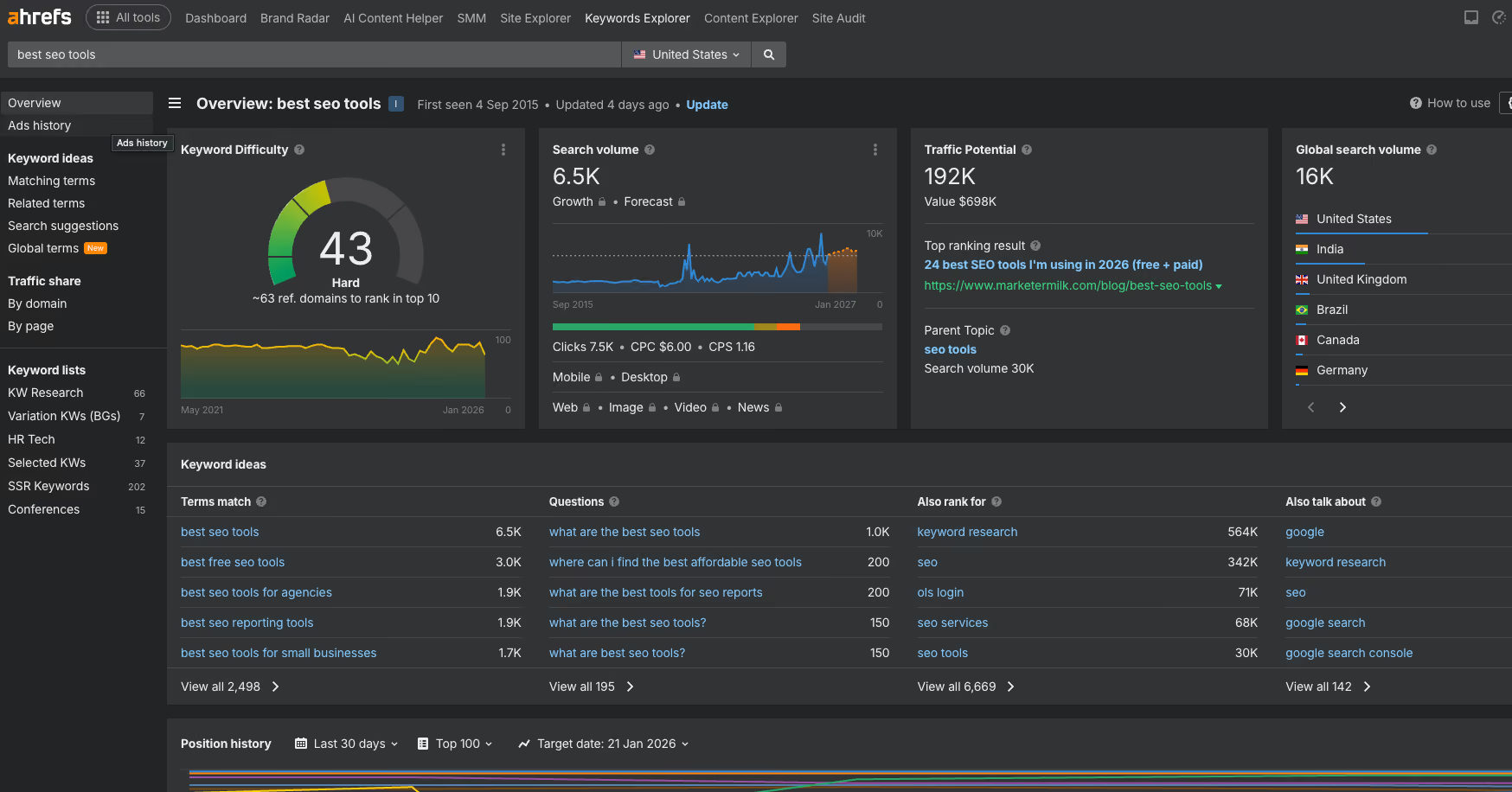
Ahrefs is one of the most trusted names in SEO software, and for good reason. It’s not trying to be everything for everyone — it’s built for people who want visibility into how search works, why their competitors are outranking them, and what they can do about it. That makes it especially valuable for small businesses with content programs already in motion or for founders who’ve been burned by SEO guesswork in the past.
The standout here is the backlink database. Ahrefs crawls the web constantly and claims one of the largest link indexes in the world. If backlinks are part of your growth strategy (they should be), Ahrefs will show you what’s working, who’s linking to whom, and where you might find opportunities.
On top of that, its keyword research tools are fast, detailed, and layered with real traffic estimates. You can dig into “content gap” reports to see what your competitors rank for that you don’t, track how your pages perform, and fix technical issues with a smart, visual audit system.
That said, it’s not beginner-focused. You’ll get more value from Ahrefs if you already know what you’re looking for or are willing to invest time learning. The pricing reflects that too — its Lite plan starts at $129 per month, and there’s no full-featured free trial. But if you’re past the “dabbling” stage and want real SEO firepower, Ahrefs delivers.
Ahrefs is used by teams at companies like Shopify, Adobe, Netflix, LinkedIn, and thousands of small agencies and publishers. Their customer base spans technical SEOs, in-house marketers, and content-driven teams.
- Lite Plan: $129/month – includes one user, 750 keywords tracked, and limited reports
- Standard Plan: $249/month – adds more history and expanded limits
- Advanced & Enterprise: From $449/month and up
- Free Option: Ahrefs Webmaster Tools offers free access to basic site audit and backlink data for your own domain
Note: No free trial for paid plans.
Best For
Ahrefs is best for SMBs that already have content or SEO strategy in motion and want deeper insights into rankings, backlinks, and competitor playbooks. Ideal for founders, marketers, or small agencies with technical fluency or a willingness to learn.
Clearscope
Clearscope stands out as a pure content optimization tool that removes guesswork from SEO writing. For teams already creating content regularly, its data‑driven suggestions help refine quality and alignment with what search engines reward.
PROS
- Very strong content optimization recommendations
- Real‑time content grading and feedback
- Easy Google Docs integration
- Helps enforce SEO best practices
- Very strong content optimization recommendations
- Real‑time content grading and feedback
- Easy Google Docs integration
- Helps enforce SEO best practices
CONS
- Focused on content optimization only
- Higher price compared with simpler editors
- Not a full SEO suite with backlinks or technical SEO
- No free trial for full features
- Focused on content optimization only
- Higher price compared with simpler editors
- Not a full SEO suite with backlinks or technical SEO
- No free trial for full features
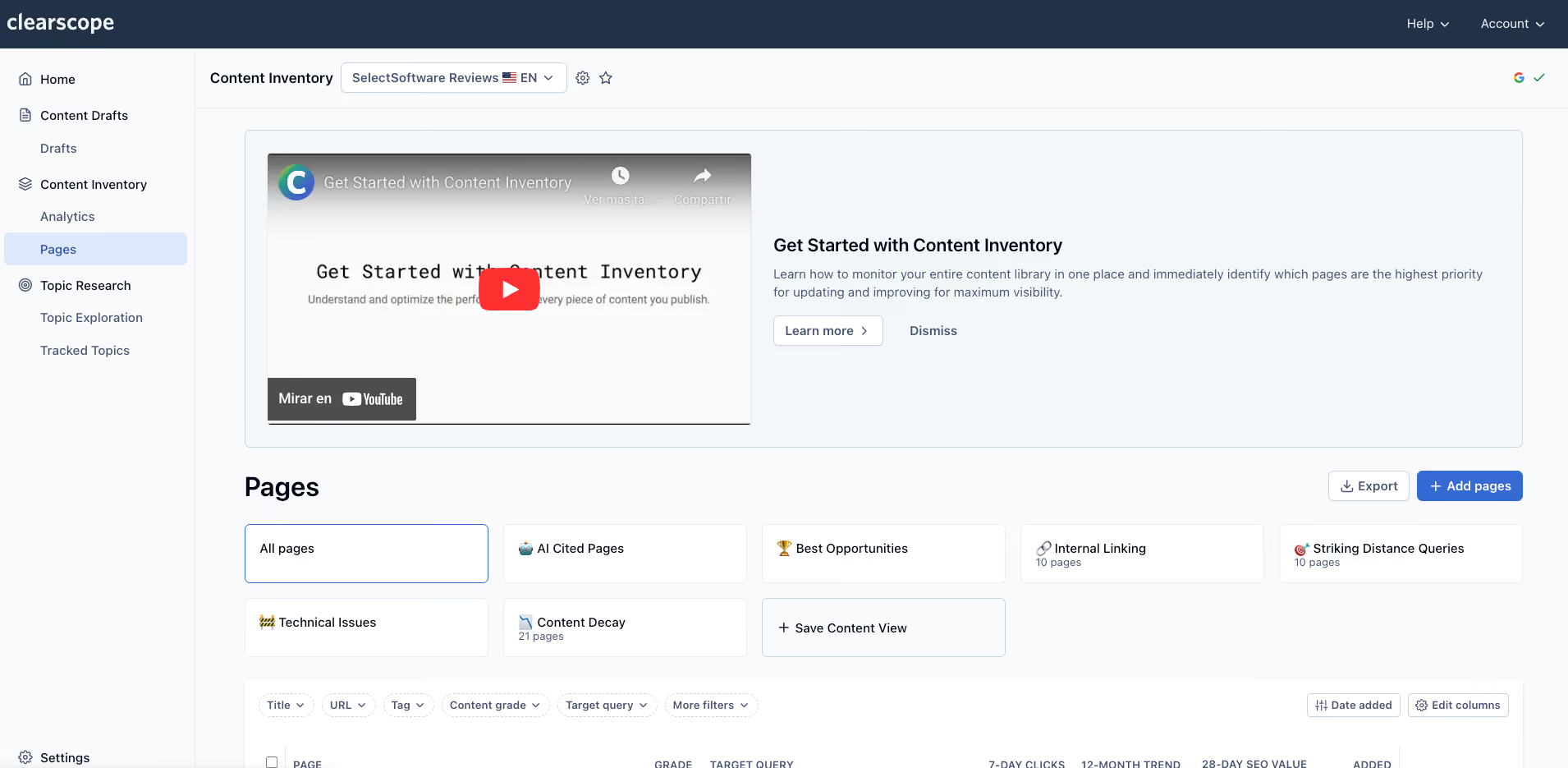
Clearscope isn’t trying to replace full SEO platforms like Ahrefs or SEMrush. Instead, it specializes in one thing and does it well: helping you write better‑optimized content that actually performs in search. It analyzes what top‑ranking pages are doing and then scores your draft against those signals, surfacing semantic keywords, related terms, and relevance indicators so your content aligns with what Google favors.
This isn’t a strategy or backlink tool. If you’re just starting with SEO or you want an all‑in‑one suite, Clearscope alone won’t cut it. But for teams that are already producing content and want a reliable way to boost quality and relevance, it’s a big time saver.
One of its biggest perks is how it removes guesswork from optimization. Instead of hypothesizing which terms to include or whether your article hits intent, you get a real‑time content grade and recommendations that are hard to ignore. That clarity is especially welcome for content teams and writers who spend hours polishing articles only to watch them underperform.
Practically, you can start with a target keyword, run a report, and then use the insights to shape an outline, refine your draft, or update existing content that’s slipping in rankings. Some versions now include monitoring features and content‑inventory views so you can track how pieces perform over time.
That said, it’s specialized. You’ll still need other tools for backlinks, technical audits, or deep keyword research. Clearscope’s value is narrow but deep: it takes the content piece of SEO and makes it significantly stronger.
Clearscope is used by content teams and agencies focused on organic growth. It’s especially popular with digital marketers, content strategists, and writers who want to increase rankings by improving the relevance and structure of their pages.
Clearscope typically starts around $129/month for small teams with core content analytics and scoring. Higher tiers add more reports, users, and priority support. There’s no traditional free trial, though demos and onboarding resources are available.
Best For
Clearscope is best for small businesses and teams that already create SEO content regularly and want a reliable data‑backed way to optimize each page for better search performance. It’s less ideal if you want a full SEO suite that includes backlink research or technical audits.
Ubersuggest
Ubersuggest gives small teams access to an all‑in‑one SEO tool for keyword research, site audits, rank tracking and basic competitor analysis at a price most can afford. It’s especially approachable for beginners and solo site owners.
PROS
- The keyword research tool returns a wide range of related phrases and long‑tail ideas that help with content planning and SEO strategy.
- Beginners appreciate the intuitive layout and simple navigation that makes core SEO data accessible without a steep learning curve.
- Ubersuggest’s backlink overview and opportunities tools surface useful link data that is competitive with basic link analysis offerings.
- Its pricing and lifetime deal options make SEO insights more affordable compared with premium competitors.
- Built‑in content ideas and competitor analysis help users identify gaps and opportunities without switching between tools.
- The keyword research tool returns a wide range of related phrases and long‑tail ideas that help with content planning and SEO strategy.
- Beginners appreciate the intuitive layout and simple navigation that makes core SEO data accessible without a steep learning curve.
- Ubersuggest’s backlink overview and opportunities tools surface useful link data that is competitive with basic link analysis offerings.
- Its pricing and lifetime deal options make SEO insights more affordable compared with premium competitors.
- Built‑in content ideas and competitor analysis help users identify gaps and opportunities without switching between tools.
CONS
- Some users report that keyword volumes and competition metrics are inconsistent or less precise than higher‑end tools.
- Rank tracking and traffic estimates may not always align closely with actual analytics, making them less reliable for high‑stakes decisions.
- The free tier has strict limits on daily searches, rank checks, and audits, which feels restrictive for casual users.
- Backlink data can be incomplete compared with dedicated backlink databases used by tools like Semrush and Ahrefs.
- Advanced SEO workflows like deep competitive analysis and technical SEO reporting are more basic than in top tier platforms.
- Some users report that keyword volumes and competition metrics are inconsistent or less precise than higher‑end tools.
- Rank tracking and traffic estimates may not always align closely with actual analytics, making them less reliable for high‑stakes decisions.
- The free tier has strict limits on daily searches, rank checks, and audits, which feels restrictive for casual users.
- Backlink data can be incomplete compared with dedicated backlink databases used by tools like Semrush and Ahrefs.
- Advanced SEO workflows like deep competitive analysis and technical SEO reporting are more basic than in top tier platforms.
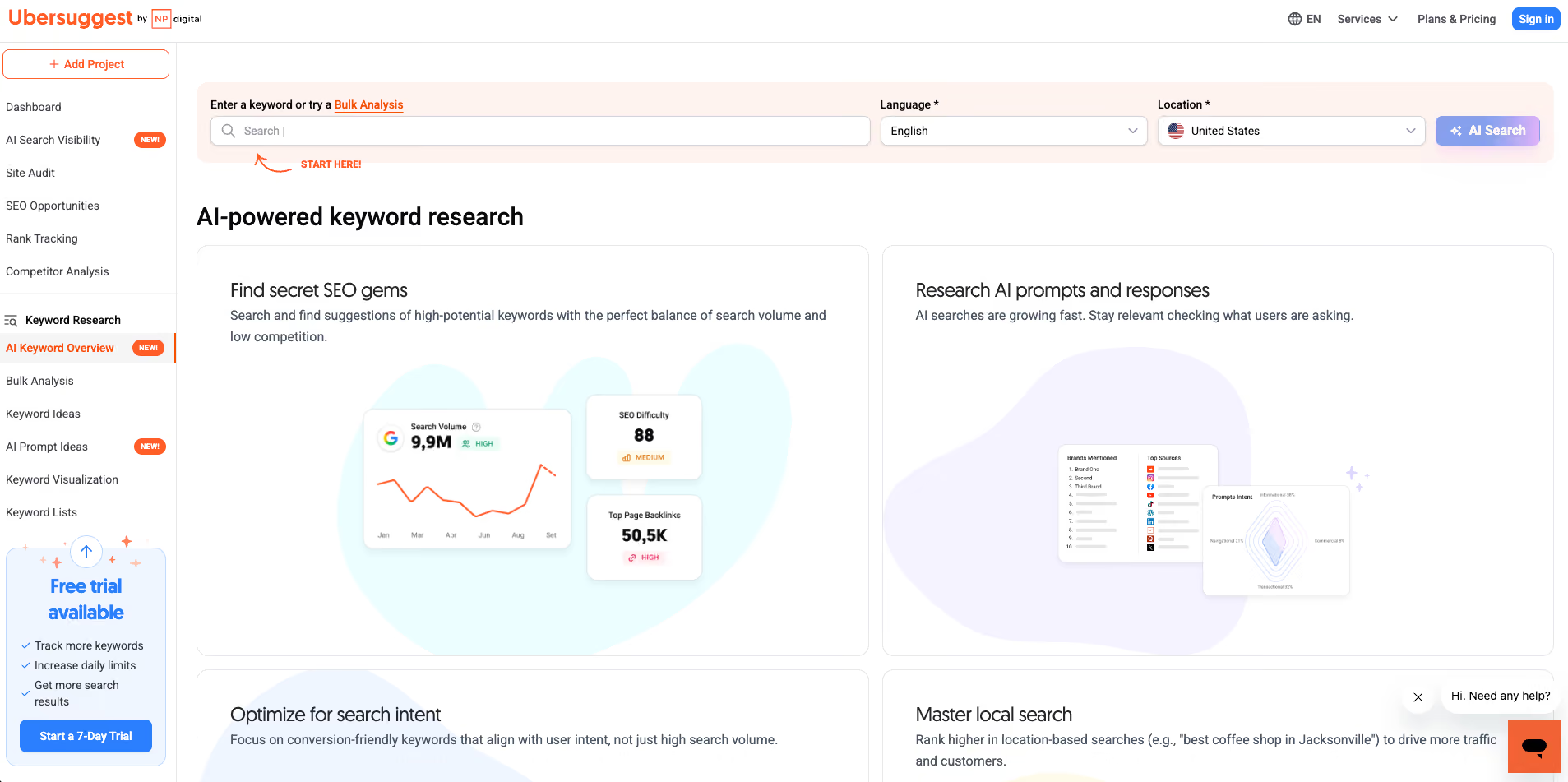
Ubersuggest started as a simple keyword suggestion tool and has grown into an approachable all‑in‑one SEO platform geared toward budget-conscious users and beginners. It gives you the essentials across keyword research, basic site audits, rank tracking, and competitor overviews.
One of its biggest strengths is accessibility. You don’t need a steep learning curve to get started. Many reviewers note that its interface makes understanding keyword volume, difficulty, and competitor performance easier than jumping straight into more advanced SEO suites.
For keyword research, Ubersuggest provides core metrics like search volume, competition, and related keyword ideas, helping you build an initial list of opportunities. It also offers a domain overview that returns estimated traffic, top pages, and backlink counts. This covers most essential SEO insights smaller teams need if they’re getting started or on a tight budget.
That said, it doesn’t compete directly with data-rich tools like Ahrefs or Semrush. Its keyword volumes and backlink data are generally more limited and less precise, and its competitive intelligence lacks the deep breakdowns found in premium tools. Ubersuggest also doesn’t surface engagement metrics or advanced SERP features in its reports.
It’s also worth noting that Ubersuggest’s parent company, NP Digital, now owns AnswerThePublic; a complementary tool that helps you discover search intent, content angles, and questions people are actually typing into Google. While they’re sold separately, many small teams use Ubersuggest for performance tracking and AnswerThePublic for ideation and topic planning. If you want SEO insights and help figuring out what content to write next, pairing the two makes sense.
The free version and 7-day trial are good ways to test whether the simplicity and pricing fit your needs. Many users treat Ubersuggest as a gateway tool, one that helps them learn SEO fundamentals and gather basic insights before graduating to more advanced platforms.
Ubersuggest is used by tens of thousands of marketers and business owners worldwide who want a simple, low‑cost SEO tool that covers keyword research, site overviews and basic optimization needs.
Ubersuggest plans are among the most affordable on the SEO market, starting around $29 per month, with options for lifetime access that eliminate recurring fees. A 7‑day free trial allows you to test features before committing.
Best For
Small businesses, solo entrepreneurs and beginners who want affordable SEO insights without the complexity or price of premium tools.
FAQs About SEO Tools for Small Businesses
Do I really need an SEO tool, or can I just use Google Search Console?
Google Search Console is great (and free), but it only shows what’s happening after your site is live. SEO tools help you plan ahead: finding the right keywords, auditing your site before it causes issues, and tracking how you’re ranking over time. Think of GSC as your dashboard, and SEO tools as the map and GPS.
What’s the difference between free SEO tools and paid ones?
Free tools (like GSC, AnswerThePublic, or even Ubersuggest’s free tier) can absolutely get you started. But most hit limits fast; either in the number of queries, data freshness, or the depth of insights. Paid tools usually unlock more accurate keyword data, better site audits, and features like competitor tracking or content scoring that are worth it once you’re publishing regularly.
How long does it take to see results from an SEO tool?
It depends on what you're using the tool for. If you’re fixing technical issues or optimizing content that’s already ranking, you might see changes in a few days. For keyword research, audits, or content planning, the real results usually show up over weeks or months. Good SEO tools help you act faster and smarter, but they’re not magic. They give you the data. You still need to do the work.
Are AI overviews making SEO irrelevant?
They’re definitely changing how people search, but SEO isn’t going anywhere. AI overviews still pull from websites to generate answers, which means your content has to be clear, structured, and trustworthy if you want to show up in those responses. The bar is higher now, but the game is still the same. SEO tools help you meet that bar by improving your site quality, tracking changes in search behavior, and making your content easier for both humans and machines to understand.
GEO, SEO, and What’s Next
If you’ve spent any time in marketing Twitter, you’ve probably seen the phrase “GEO” floating around. Generative Engine Optimization is the latest buzzword, but at its core, it’s just SEO done right for a new kind of search interface.
GEO isn’t a replacement for SEO. It’s a shift in focus. You’re still optimizing content for visibility, but now that means showing up in AI summaries, chatbot responses, and zero-click search results, not just the blue links. That means your content has to be clearer, better structured, more trustworthy, and written with both users and machines in mind.
The tools in this guide aren’t stuck in the past. Many are already adapting to this shift. Some help you create content that aligns with search intent instead of just stuffing in keywords. Others offer content scoring, structured data tips, or track how AI features like SGE are impacting your rankings.
It’s an uncertain time for SEO, but also an exciting one. The rules are changing, but they’re not disappearing. The fundamentals still matter. Good content still matters. And the right tools can still give you an edge, especially if you’re a small business trying to compete with bigger players.
As always, the goal is to get found by the right people at the right time. That hasn’t changed. Only how we get there has.
About the Author


About Us
- Our goal at SSR is to help HR and recruiting teams to find and buy the right software for their needs.
- Our site is free to use as some vendors will pay us for web traffic.
- SSR lists all companies we feel are top vendors - not just those who pay us - in our comprehensive directories full of the advice needed to make the right purchase decision for your HR team.


