



Unlike most competitors, who emphasize micro-recognition or focus on surveys, Kudos finds a middle ground: blending recognition, points-based rewards, and cultural insights into one ecosystem. In our most recent testing, this balance made Kudos feel both motivational for employees and genuinely useful for HR teams trying to measure and influence engagement.
Ratings
Ease of Use
Best For
Key Differentiator
Price
Free Trial
PROS
- Recognition messages can include redeemable points, making appreciation both meaningful and actionable.
- Admins can offer gift cards, merchandise, experiences, donations, or company swag tailored by location, team, or budget.
- Combines data on morale, recognition, churn, and loyalty into a digestible culture score.
- Pulse Surveys automatically generate executive summaries, saving HR time and improving visibility.
- SOC 2 Type II and ISO 27001 certifications make Kudos viable for enterprise buyers.
- The platform is available in 11+ languages with regional reward options.
CONS
- No free trial or sandbox, so buyers must book a demo to access the platform.
- Average app store ratings of 3.2/5 and hasn’t been updated since mid-2024.
- Requires upfront configuration, making it not ideal for teams without internal admin capacity.
- If employees don’t use the recognition system regularly, culture insights lose depth.

Need Help? Talk to an HR Software Advisor!
Tell us more about your company & an HR Software Advisor will help you find the right software





Kudos describes itself as a platform that brings recognition, rewards, and engagement tools together under one roof, and based on the most recent demo we’ve had with the vendor, that’s a fair claim. Recognition lives at the center of the experience. Shoutouts from peers, milestone messages, and manager praise all show up in a shared feed where each message can carry points, GIFs, or Kudos-branded eCards. That visibility helps shift recognition from being occasional to expected.
The rewards side is where Kudos tries to set itself apart. When someone gets recognized with points, they can redeem those through a built-in storefront. We were shown how admins can create separate catalogs for different teams or locations, each with a tailored mix of digital gift cards, branded swag, or even local experiences. Everything from point conversion rates to approval rules is configurable. For HR teams juggling multiple programs, that kind of control matters.
The engagement tools came across as quietly effective. The Sentiment Survey pops up once a month when users log in, offering a lightweight emoji-based mood check. For deeper feedback, the Pulse Surveys support standard formats like eNPS and Likert scales. Results are aggregated in a dashboard that tracks loyalty, morale, and churn indicators over time. One feature we didn’t expect but appreciated was the AI-generated Executive Summary, which condenses survey responses into a readable PDF for leadership. We didn’t test that directly, but it was shown during the demo and looked thoughtfully executed.
That said, Kudos doesn’t offer a free trial or self-guided version. At $3.25 per user per month, pricing is reasonable for larger companies, but there’s a minimum employee count of 500. This makes it a better fit for midsize and enterprise organizations with the resources to manage a full rollout.
While Kudos gives admins a high level of control, that also means the initial configuration takes effort. We verified during testing that the setup involves defining reward structures, budgets, automation rules, and survey thresholds. Consequently, teams without dedicated HR admins may find the process a bit overwhelming without support. To be fair, though, the vendor does offer onboarding and guidance, which most users said they relied on to get up and running smoothly.
We also noticed that Kudos’ mobile apps have not been updated since mid-2024 and currently hold a pretty low rating. Lastly, while Kudos offers robust rewards options, it’s built around a points-based system, which may not favor teams seeking a more experience-driven, non-monetary recognition style.
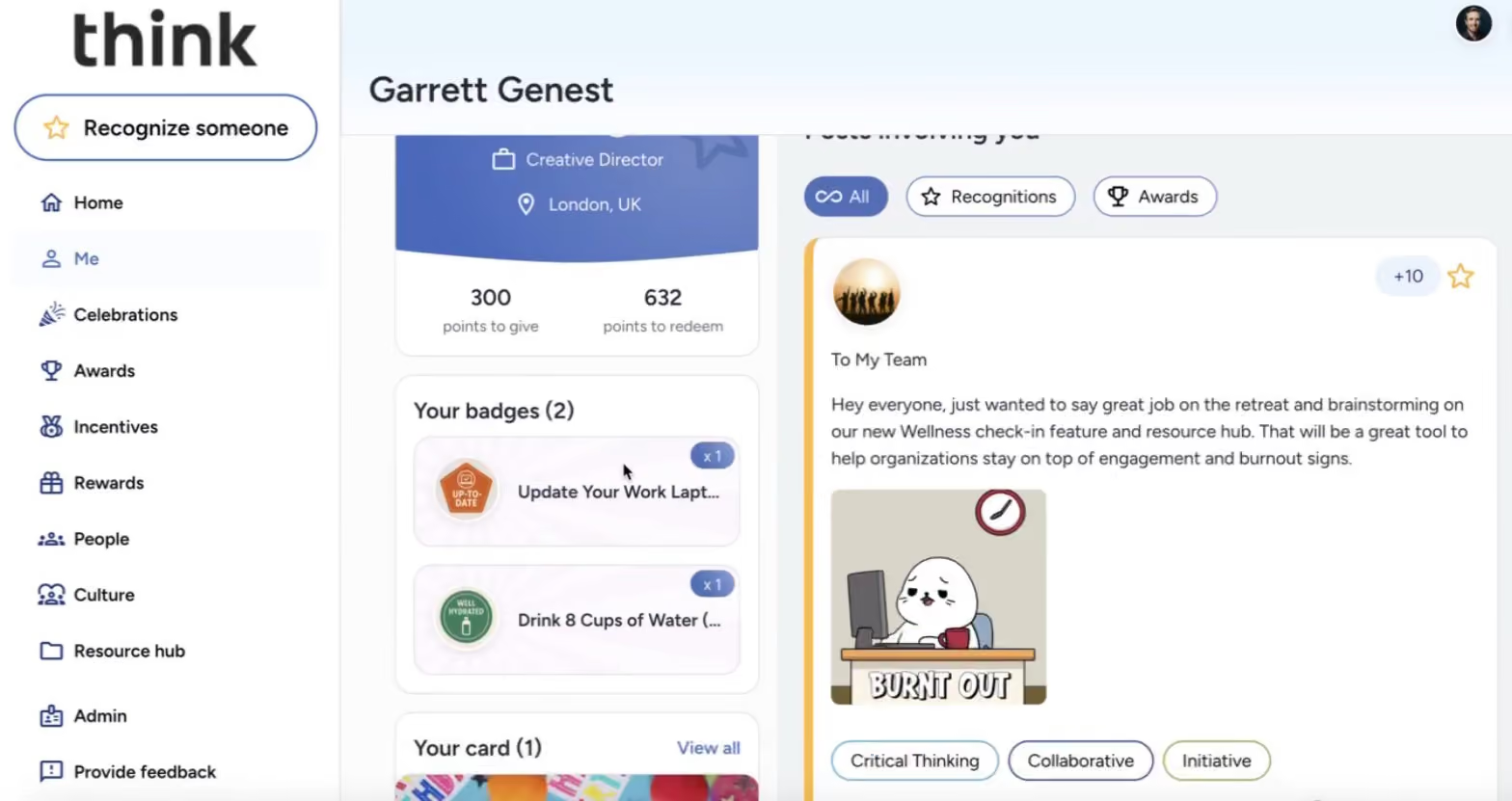



We use Kudos on a weekly basis. Key workflows include client appreciation, employee recognition, peer acknowledgments, and celebrating anniversaries and birthdays. The mobile app is convenient, so we don’t need to rely on the desktop version.
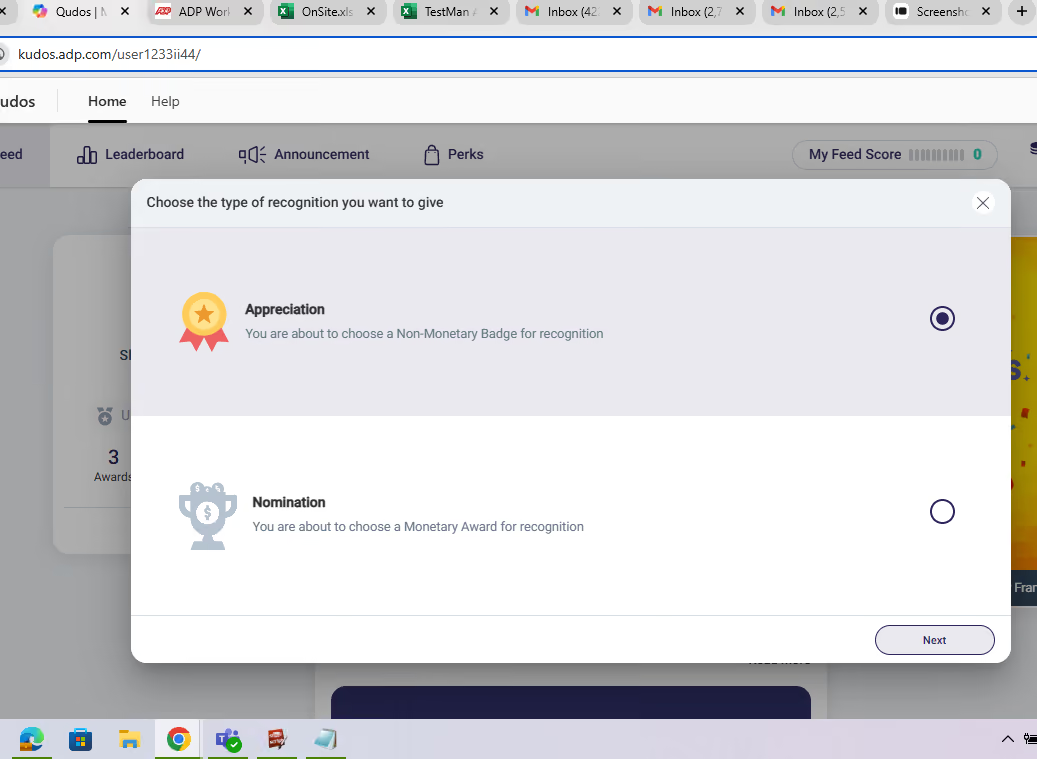
- Kudos supports multiple brands across different regions.
- It accommodates most currencies and global merchants.
- Customer support is available 24/7 and is responsive.
As a globally distributed team, we were struggling with employee and peer recognition. Finding a unified solution for global incentive programs seemed impossible until we discovered Kudos. Their detailed catalog includes global brands, all under one platform.
There is little to dislike about the platform. Delivery times for third-party vouchers could be improved.
Kudos has a strong global presence and covers a wide range of regions. Their customer service is dedicated and responds promptly. We receive frequent updates and mailers about trending offers, keeping the platform engaging.
Consider whether your team is globally distributed, as many vendors may not support all regions. Make sure the vendor's support hours align with your team’s working hours. Employee recognition should be a core value for the organization to make full use of such a platform.
Yes, we receive regular product updates, and the list of supported brands is refreshed frequently.
Organizations that operate globally and face challenges with employee and peer recognition.
A small, regional organization may not benefit fully from Kudos.

We encouraged our team to use all their Kudos every month (starting with fresh points on the first of each month). I personally used Kudos weekly or when a big accomplishment presented itself.
A key workflow is the values-based recognition feature, where you can align your Kudos with the company’s core values to further embed the culture into daily operations. I liked the primary workflow of sending peer-to-peer recognition messages that are visible to the entire company in real time.
Everyone can see the contributions being made and the projects each team is working on, which helps with cross-functional collaboration.
- It is easy to integrate with Slack, encourages employee engagement, offers a wide variety of rewards, encourages communication, and simplifies the employee recognition process.
- Reporting and analytics help determine which employees use Kudos, which values are most commonly recognized, and to identify engagement trends.
- Automates work anniversaries, birthdays, surveys, award programs, and more.
We wanted to increase employee engagement and find a solution to inconsistent employee recognition across the company. Two of the biggest benefits are that Kudos offers a platform that enables peer-to-peer recognition, allowing employees to acknowledge contributions in real time, and the platform's rewards system provides tangible incentives to motivate employees to use Kudos.
Kudos syncs with Slack (our main communication tool), so implementation was easy. I have personally used Kudos for six months. Kudos is an effective tool for acknowledging the efforts of team members. It contributed to a more communicative culture.
- Kudos encourages employee engagement but does not guarantee it.
- The program itself is excellent, but it is not a cure for poor corporate culture, low morale, or collaboration issues.
- Some leadership teams, especially at startups, mistakenly believe Kudos alone will solve deep-rooted organizational problems.
- You must secure employee buy-in and maintain engagement both before and during active usage for Kudos to be effective.
- When strong leaders and solid companies use Kudos, it is extremely helpful for enhancing employee engagement and improving the overall employee experience.
- Kudos is much better than its competitors (such as Bonusly, Guusto, and some proprietary options).
- It has built-in analytics to track progress and highlight areas for improvement.
- Kudos provides a better catalog of rewards than its competitors.
- I have implemented Kudos (and other platforms) with Slack and Teams; the Teams integration is poor, but that seems to be a Microsoft issue rather than a flaw with Kudos or similar platforms.
- Slack integration is seamless and easy, with almost no glitches or issues.
Understand that Kudos is not a guaranteed solution for improving employee satisfaction. If you want to enhance employee engagement and communication, consider a tool like Kudos.
As a manager who implemented and used Kudos, I found the price to be reasonable, the Slack implementation to be easy, and the employee feedback to be positive.
You will need an engagement strategy to encourage non-engaged employees to use the platform, but Kudos helps with automation features like reminders and surveys.
Kudos incorporates user feedback and maintains the platform with consistent updates and upgrades, including improvements to the mobile app and Slack integration.
It has added culture and values alignment tools, allowing companies to tie recognition directly to organizational goals and values.
Kudos is well-suited for remote and hybrid work environments.
It is ideal for companies looking to strengthen their employee engagement and recognition programs.
It works well for companies of all sizes, from startups to large corporations.
Large corporations particularly benefit from recognition programs, where it can be easy for employees to feel overlooked.
Any user or organization would be a good fit for Kudos.

I use Kudos daily to recognize team wins, both large and small. I also use it to acknowledge birthdays and work anniversaries. It's especially useful for highlighting moments when team members demonstrate our company values.
In a talent acquisition setting, Kudos is effective for recognizing when we are ahead of SLAs or when a team works hard to fill a difficult role. Tagging leaders in recognition posts adds value, as employees appreciate visibility and engagement from leadership.

- I like the ability to tag peers and leaders, which increases engagement and enhances recognition across levels.
- The option to add GIFs is popular with the team and adds a fun, personal touch to messages.
- Tagging our DNA pillars in recognition posts is a great way to reinforce and align with company culture.
We use Kudos as an engagement and reward tool. I have personally used the platform since January 2022. Two major benefits of the platform are recognition and increased morale. My teams enjoy giving and receiving kudos from peers and leaders within the organization.
Kudos promotes positivity by encouraging employees to celebrate wins—both big and small—and to share kind, supportive messages. Employees also appreciate the rewards feature, which allows them to redeem kudos points for various incentives.
- The AI refinement tool does not function well. If you click the AI button, it duplicates your message in the box and messes up the text with words out of order.
- I do not like that you can't see larger versions of GIFs before choosing them either. Oftentimes, they are so small or the font is so tiny, you're unsure what they say before you select them.
- I don't love the leader dashboard. I would prefer easier-to-find/build reports or dashes to show which team members receive kudos most often and for what value or even notifications when team members didn't receive any kudos for the time so we make sure no one is being left out.
I have not used other platforms before.
- Consider ease of use—the platform is simple and accessible to all levels of employees.
- Determine whether the tool allows recognition to be tailored to your company’s values.
- Cost is also a factor—ensure it fits within your budget and can scale as your organization grows.
In the three years I have used it, I’ve seen the addition of features such as cards, though I wish Kudos could be integrated with them. New GIFs are added regularly, and the AI refinement tool was introduced within the past year. The dashboard has remained relatively the same and is still easy to navigate.
Kudos is ideal for organizations that want to recognize, engage, and boost morale among teams. It provides a way to reward employees beyond salary or standard bonuses.
Kudos may not be suitable for employees who are on-site and do not regularly access a computer, such as those in trucking, construction, or manufacturing roles.
Awardco

Awardco

Motivosity
Motivosity
C.A. Short Company
C.A. Short Company

Bonusly
Bonusly

WorkTango
WorkTango
Kudos isn’t ideal for small teams looking for a quick, self‑service recognition app or companies that want a full HR suite with performance reviews and compensation management built in. If you’re under 200 employees or prefer a lightweight, budget-friendly option, Kudos may feel like overkill.
ATCO, DHL Express, Bulgari, Arch Insurance, KidsPeace, Make-A-Wish
- Recognition Wall: Public, values‑aligned feed for peer‑to‑peer and manager recognition
- Points‑Based Rewards: Configurable reward points with automated allocations and anti‑gaming controls
- Multi‑Catalog Rewards Storefronts: Supports gift cards, merchandise, experiences, and donations
- E‑Cards and Celebrations: Automated cards for birthdays, anniversaries, and onboarding
- Nomination & Incentive Programs: Build campaigns for awards and challenges with proof‑of‑completion options
- Sentiment Survey: Monthly emoji‑based pulse of morale with trend tracking
- Pulse Surveys: Customizable eNPS and engagement surveys with AI‑summarized analytics
- Culture Insights Dashboard: Centralized culture index combining recognition, morale, churn, and loyalty data
- Kudos TV: Broadcast recognition messages across physical screens (ideal for deskless workers)
- Security Certifications: SOC 2 Type II and ISO 27001
- Integrations: 80+ HRIS connections via Merge API
- AI Recognition Assistant: Helps refine recognition messages for tone and clarity
- Chat & Collaboration: Microsoft Teams, Outlook, SharePoint, Skype, and Slack
- SSO: ADP, Azure AD, Okta, LinkedIn, and many more
- User Provisioning: ADP, BambooHR, Workday, Paylocity, and more
- Browser Extensions: Brave, Microsoft Edge, Chrome, Firefox
- For everything else, they have the Kudos API, and you can even request new integrations through their chatbot.
Kudos starts at $3.25 per user per month for a minimum of 500 employees. Actual pricing will vary depending on the number of users and contract length.
Kudos is a cloud-based platform that integrates with many other existing business software solutions, including Microsoft Teams, Microsoft Outlook, Slack, and more. Implementation services are provided by Kudos® to ensure a smooth technical setup and effective business adoption.
Kudos provides structured onboarding, live admin training, and quarterly success reviews to help teams configure programs and drive adoption. Dedicated customer success managers assist with setup, reporting, and internal rollout.
Kudos®, Inc are the makers of the platform that bears the same name. It is a SaaS solution for employee engagement and workplace culture management. Since their inception in 2010, they’ve been leveraging the perks of social software and to help strengthen people’s relationship to their workplace. By extension, improving the company culture.
Company HQ
Calgary, Alberta
Number of Employees
50-200
Year Founded
2010
Amount Raised
FAQ
About SSR

We spend hundreds of hours researching the best HR and recruiting software so you don’t have to. We never take money from vendors during our research phase and rely heavily on practitioners and experts to help us recommend the right software. However we may earn a small fee if you click on vendor links on this page.

