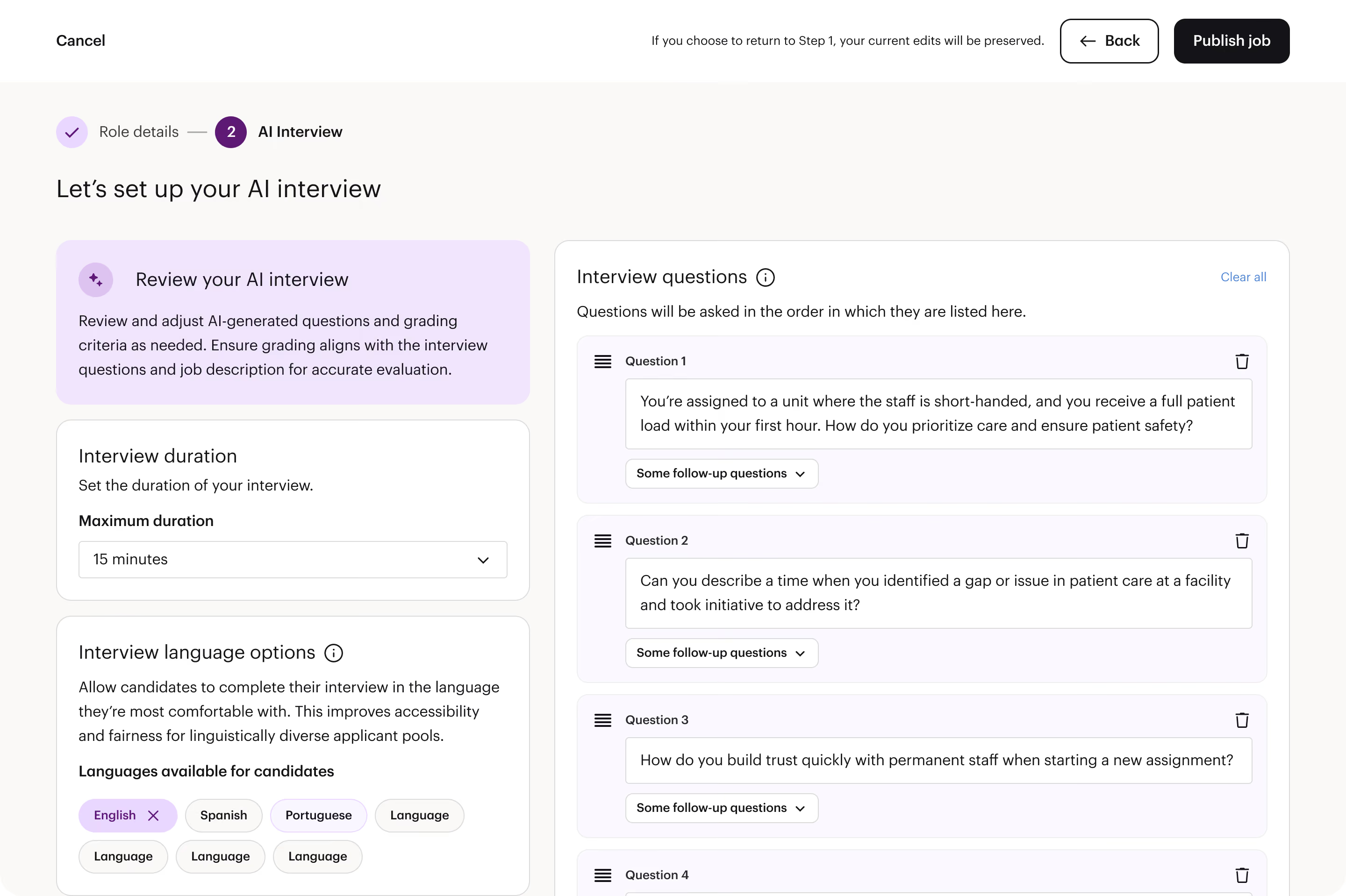
We picked Braintrust for its uniquely autonomous AI interviewing engine. Unlike video interview tools that only record answers, Braintrust’s AI actively conducts interviews, asks follow-ups, answers applicant questions, scores candidates, and delivers a recruiter-ready shortlist. It is one of the best applications of AI in candidate screening we’ve seen to date.
Ratings
Ease of Use
Best For
Key Differentiator
Price
Free Trial
PROS
- The AI voice interviewer responds naturally, asks follow-up questions, and adapts intelligently beyond scripts.
- Models are designed to avoid bias by excluding personally identifiable information.
- Candidates can complete interviews at any time, improving flexibility and convenience.
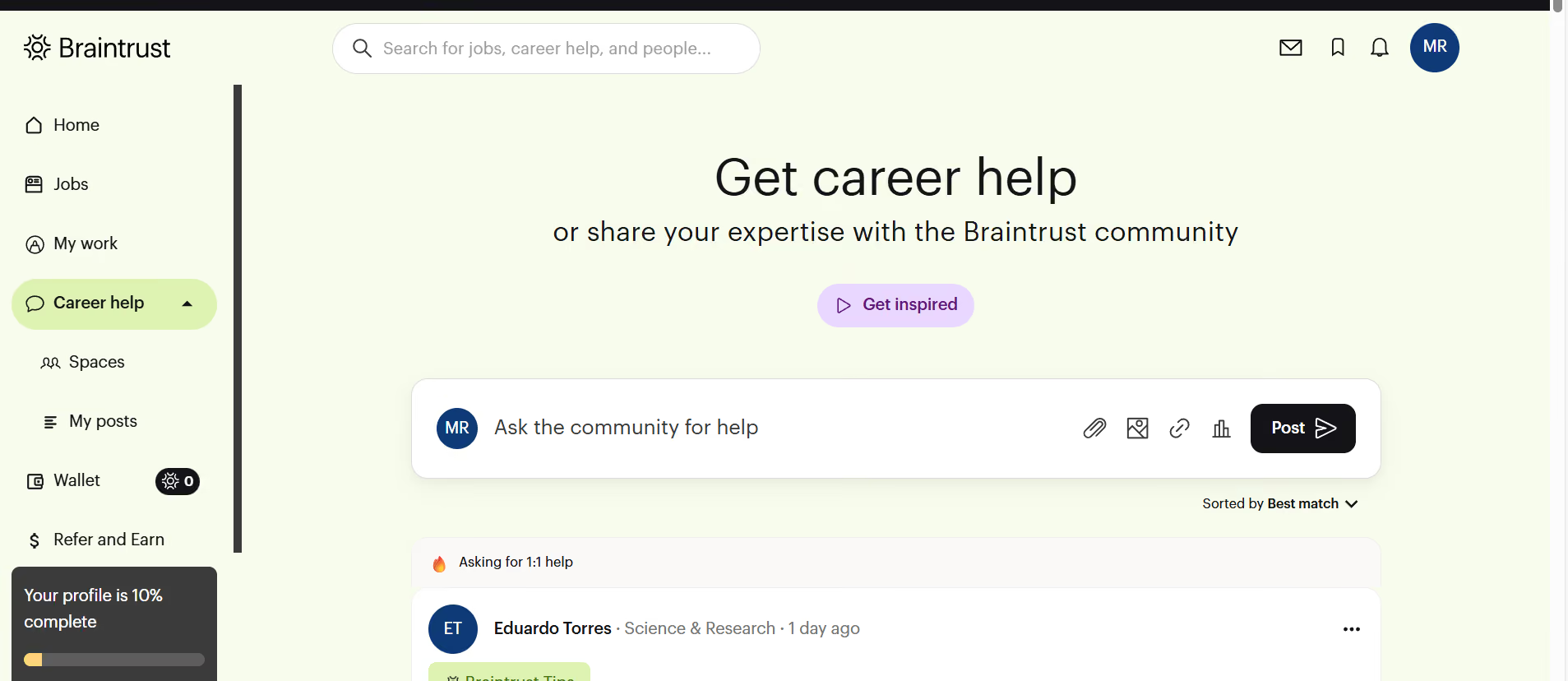
- Recruiters get a centralized dashboard to watch interviews, read scorecards, leave notes, and process candidates through the pipeline.
- Multilingual support allows interviews in up to 10 languages for global hiring.
CONS
- The platform doesn’t include tools for proactive candidate sourcing.
- Built-in ATS features are basic compared to standalone applicant tracking systems or recruiting CRMs, but the tool would integrate to such platforms.
- Recruiters must manually reach out to past candidates to re-engage them, as automation isn’t included.

Need Help? Talk to an HR Software Advisor!
Tell us more about your company & an HR Software Advisor will help you find the right software





Braintrust’s AI recruiter, Braintrust Air, impressed us during our demo and personal testing by delivering one of the most realistic AI-led interview experiences we’ve seen. When we tested it ourselves (albeit outside our professional domain), we were struck by how naturally the AI interviewer—named AIR—held the conversation, doubling back with clarifying questions and even acknowledging our attempts to adjust equipment mid-interview.
Unlike static video interview platforms, Braintrust Air actively engages with candidates. In our experience, it quickly identified knowledge gaps, provided precise feedback, and produced a detailed interview scorecard outlining strengths, weaknesses, and suggested improvements. The AI interviewer was tough but fair, pointing out well-founded observations about the conversation in an easy manner for a recruiter to grasp and assess for next steps, if any.
The recruiter part is where Braintrust, already quite impressive in terms of AI interviews, is bound to grow more in the coming years. The dashboard is very straightforward, allowing hiring teams to see interview recordings, AI-generated scores, and scorecards. Notes can be added collaboratively, and recruiters can move candidates through hiring stages directly in the platform. While Braintrust can function as a basic ATS for smaller teams with simple hiring workflows, it truly shines when integrated with systems like Greenhouse or Workday for enterprise users. This hybrid approach enables teams to integrate the AI directly into their existing hiring stacks without disrupting more complex processes.
We appreciated the transparency around roadmap developments. Features such as recruiter intro videos, company-level culture questions, and expanded language support demonstrate a commitment to evolving the platform in response to customer needs.
However, Braintrust’s core strength is squarely in interviewing and initial screening. The product doesn’t offer sourcing capabilities or advanced CRM-like candidate nurturing on its own. While recruiters can revisit past candidates stored in the platform, automated re-engagement workflows require external systems or integrations.
Overall, if your team is overwhelmed by large applicant volumes and struggling with the inefficiencies of traditional first-round interviews, Braintrust provides a tangible, time-saving solution with arguably one of the most sophisticated AI interviewers on the market today.


- We use it for skills-based sourcing, candidate screening, and interview coordination based on verified skills and experience.
- We also use Braintrust for candidate screening, which helps streamline evaluations and maintain a high-quality talent pool.
- It is a great tool for coordinating interviews, making it easy to schedule each one.
- Braintrust has a transparent fee structure, which creates trust and predictability.
- It is a great source of specialized talent.
- AI assistance helps reduce time in the hiring process.
We chose it to access talent and enable efficient workflows, particularly in supporting strategic HR processes such as recruitment and selection (talent acquisition).
Before implementing it, many of our workflows were manual and time-consuming, which limited our ability to operate strategically.
This tool helped streamline operations, improve processes, and centralize information, allowing teams to work more efficiently.
- The reporting features are fairly limited, so it’s hard to get deeper insights into hiring performance.
- I wish there were more customizable dashboards to better track progress and metrics.
- More detailed data on the talent pipeline would make planning and decision-making easier.
Braintrust feels different from other tools because you’re working directly with talent from its own network, not through layers of recruiters or agencies. That makes the processes more transparent, faster, and manageable. The built-in AI also helps streamline matching and screening, saving time and reducing a lot of manual work compared to similar platforms.
When buying a tool like Braintrust, buyers should first look at pricing and make sure the model is transparent and sustainable. It’s also important to evaluate the quality and size of the talent marketplace, along with how easy the platform is to use in daily workflows.
Finally, consider confidentiality and whether it integrates smoothly with other systems already in use.
Braintrust has evolved from just a decentralized marketplace into a platform with strong AI integration, making it easier for users to connect and find work.
It now offers valuable networking opportunities and tools that help users understand labor law concepts according to their location.
Braintrust is ideal for organizations that need highly specialized and flexible talent. It works well for companies looking to hire experts for short-term projects or with specific technical skills. It also suits freelancers and professionals seeking meaningful, high-quality work.
Braintrust is not a great fit for organizations looking for long-term, full-time employees or on-site jobs. It’s less useful for projects that don’t require specialized skills or flexible, remote talent.
Companies needing large-scale, traditional hiring might find it limiting. Braintrust works best for companies that need temporary or project-based talent.
Braintrust was a great platform for hiring subject matter experts on a part-time or freelance basis. It helped us find applicants who were not seeking full-time roles with benefits. The platform also supported the vetting and screening process.
The network Braintrust provided was invaluable. Talent was global and work was remote, which made hiring efficient since qualified candidates were brought directly to us.
The talent pool was strong, and hiring on a short timeline was easy. Niche roles were filled without difficulty. The freelance structure of Braintrust hires was convenient. The platform’s quality control features were helpful and well-managed.
My former company used Braintrust for about a year. It was used to hire freelance help for niche roles that we weren’t looking to fill on a full-time basis. This allowed the organization to bring someone on board quickly in a temporary capacity.
The benefit for these specific roles was significant because the candidates were freelancers. I assisted with both the screening and hiring processes.
The categories for hiring weren’t as broad as I would have liked. The fees accumulated quickly and were expensive. Some hires felt worth the cost, while others did not. Handling disputes was challenging and could have been more streamlined.
The platform was more regulated than others, and the talent pool appeared to be more advanced.
The hiring timeline should be considered. It’s faster than a direct hire but slower than some other freelance platforms. Determine whether the role truly requires a full-time hire. If not, Braintrust can be a good option for temporary or project-based needs.
Customer service has improved, and several platform bugs have been addressed.
Companies that don’t need full-time employees for niche roles will find Braintrust useful. For example, businesses need occasional graphic design work without hiring a dedicated designer.
Companies focused solely on direct, full-time hires won’t benefit from Braintrust.
Greenhouse

Greenhouse
Workable
Workable

Humanly
Humanly

GoodTime
GoodTime
Recooty
Recooty
Braintrust’s notable customers include NASA, Nike, Nestle, Guardian, Google, Wayfair, and Goldman Sachs, among others.
Braintrust’s pricing is custom-based on company needs. However, they offer a try-before-you-buy model, letting teams pilot the AI interviewing solution at no charge, sometimes resulting in hires directly from the trial pool. For the most accurate quote, visit their pricing page or contact their sales team.
Braintrust is best suited for companies in industries with high application volumes and frequent turnover—such as staffing agencies, retail, fast food, and healthcare—who need to efficiently screen large candidate pools with a rigorous AI interviewer.
Company HQ
Number of Employees
Year Founded
Amount Raised
FAQ
About SSR

We spend hundreds of hours researching the best HR and recruiting software so you don’t have to. We never take money from vendors during our research phase and rely heavily on practitioners and experts to help us recommend the right software. However we may earn a small fee if you click on vendor links on this page.