Best Employee Rewards Software

Best Employee Rewards Platforms - 2026

We are a reader supported site with strict editorial standards, clicks may earn a fee which supports our testing. Learn More
Quick Summary

Find the best employee rewards and recognition platform for your business in 2026. Our reviews are grounded in hands-on experience, in-depth research, live demos, real user feedback, and insights from independent experts — so you get advice that’s consistent, reliable, and genuinely helpful.

Best Employee Rewards Software

Over 3 million HR leaders trust our advice

Need Help? Talk to an HR Software Advisor!

Get 1:1 help from an HR Software Advisor
Save time with recommendations in less than 20 minutes
Save up to 30% with our pricing insights

Tell us more about your company & an HR Software Advisor will help you find the right software

What is the Best Employee Rewards Platforms - 2026

The best employee reward system helps you motivate staff, strengthen your workplace culture, and attract new talent without exhausting your human resources with piles of extra work. After testing over 50 options and giving and receiving hundreds of kudos over the past five years, we’ve experienced firsthand how easily such a platform can foster a culture of appreciation, especially when paired with its sibling employee recognition software.

What is the best rewards program for my staff? How much does it cost? Any pitfalls and adoption mistakes I need to bear in mind? These are some of the questions we’ll help you answer in this guide.

Other Employee Reward Systems Worth Considering

Matter: Employee rewards system inside Slack and MS Teams
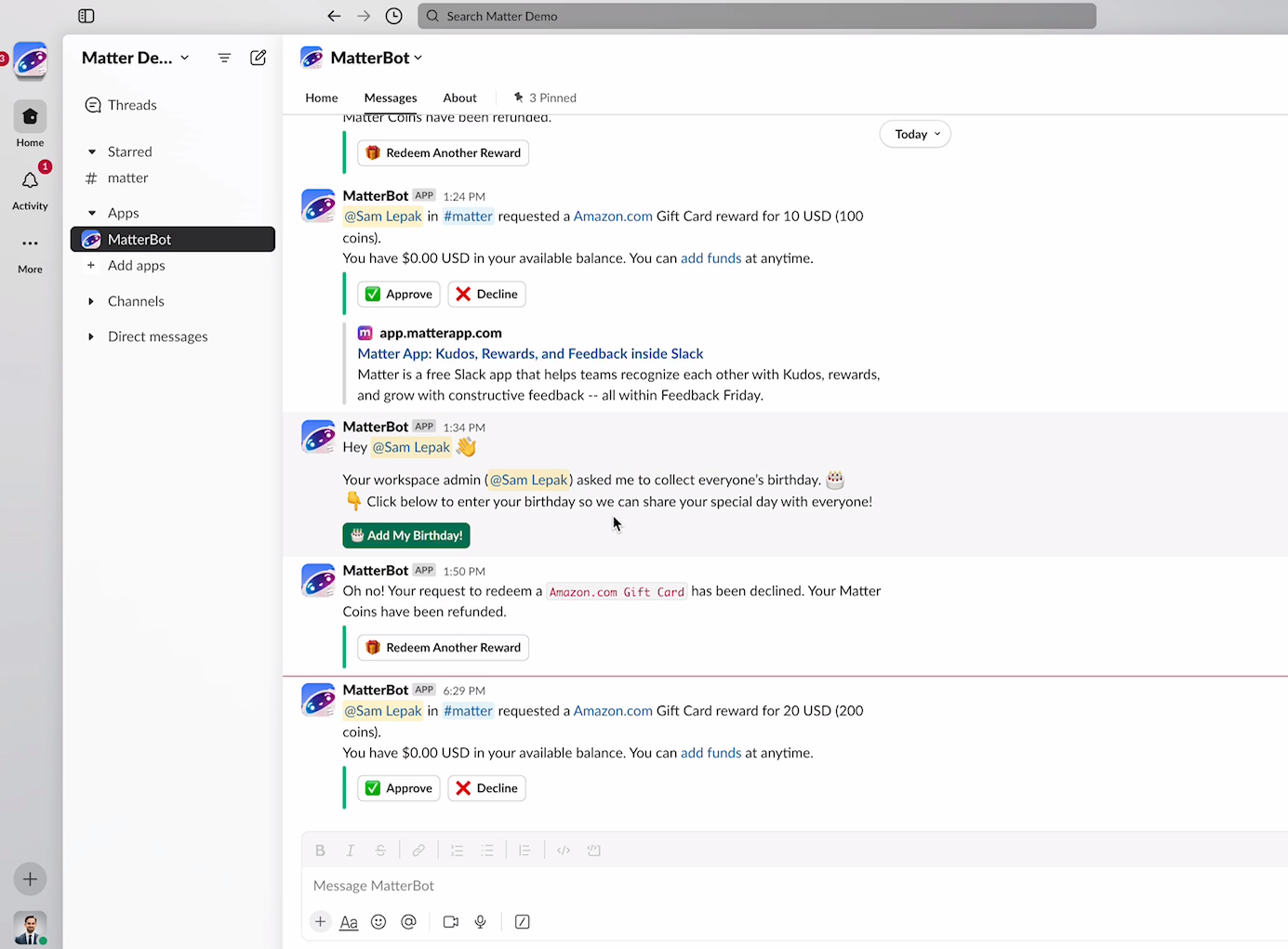
Matter fits seamlessly into Slack and MS Teams: setup took minutes, the UI is clean, and it handles rewards, birthdays, anniversaries, and surveys all in one place, with a built-in Rewards Calculator that made budgeting effortless. At $3/month with a free plan and 30-day trial, it's a low-risk try for small teams. That said, it's a non-starter if your team isn't on Slack or MS Teams, the free plan caps analytics at 30 days, and it doesn't match Connecteam's breadth of free HR tools, but for SMBs wanting a dedicated rewards experience inside their existing communication stack, it delivers.

Cooleaf: Great point-based employee rewards system for global enterprises
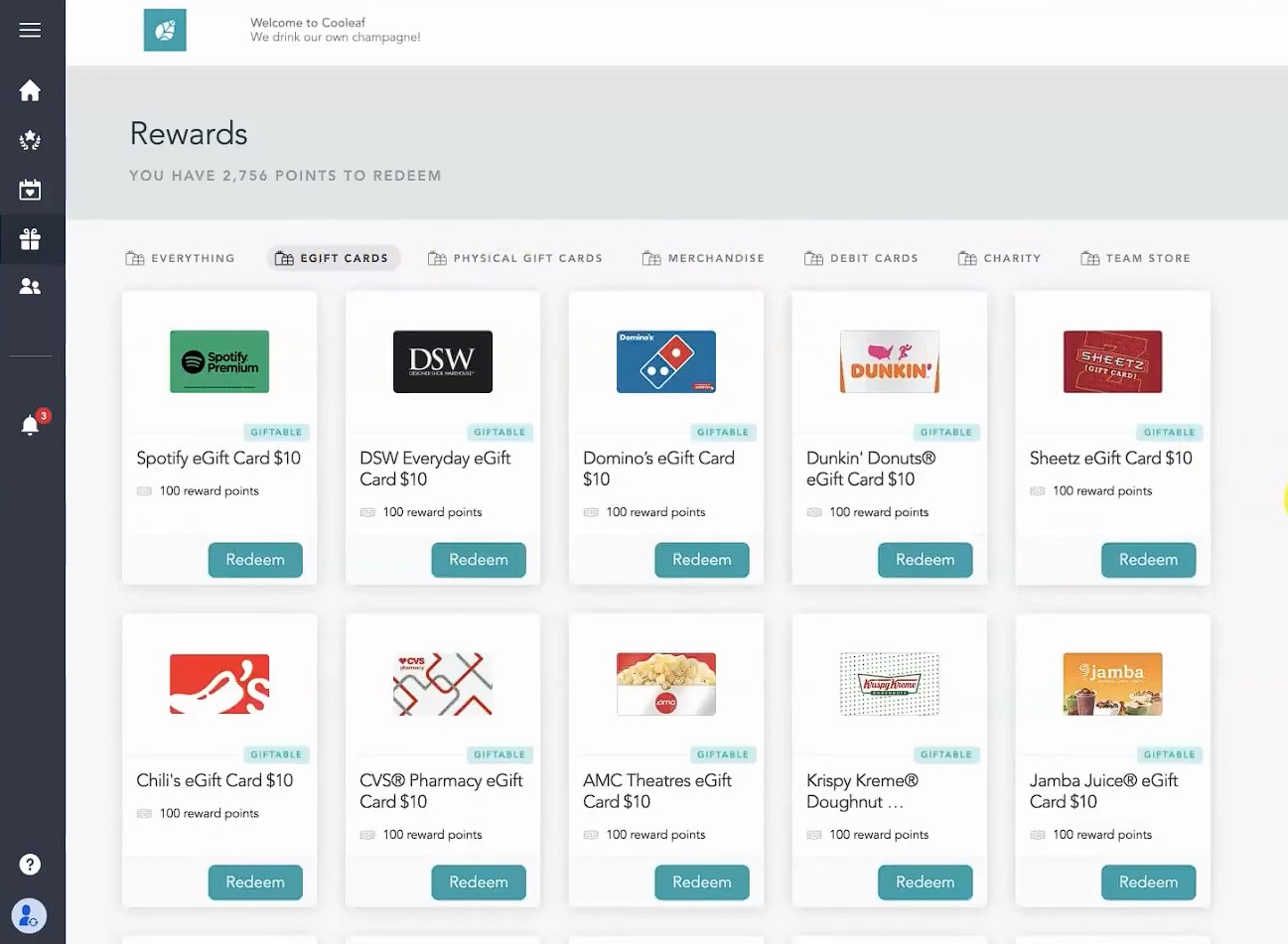
Cooleaf handles global fulfillment of both physical and digital rewards in-house, offers 700+ brands, and gives HR leaders solid analytics on redemption trends by team, location, and role. The catch is that this is firmly an enterprise platform. Setup requires onboarding support, the configuration depth can feel like overkill for teams under 500, and there's no free trial, free plan, or even disclosed pricing. For global organizations with 2,000+ employees looking for a strategically integrated rewards program, Cooleaf delivers; for everyone else, it's likely more than you need.

Reward Gateway: Reward system for employees with excellent mobile experience

Reward Gateway impresses with a broad catalog spanning Amazon products and personalized ecards, plus modular add-ons like surveys and employee discounts so you only pay for what you need. Their 24/7 support across chat, email, and phone was consistently responsive throughout our testing. The drawbacks are that mobile experience is a weak spot, as users must log in separately rather than accessing rewards through existing tools and reporting lacks the depth needed to effectively measure program ROI. Pricing tends to start at £6 per employee per month. Best suited for mid-size companies of 51–500 employees wanting a retailer-rich rewards experience with strong admin flexibility.

Benefits of Corporate Rewards Platforms

An effective employee rewards system strengthens workplace engagement, boosts morale and HR efficiency, and reinforces company's core values, all while cultivating a positive culture.

Improved Employee Engagement and Retention

With 77% of employees performing their best when engaged and appreciated, rewarding worker contributions has a tangible impact. That does not just stop at better staff performance; it also helps reduce turnover rates. Gallup found that organizations that prioritize rewards at work see a 56% decrease in the likelihood of employees seeking new job opportunities

You would also want to consider a program fostering peer-to-peer recognition, as recent data suggests that employees who feel recognized by their peers are five times more likely to feel valued and to invest in their work.

Increased Productivity and Innovation

Employee recognition statistics demonstrate that employees perform better and feel more motivated when their contributions are recognized. According to Gartner, a well-designed recognition program can lead to an 11.1% increase in average employee performance.

Also, when employees receive regular recognition, they are more likely to offer creative solutions and strive for higher performance. For instance, those recognized monthly are 36% more likely to report feeling productive and engaged compared to those recognized quarterly.

Higher HR Efficiency

Too often, HR professionals wear many hats and have multiple aspects they need to attend to, so any opportunity to streamline the processes should be seized. The best solutions have all manner of automation options to ensure that rewards programs are implemented consistently and fairly. These tools can automate everything from milestone celebrations, work anniversaries, and birthdays to onboarding—all in one user-friendly interface.

Strengthened Company Culture and Employer Brand

Implementing a well-planned rewards strategy with the help of employee rewards software is a surefire way to build positivity around your company brand.

Rewards don’t have to be financial, either: Plenty of well-known companies have received positive press coverage for the non-monetary incentives they offer to reward staff.

Types of Employee Rewards (with Examples)

There are generally two employee reward types:

  • Monetary rewards are directly linked to an employee's performance, achievements, or contribution to the organization. Examples of monetary rewards for employees include bonuses that comprise a percentage of their salary, a commission on a sale, and a bonus allocated to reaching a specific metric target.
  • Non-monetary rewards don’t involve direct financial compensation but aim to motivate and recognize individuals by gifting a specific item or experience. Some ideas for non-monetary rewards include an employee award title, peer nominations, an employee wellbeing program, paid days off to rest after hard work to celebrate a big achievement, and company-sponsored training opportunities that an employee wants to pursue.

You can use either one or both. The center point here is to ensure that the rewards initiatives (as well as the employee recognition programs) are: 1) meaningful to the recipients (your employees) and 2) aligned with your company values.

About Us

  • Our goal at SSR is to help HR and recruiting teams to find and buy the right software for their needs.
  • Our site is free to use as some vendors will pay us for web traffic.
  • SSR lists all companies we feel are top vendors - not just those who pay us - in our comprehensive directories full of the advice needed to make the right purchase decision for your HR team.

Our Top 3 Picks:

Best Employee Rewards Software

Best Employee Rewards Platforms - 2026

32,000+ HRs rely on our research each month to buy HR Tech
1,000+ hours spent researching the best employee reward platforms
76+ employee reward platforms analyzed
Last Updated:
Over 3 million HR leaders trust our advice

Best Employee Rewards Software

Need Help? Talk to an HR Software Advisor!

Get 1:1 help from an HR Software Advisor
Save time with recommendations in less than 20 minutes
Save up to 30% with our pricing insights

Tell us more about your company & an HR Software Advisor will help you find the right software

What is Best Employee Rewards Platforms - 2026

Matter: Employee rewards system inside Slack and MS Teams

Matter fits seamlessly into Slack and MS Teams: setup took minutes, the UI is clean, and it handles rewards, birthdays, anniversaries, and surveys all in one place, with a built-in Rewards Calculator that made budgeting effortless. At $3/month with a free plan and 30-day trial, it's a low-risk try for small teams. That said, it's a non-starter if your team isn't on Slack or MS Teams, the free plan caps analytics at 30 days, and it doesn't match Connecteam's breadth of free HR tools, but for SMBs wanting a dedicated rewards experience inside their existing communication stack, it delivers.

Cooleaf: Great point-based employee rewards system for global enterprises

Cooleaf handles global fulfillment of both physical and digital rewards in-house, offers 700+ brands, and gives HR leaders solid analytics on redemption trends by team, location, and role. The catch is that this is firmly an enterprise platform. Setup requires onboarding support, the configuration depth can feel like overkill for teams under 500, and there's no free trial, free plan, or even disclosed pricing. For global organizations with 2,000+ employees looking for a strategically integrated rewards program, Cooleaf delivers; for everyone else, it's likely more than you need.

Reward Gateway: Reward system for employees with excellent mobile experience

Reward Gateway impresses with a broad catalog spanning Amazon products and personalized ecards, plus modular add-ons like surveys and employee discounts so you only pay for what you need. Their 24/7 support across chat, email, and phone was consistently responsive throughout our testing. The drawbacks are that mobile experience is a weak spot, as users must log in separately rather than accessing rewards through existing tools and reporting lacks the depth needed to effectively measure program ROI. Pricing tends to start at £6 per employee per month. Best suited for mid-size companies of 51–500 employees wanting a retailer-rich rewards experience with strong admin flexibility.

Other Employee Reward Systems Worth Considering

Matter: Employee rewards system inside Slack and MS Teams

Matter fits seamlessly into Slack and MS Teams: setup took minutes, the UI is clean, and it handles rewards, birthdays, anniversaries, and surveys all in one place, with a built-in Rewards Calculator that made budgeting effortless. At $3/month with a free plan and 30-day trial, it's a low-risk try for small teams. That said, it's a non-starter if your team isn't on Slack or MS Teams, the free plan caps analytics at 30 days, and it doesn't match Connecteam's breadth of free HR tools, but for SMBs wanting a dedicated rewards experience inside their existing communication stack, it delivers.

Cooleaf: Great point-based employee rewards system for global enterprises

Cooleaf handles global fulfillment of both physical and digital rewards in-house, offers 700+ brands, and gives HR leaders solid analytics on redemption trends by team, location, and role. The catch is that this is firmly an enterprise platform. Setup requires onboarding support, the configuration depth can feel like overkill for teams under 500, and there's no free trial, free plan, or even disclosed pricing. For global organizations with 2,000+ employees looking for a strategically integrated rewards program, Cooleaf delivers; for everyone else, it's likely more than you need.

Reward Gateway: Reward system for employees with excellent mobile experience

Reward Gateway impresses with a broad catalog spanning Amazon products and personalized ecards, plus modular add-ons like surveys and employee discounts so you only pay for what you need. Their 24/7 support across chat, email, and phone was consistently responsive throughout our testing. The drawbacks are that mobile experience is a weak spot, as users must log in separately rather than accessing rewards through existing tools and reporting lacks the depth needed to effectively measure program ROI. Pricing tends to start at £6 per employee per month. Best suited for mid-size companies of 51–500 employees wanting a retailer-rich rewards experience with strong admin flexibility.

Benefits of Corporate Rewards Platforms

An effective employee rewards system strengthens workplace engagement, boosts morale and HR efficiency, and reinforces company's core values, all while cultivating a positive culture.

Improved Employee Engagement and Retention

With 77% of employees performing their best when engaged and appreciated, rewarding worker contributions has a tangible impact. That does not just stop at better staff performance; it also helps reduce turnover rates. Gallup found that organizations that prioritize rewards at work see a 56% decrease in the likelihood of employees seeking new job opportunities

You would also want to consider a program fostering peer-to-peer recognition, as recent data suggests that employees who feel recognized by their peers are five times more likely to feel valued and to invest in their work.

Increased Productivity and Innovation

Employee recognition statistics demonstrate that employees perform better and feel more motivated when their contributions are recognized. According to Gartner, a well-designed recognition program can lead to an 11.1% increase in average employee performance.

Also, when employees receive regular recognition, they are more likely to offer creative solutions and strive for higher performance. For instance, those recognized monthly are 36% more likely to report feeling productive and engaged compared to those recognized quarterly.

Higher HR Efficiency

Too often, HR professionals wear many hats and have multiple aspects they need to attend to, so any opportunity to streamline the processes should be seized. The best solutions have all manner of automation options to ensure that rewards programs are implemented consistently and fairly. These tools can automate everything from milestone celebrations, work anniversaries, and birthdays to onboarding—all in one user-friendly interface.

Strengthened Company Culture and Employer Brand

Implementing a well-planned rewards strategy with the help of employee rewards software is a surefire way to build positivity around your company brand.

Rewards don’t have to be financial, either: Plenty of well-known companies have received positive press coverage for the non-monetary incentives they offer to reward staff.

Types of Employee Rewards (with Examples)

There are generally two employee reward types:

  • Monetary rewards are directly linked to an employee's performance, achievements, or contribution to the organization. Examples of monetary rewards for employees include bonuses that comprise a percentage of their salary, a commission on a sale, and a bonus allocated to reaching a specific metric target.
  • Non-monetary rewards don’t involve direct financial compensation but aim to motivate and recognize individuals by gifting a specific item or experience. Some ideas for non-monetary rewards include an employee award title, peer nominations, an employee wellbeing program, paid days off to rest after hard work to celebrate a big achievement, and company-sponsored training opportunities that an employee wants to pursue.

You can use either one or both. The center point here is to ensure that the rewards initiatives (as well as the employee recognition programs) are: 1) meaningful to the recipients (your employees) and 2) aligned with your company values.

About Us

  • Our goal at SSR is to help HR and recruiting teams to find and buy the right software for their needs.
  • Our site is free to use as some vendors will pay us for web traffic.
  • SSR lists all companies we feel are top vendors - not just those who pay us - in our comprehensive directories full of the advice needed to make the right purchase decision for your HR team.

Our Top 3 Picks: